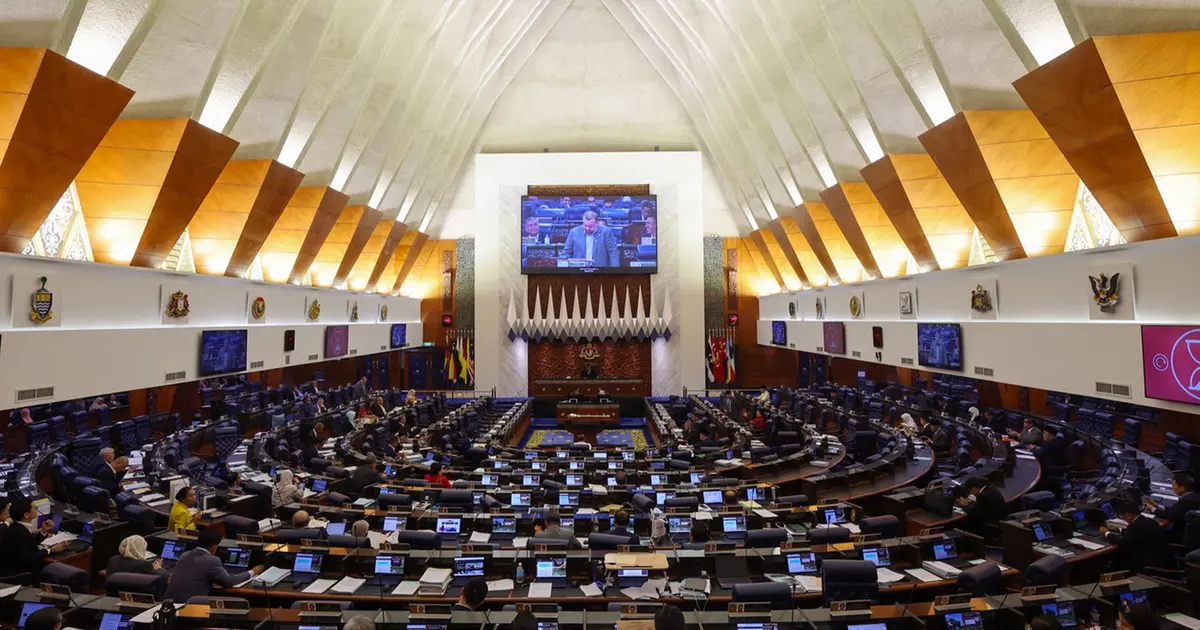
Malaysian lawmakers will return to the Dewan Rakyat on Monday to tackle a legislative agenda centred on constitutional reforms, with a contentious bill designed to impose a 10-year ceiling on prime ministerial tenure taking pride of place among four substantial measures up for consideration. The proposal, which has already encountered resistance in Parliament, represents a significant attempt to reshape the country's governance framework through structural limits on executive power.
The push to constitutionally cap a prime minister's time in office reflects broader regional and global debates about executive tenure and democratic renewal. Malaysia has historically lacked formal statutory limits on the prime minister's tenure—once appointed, a premier could theoretically serve indefinitely, limited only by electoral cycles and party political dynamics. By enshrining a 10-year maximum into constitutional law, proponents argue the country would align itself with international best practices that balance stability with the need for fresh leadership perspectives and prevent the concentration of power in any single individual's hands.
This is not the first attempt to shepherd the term limit bill through Parliament. During the previous legislative sitting, the measure failed to achieve the supermajority—a two-thirds majority—required to pass constitutional amendments under Malaysian law. This elevated threshold exists precisely to protect the constitution from casual modification and to ensure that major structural changes command broad consensus across the political spectrum. The failure to gain sufficient backing underscores the depth of disagreement within Parliament about whether such constraints on prime ministerial power are desirable or necessary.
The reasons for the bill's previous defeat remain multifaceted. Opposition Members of Parliament and some government backbenchers have raised concerns about introducing artificial constraints on leadership succession, arguing that such measures could create lame-duck administrations in a prime minister's final years, potentially weakening the government's ability to implement policy during a critical transition period. Others question whether constitutional rigidity of this nature is the appropriate mechanism to address concerns about concentrated executive authority, suggesting that political convention and robust parliamentary oversight provide more flexible alternatives.
For Malaysian readers, the constitutional amendment carries particular significance in the context of recent political volatility. The country has experienced multiple changes of government over the past five years, followed by periods of coalition realignment and institutional stress. Supporters of the term limit bill contend that formal tenure restrictions would instil greater stability by establishing clear succession frameworks and removing uncertainty about how long a particular administration expects to govern. Conversely, critics worry that introducing such constitutional constraints mid-stream could destabilise an already fragile political equilibrium and invite litigation or constitutional disputes.
The reintroduction of this bill this week signals determination by its sponsors—presumably within the government coalition—to persist despite the previous setback. Securing a two-thirds supermajority requires either significant support from opposition benches or near-unanimous backing from government lawmakers. The fact that the bill is being brought back suggests that either negotiations have occurred to build broader parliamentary consensus or that sponsors believe the political arithmetic has shifted sufficiently to make passage possible. The coming debate will reveal whether the intervening period has generated new momentum for reform or whether the same fundamental divisions persist.
Regionally, Malaysia's approach to executive tenure limits carries weight for Southeast Asian democracies grappling with similar governance questions. Thailand, Indonesia, and the Philippines have all wrestled with constitutional constraints on presidential power, producing mixed results. By observing how Malaysia navigates this question, other regional governments evaluating their own constitutional arrangements will gain insight into the practical and political consequences of formal tenure restrictions. The Malaysian precedent could influence how neighbouring democracies approach similar reforms.
The parliamentary sitting's inclusion of three additional major bills alongside the term limit measure suggests a comprehensive legislative programme designed to address multiple governance concerns simultaneously. This clustering of significant constitutional or institutional measures within a single sitting session creates both opportunity and risk—opportunity because pressing reforms can advance together, and risk because the debate may become unwieldy or generate unintended trade-offs between different policy priorities. How effectively Parliament manages the discussion across all four bills will partly determine the quality of outcomes.
Parliamentary arithmetic will ultimately determine the bill's fate. Government whips will likely be counting votes meticulously over the coming days, assessing whether they can muster the 148 votes (two-thirds of 222) required for passage. Any defections from government benches would substantially complicate passage, while building opposition support would require convincing lawmakers to vote against their parties' formal positions—a rare occurrence but not unprecedented in constitutional matters where some legislators feel bound by conscience or conviction rather than party discipline.
The broader constitutional conversation occurring across these four bills reflects Malaysia's continued engagement with foundational questions about how power should be distributed and limited within its democratic system. Whether the term limit bill succeeds or fails, the debate itself signals that constitutional scrutiny remains an active, ongoing process rather than a settled matter. For citizens and observers tracking Malaysia's democratic trajectory, this week's parliamentary proceedings will offer crucial indicators of the country's commitment to evolving its governance structures in response to contemporary political challenges and international democratic standards.

