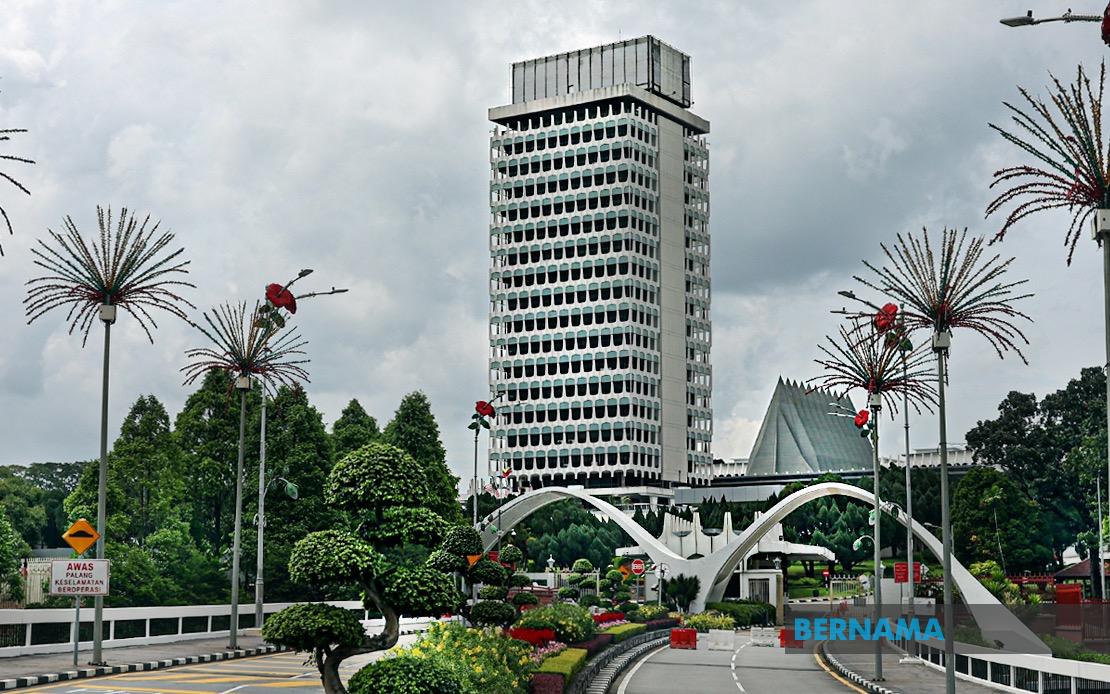
Parliament reconvenes today with mounting economic anxiety at the forefront of legislative debate, as legislators prepare to scrutinise the government's response to mounting pressures from disruptions flowing through one of the world's most critical shipping corridors. The opening day of the Second Meeting of the Fifth Session of the 15th Parliament will feature substantial questioning around the Strait of Hormuz, a waterway through which roughly a third of global maritime petroleum trade transits and where geopolitical tensions continue to reverberate through supply chains from East Asia to Europe.
Datuk Dr Richard Rapu @ Aman anak Begri, representing Betong in the GPS party, will press the Economy Minister for an updated assessment of how trade disruptions in the Strait are cascading through Malaysian operations. His questions will zero in on operational expenses faced by domestic manufacturers and traders, a concern that ripples across sectors dependent on imported raw materials and energy. Coupled with this line of enquiry, he will demand clarity on second-quarter inflation figures for 2026, signalling parliamentary anxiety that commodity price volatility and shipping delays may be feeding into consumer prices that erode household purchasing power across the nation.
The inquiry extends beyond immediate cost pressures. Rapu will also challenge the government to articulate how contingency mechanisms outlined in the 13th Malaysia Plan will sustain economic growth targets should global recession deepen. This question reflects a broader parliamentary preoccupation with Malaysia's vulnerability to external shocks—a perennial concern for an economy deeply embedded in international supply networks. With global trade already showing signs of stress, lawmakers are pressing for concrete evidence that policymakers possess buffers and alternative strategies to prevent cascading economic contraction.
A separate parliamentary line of questioning will examine hajj management overhauls tabled for implementation next year. Onn Abu Bakar from Batu Pahat will direct questions to the Prime Minister about proposed reforms targeting three interrelated challenges: the financial burden pilgrims shoulder, the extended waiting periods that can stretch for years, and safeguarding mechanisms for their health and welfare throughout the pilgrimage process. For Malaysia, where hajj represents both spiritual significance and considerable state expense, this inquiry reflects genuine policy pressure to balance accessibility with fiscal responsibility.
The artificial intelligence governance framework also features prominently in today's parliamentary agenda, signalling lawmakers' recognition that emerging technologies present novel regulatory challenges. Wong Shu Qi representing Kluang will interrogate the Digital Minister on whether the AI Governance Bill currently under preparation explicitly criminalises harmful applications including deepfake generation, particularly in child exploitation contexts, identity fraud, and non-consensual distribution of intimate content. This questioning underscores growing awareness in Malaysian legislative circles that AI-enabled harms require statutory precision rather than interpretative ambiguity.
Food security concerns amplified by geopolitical instability in the Middle East will also command attention. Datuk Dr Radzi Jidin from Putrajaya will question the Agriculture and Food Security Minister about short-, medium- and long-term government interventions designed to buffer Malaysia's food supply against regional conflict spillover. The Middle East remains a significant source of agricultural inputs and trading partners for Malaysia, making the inquiry timely and substantive rather than purely rhetorical.
Beyond the oral questions segment, the legislative agenda encompasses tabling of two significant bills. The Cybercrime Bill 2026 represents an attempt to modernise Malaysia's digital crime statutes, while the Road Transport Act Amendment targets updates to transport regulations last substantially revised in 1987. Both measures suggest parliament is attempting to address outdated frameworks struggling against contemporary realities—whether criminal exploitation of digital infrastructure or traffic management patterns unrecognisable from nearly four decades prior.
The session will extend across 16 sitting days through to 16 July, providing sustained opportunity for committee work, debate, and legislative development beyond today's opening salvos. This extended calendar reflects the substantial legislative business parliament must process, from economic resilience frameworks through digital governance to sectoral modernisation. The breadth of today's questioning—spanning geopolitics, emerging technology, food systems, and religious welfare—illustrates the interconnected challenges confronting Malaysian policymakers in an era of compounding external pressures and technological disruption.
For Malaysian industries and citizens, today's parliamentary proceedings carry practical significance. How effectively legislators extract commitments on Hormuz contingencies, inflation trajectories, and AI safeguards will influence business confidence and consumer sentiment in coming quarters. The hajj discussions signal recognition that state capacity to manage essential services requires periodic recalibration. Collectively, these debates reveal a parliament grappling earnestly with how Malaysia navigates a volatile external environment while maintaining domestic stability and opportunity—questions that will animate legislative work through the approaching winter months.
%22%2F%3E%3C%2Fpattern%3E%3C%2Fdefs%3E%3Crect%20width%3D%22100%25%22%20height%3D%22100%25%22%20fill%3D%22url(%23ph5ptfzg)%22%2F%3E%3Crect%20width%3D%22100%25%22%20height%3D%22100%25%22%20fill%3D%22url(%23ph5ptfzp)%22%2F%3E%3Ctext%20x%3D%2250%25%22%20y%3D%2250%25%22%20text-anchor%3D%22middle%22%20dominant-baseline%3D%22central%22%20fill%3D%22rgba(255%2C255%2C255%2C0.95)%22%20font-family%3D%22Georgia%2C%20'Times%20New%20Roman'%2C%20serif%22%20font-weight%3D%22700%22%20font-size%3D%22272%22%20letter-spacing%3D%22-0.02em%22%3EAnwar%3C%2Ftext%3E%3C%2Fsvg%3E)