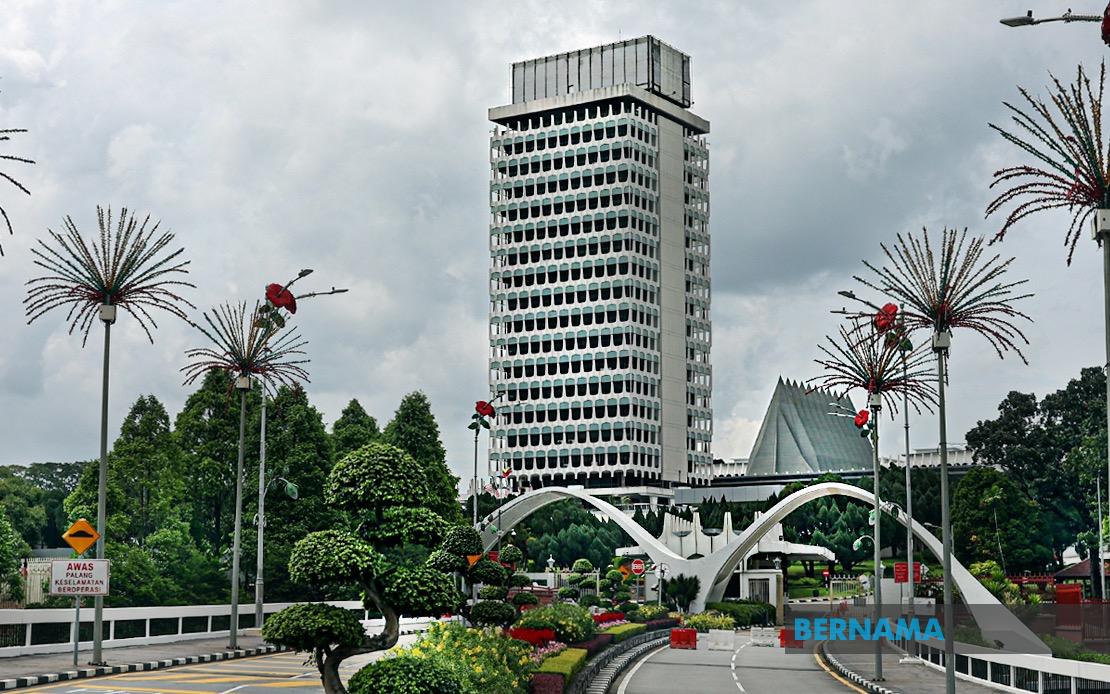
Members of the Dewan Rakyat gathered on June 25 to address several pressing national concerns, ranging from the country's clean energy transition to its diplomatic approach towards Myanmar and the emerging strategic imperative of data sovereignty. The parliamentary session, stretching across 16 days until July 16, reflects the breadth of challenges facing policymakers as Malaysia navigates economic uncertainty, technological advancement, and regional geopolitical complexities.
Energy policy featured prominently in the parliamentary agenda, with particular attention directed towards the Corporate Renewable Energy Supply Scheme (CRESS), an initiative designed to attract industrial participation in renewable power generation. Rodziah Ismail, representing Ampang under the Pakatan Harapan coalition, sought details from the Minister of Energy Transition and Water Transformation regarding how many companies have enrolled in CRESS and at what stage the programme stands in its execution. Her inquiries extended beyond programme participation to examine the broader implications for Malaysia's bid to establish itself as a regional hub for data centre operations, a sector demanding reliable and affordable electricity supplies.
The questioning around CRESS also encompassed technical matters affecting operational costs in the data centre sector. Ismail sought the Minister's findings on the System Access Charge (SAC) rate review, a crucial metric determining transmission costs for large industrial consumers. Additionally, she probed two complementary energy initiatives: the Corporate Green Power Programme (CGPP) and Battery Energy Storage Systems (BESS), both integral to Malaysia's vision of sustainable industrial competitiveness. These questions underscore a strategic recognition that Malaysia's aspirations to capture regional data centre investment hinge significantly on creating an attractive cost structure relative to competing jurisdictions.
Beyond energy matters, the session confronted Malaysia's economic vulnerabilities in the context of global instability. Mohd Syahir Che Sulaiman from Bachok raised concerns about job losses and business contractions attributed to elevated energy costs and international economic headwinds. He questioned the Minister of Economy on specific mitigation measures adopted by the National Economic Action Council and demanded evidence of their effectiveness. This line of inquiry reflects widespread unease in constituencies across peninsular Malaysia regarding economic resilience and the adequacy of government interventions during periods of external shock.
Fuel subsidy reform occupied another segment of parliamentary debate, with Datuk Seri Hasni Mohammad pressing the Finance Minister on the rationale for standardising subsidy mechanisms through MyKad verification for diesel purchases. His question about whether the 200-litre monthly entitlement proves sufficient for consumers raises concerns about the adequacy of government support for transportation-dependent industries and rural populations, where fuel consumption often exceeds urban averages.
Malaysia's diplomatic posture towards Myanmar commanded substantial parliamentary focus, reflecting the nation's delicate balancing act in Southeast Asian regional affairs. William Leong Jee Keen sought the Foreign Minister's clarification on how the Five-Point Consensus, a diplomatic framework agreed upon by the Association of Southeast Asian Nations (ASEAN), translates into actual Malaysian foreign policy toward the Myanmar government. The Five-Point Consensus, established in response to Myanmar's internal political instability, represents ASEAN's collective attempt to encourage dialogue and humanitarian progress without imposing sanctions that might isolate the country further. Leong's inquiry essentially asked whether Malaysia's bilateral approach aligns with this framework or operates independently, an important distinction for Malaysian foreign policy coherence.
Data sovereignty emerged as a critical contemporary concern, with Datuk Seri Amirudin Shari questioning the Digital Minister on mechanisms to synchronize state-level digital infrastructure projects, specifically the Selangor Dark Fiber Network, with national data security requirements. His question highlights an emerging tension between decentralized digital development and centralized security imperatives, particularly as Malaysia pursues artificial intelligence capability. Amirudin sought assurance that data sovereignty receives adequate consideration in Malaysia's aspiration to become an AI-ready nation by 2030, a timeline that many technology observers regard as ambitious given current digital governance frameworks.
Educational standards and Islamic religious instruction formed another parliamentary focus. Datuk Idris Ahmad enquired whether the Islamic Education curriculum effectively develops students holistically and questioned coordination mechanisms between federal authorities and state Islamic Religious Councils. This question reflects concerns that Malaysia's educational outcomes in religious instruction may vary significantly across states, potentially creating inconsistencies in the quality and approach to Islamic teaching nationwide.
The constitutional arrangements governing Malaysian federation featured in parliamentary discourse through Isnaraissah Munirah Majilis' question regarding the Malaysia Agreement 1963 (MA63) implementation. She specifically pressed for clarity on the timeline for increasing Sabah and Sarawak's parliamentary representation to 35 per cent of total seats nationwide. This issue remains contentious in East Malaysian politics, with many stakeholders viewing the promised increase as overdue recognition of these states' contributions to the federation since 1963.
The Public Accounts Committee also addressed healthcare affordability through its examination of rising private health insurance premiums and hospital charges. This briefing, involving collaboration across the Ministry of Finance, Ministry of Health, and Bank Negara Malaysia, reflects growing public concern about healthcare costs and their broader implications for household financial stability and public health equity.
Concluding the parliamentary sitting, members proceeded to debate the Prisons (Amendment) Bill 2026, legislation addressing reforms within Malaysia's correctional system. The breadth of issues spanning energy transition, foreign relations, digital infrastructure, educational standards, constitutional arrangements, and social welfare demonstrates the complexity confronting contemporary Malaysian governance. Each topic carries implications extending beyond immediate policy implementation, touching broader questions about Malaysia's competitive positioning regionally, social equity domestically, and strategic autonomy internationally.

