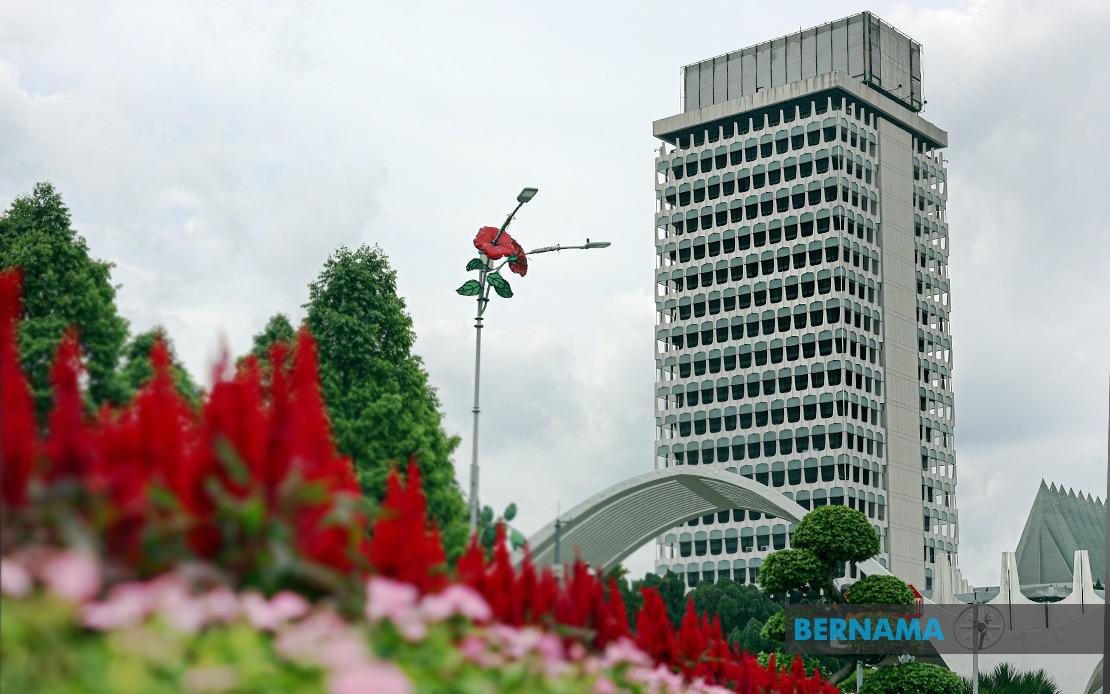
The Second Meeting of the Fifth Session of the 15th Parliament opens Monday and will operate until July 16, bringing several significant legislative measures back under scrutiny after earlier attempts fell short of parliamentary approval. Among these, the Constitution (Amendment) Bill 2026 will be re-tabled with the explicit objective of restricting a prime minister's term in office to a maximum of 10 years, a provision that previously failed to achieve the necessary two-thirds majority during the First Meeting of the Fifth Session.
Alongside this, lawmakers will again confront the Constitution (Amendment) Bill (No. 2) 2026, which proposes a structural separation between the roles of Attorney General and Public Prosecutor. This measure has been referred to the Parliamentary Special Select Committee for deeper examination and refinement before it returns for full chamber consideration. The committee's detailed scrutiny reflects the complexity and sensitivity of restructuring these long-intertwined constitutional positions, institutions that have shaped Malaysian governance for decades.
The government's legislative agenda reflects broader concerns about institutional design and public safety. Transport Minister Anthony Loke has flagged the Road Transport Act 1987 (Amendment) Bill as an urgent priority, with tabling scheduled for the opening day and debate to follow. The amendments span eleven distinct areas and encompass forty-two separate clauses, all directed toward combating the persistent menace of illegal street racing and organised racing syndicates that continue to endanger road users across the country.
Illegal racing has emerged as a persistent challenge for Malaysian authorities, particularly in urban centres where young drivers engage in dangerous high-speed activities that claim lives and destabilise communities. Beyond targeting these criminal activities, the proposed amendments seek to dismantle the operational networks of so-called "tonto" syndicates that coordinate and profit from street racing enterprises. Loke's emphasis on enforcement mechanisms suggests the government views this as requiring not merely legal prohibition but institutional capacity to detect, investigate, and prosecute offenders effectively.
The parliamentary session also encompasses attention to the Cybercrime Bill 2026, indicating that digital security and online criminal activity remain on the legislative radar. This positions Malaysia alongside other regional economies grappling with the expansion of cybercriminal enterprises and the need for statutory frameworks that can evolve as technology itself transforms. The inclusion of such diverse subject matter across sixteen days reflects Parliament's mandate to address multifaceted challenges spanning physical infrastructure, digital security, and constitutional governance.
Dewan Rakyat Speaker Tan Sri Johari Abdul has sounded a cautionary note about parliamentary conduct amid the concurrent Johor State Election, which will take place during the sitting period. His statement underscores a recurring institutional tension: MPs serve multiple constituencies and political commitments, yet their primary legislative responsibility demands full attendance and engagement during parliamentary sessions. Johari's reminder that representatives must not "misuse the House for political purposes" carries particular weight when state elections compete for attention and resources.
The speaker's broader exhortation to MPs emphasises quality deliberation grounded in empirical evidence and constructive analysis rather than rhetorical posturing. He has called for debates to address substantive concerns including living costs, educational access, healthcare, economic performance, employment generation, and community welfare—issues directly affecting ordinary Malaysians. This framing positions parliamentary work as inherently connected to citizen welfare rather than abstract constitutional principle, appealing to elected representatives' fundamental accountability to constituents.
Johari's remarks reflect growing concern that parliamentary discourse sometimes devolves into factional dispute disconnected from policy substance. His call for proceedings conducted "through orderly and mature debate in accordance with the Standing Orders" suggests occasional lapses in parliamentary decorum that leaders wish to arrest. The emphasis on facts, data, and evidence-based reasoning over sentiment and polemic indicates frustration with rhetorical excess that produces political theatre rather than legislative progress.
The international context shapes at least one dimension of parliamentary attention during this sixteen-day period. The sitting is expected to generate discussion regarding the impact of the global energy supply crisis on Malaysia, particularly following the ongoing conflict in West Asia. Disruptions to international energy supply chains carry direct implications for Malaysian industries, transportation costs, electricity generation, and broader economic competitiveness. The parliamentary forum provides opportunity for government and opposition to examine policy responses and preparedness for energy market volatility.
While the Dewan Rakyat conducts its two-week session, the Dewan Negara (upper house) will separately convene for ten days commencing July 20 and concluding August 4. This staggered schedule reflects Malaysia's bicameral system and allows both chambers to maintain distinct deliberative calendars. The upper house will presumably address measures emerging from the lower house, providing opportunity for refinement and additional scrutiny of legislation passed by the more directly elected chamber.
The convergence of constitutional reform proposals, public safety legislation, cybersecurity frameworks, and energy policy discussions within a single parliamentary session demonstrates the breadth of governance challenges confronting contemporary Malaysia. Success requires both technical legislative competence and political cooperation to navigate competing interests and ideological positions. The speaker's emphasis on responsible representation and evidence-based debate signals institutional hope that MPs will prioritise substance over partisan advantage during the forthcoming sitting.

