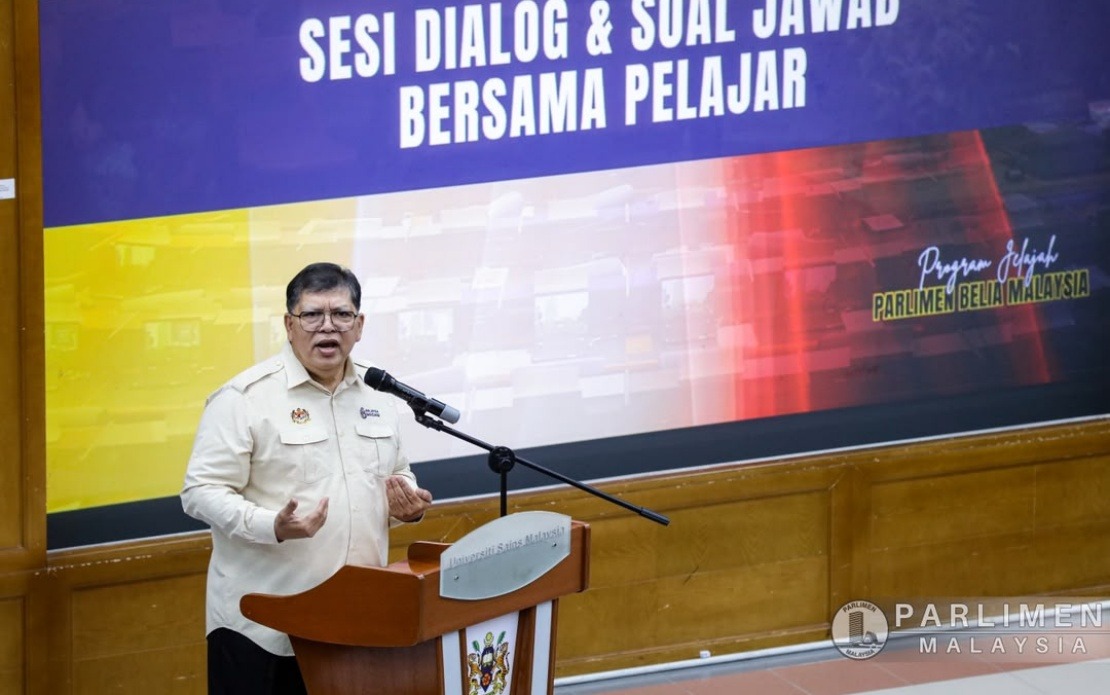
The Dewan Rakyat must transform itself into an institution of unwavering public confidence and serve as the gold standard of democratic practice for generations to come, according to Speaker Tan Sri Johari Abdul. With the Malaysian Youth Parliament set to convene on September 11, the pressure on MPs to demonstrate exemplary behaviour has intensified, as hundreds of thousands of young Malaysians will soon turn their attention to the nation's highest legislative chamber to understand how democracy truly operates.
Johari emphasized that Parliament transcends its traditional role as merely a debating arena for elected representatives. Rather, it functions as the nation's premier legislative body and a compass point for society at large, particularly for younger citizens forming their first impressions of democratic governance. The institution's conduct will directly shape how future leaders perceive and practice democracy, making the current standard of parliamentary discourse a matter of considerable national importance.
Young participants entering the Youth Parliament programme require more than simply attending sessions—they need to witness firsthand the embodiment of democratic values through the behaviour and demeanor of current MPs. This includes observing how legislators engage in substantive discussion, maintain respect across party lines, and prioritize national interest over partisan gain. By absorbing these practices during their tenure in the Youth Parliament, these emerging leaders will carry forward either a culture of dignified democratic participation or, conversely, the less flattering aspects occasionally visible in parliamentary proceedings.
The Speaker's message carries particular weight in an era of unprecedented public scrutiny. Social media platforms and parliamentary broadcasts ensure that every parliamentary utterance and gesture reaches constituents in real time. There is no longer a buffer between parliamentary activity and public perception. Members of Parliament operate under constant observation, making their adherence to standards of factual accuracy, courtesy, and constructive problem-solving not merely matters of personal conduct but contributions to public confidence in democratic institutions.
The Malaysian Youth Parliament programme represents an ambitious attempt to deepen democratic engagement among younger citizens. The structure mirrors the actual Parliament, comprising 222 seats that correspond to parliamentary constituencies across the country. However, rather than becoming extensions of existing political parties, youth participants establish their own non-partisan organisations within the platform—entities that remain distinct from Malaysia's formal party political system. More than a dozen such youth groups have already formed, each providing alternative avenues for young people to develop leadership capabilities outside traditional party structures.
Parliament Malaysia is currently mobilizing nationwide outreach efforts to attract youth involvement. The organization is targeting 300,000 Malaysians aged eighteen to thirty for registration, a remarkably expansive recruitment goal that underscores the programme's ambitions to achieve meaningful generational engagement. This target reflects recognition that Malaysia's future stability and prosperity depends on fostering an informed, participatory younger generation with functional understanding of how democratic institutions operate.
The pathway to participation follows a structured timeline designed to ensure legitimacy and inclusivity throughout the process. Nominations commence on July 8, with official candidates announced three days later. A comparatively lengthy campaign period—extending from mid-July through early August—allows aspiring youth representatives to present platforms and build support. The voting mechanism harnesses digital infrastructure through the e-PBMy system, enabling online participation across Malaysia on August 8 and 9. This technological approach removes geographic barriers while maintaining transparent, auditable electoral processes.
Once elected, Youth Parliament members will not serve one-off ceremonial roles but will undertake substantive parliamentary work. Each parliamentary term lasts two years, with three sittings annually, each spanning two days. This sustained engagement contrasts sharply with briefer youth exchange programmes and allows young participants to develop familiarity with legislative procedures, master policy issues, and cultivate cross-generational networks of peers with shared governance interests. The programme's continuity facilitates meaningful development rather than tokenistic participation.
The institutional shift reflects evolving government thinking about youth engagement mechanisms. Since its 2015 introduction under the Ministry of Youth and Sports, the Malaysian Youth Parliament operated under that ministry's stewardship. However, in October 2023, the government determined that the programme would achieve greater legitimacy and impact under direct Parliament Malaysia administration. This elevation signals recognition that youth need not merely receive lectures about democracy but should participate within authentic democratic structures, even if at a training level.
For Malaysian readers following democratic development, the Youth Parliament programme offers a compelling case study in institutional innovation. Unlike passive civic education modules, the scheme immerses young citizens in parliamentary culture, procedures, and deliberative practices. Success depends fundamentally on the quality of example set by current MPs. If parliamentary proceedings reflect factual discourse, respectful disagreement, and genuine attention to constituent welfare, young observers will internalize these values. Conversely, if parliamentary sessions deteriorate into partisan theatrics or personality-driven conflict, youth will absorb those corrupted versions of democratic practice.
The broader regional significance extends beyond Malaysia's borders. Southeast Asian democracies collectively struggle with youth disengagement from formal political processes, despite societies facing mounting challenges requiring multigenerational approaches. Malaysia's investment in structured youth parliament participation, coupled with explicit messaging that current legislators must model exemplary conduct, offers a template that peers across the region might study. The approach acknowledges that institutions survive through perpetual renewal by successive generations, requiring intentional cultivation of democratic values and legitimate participation channels.
As Malaysia moves toward the September parliamentary opening, Speaker Johari's challenge to Members of Parliament deserves recognition as more than ceremonial rhetoric. The Speaker has essentially redefined parliamentary excellence beyond legislative output to include pedagogical responsibility—the duty to educate future leaders through institutional example. For Malaysia's democratic trajectory, whether current MPs embrace this expanded understanding of their role may prove as consequential as the legislation they enact. The Malaysian Youth Parliament thus becomes not merely a programme for young people but a mirror reflecting the health and vitality of Malaysia's democratic institutions themselves.

