The Paris Vivatech festival has become a crucible for transformative technological breakthroughs, with this year's exhibition revealing significant advances poised to reshape multiple industries across Southeast Asia and beyond. Among the most compelling innovations on display is Blueprint Biomed's artificial bone grafting solution, a development that could fundamentally alter how millions of patients annually receive orthopaedic treatment worldwide. The Berlin-based company has engineered a synthetic alternative to the traditional autologous bone grafts derived from patients' own skeletal tissue, eliminating the complications that plague conventional procedures.
Autologous bone grafting, whilst considered the gold standard, carries substantial drawbacks that Blueprint Biomed's technology directly addresses. Patient-derived grafts frequently fail, necessitating additional corrective surgery and extending recovery periods. Furthermore, the harvesting process itself inflicts secondary trauma and pain at donor sites, alongside potential complications including infection and improper healing. Blueprint Biomed's approach circumvents these challenges entirely by employing a sophisticated 3D-printed scaffold composed of polycaprolactone, a biodegradable synthetic polyester layered with collagen structures. This engineered framework can be manufactured in virtually any anatomical shape required, offering unprecedented customisation for diverse surgical applications. The scaffold's biological fate has been precisely engineered—collagen dissolves harmlessly within three months while polycaprolactone resorbs within two years, leaving only regenerated bone tissue. Chief executive Aaron Herrera articulated the company's ambitions during discussions at Vivatech, revealing that the startup is pursuing US$2.5 million in funding as it advances toward human clinical trials, with realistic projections for patient implantation commencing in 2028. This timeline positions the technology for potential Malaysian and Southeast Asian market entry within the medium term, offering orthopaedic surgeons throughout the region enhanced treatment options for fracture management and joint reconstruction.
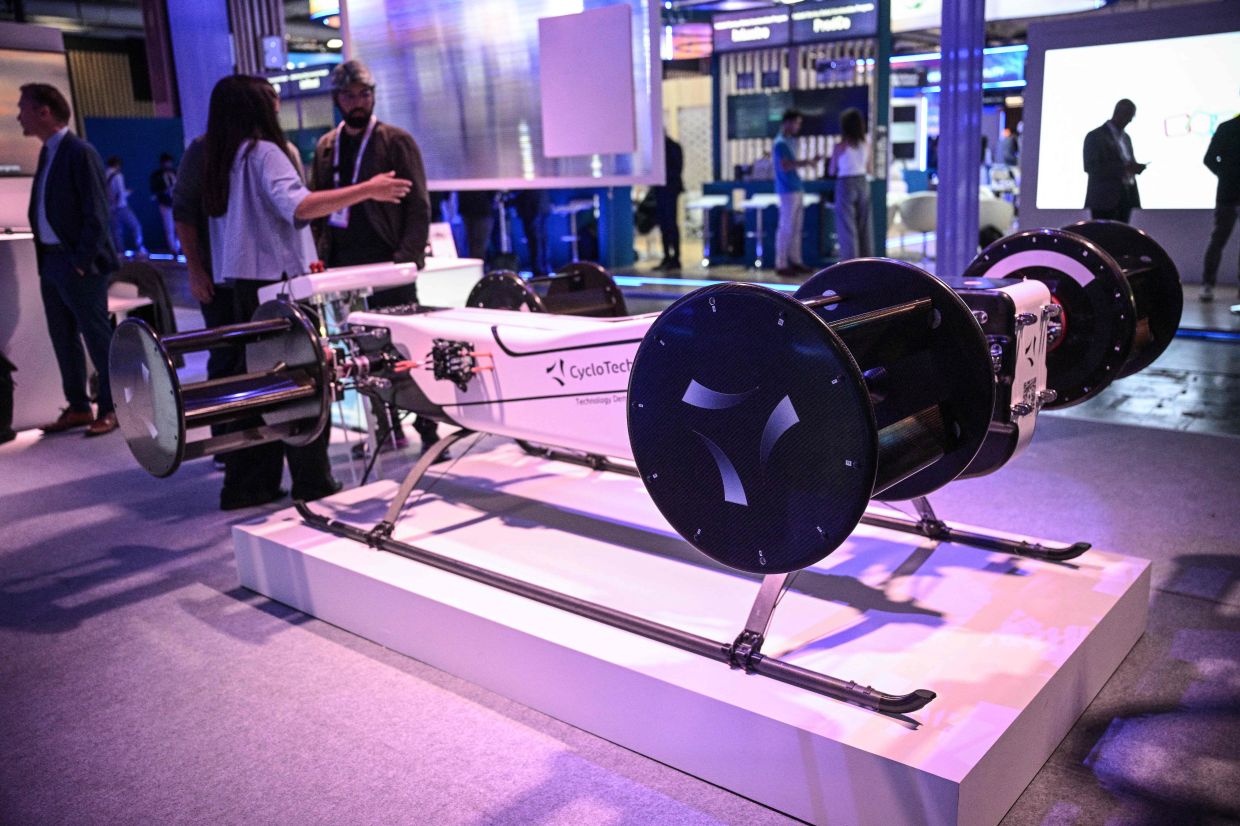
Austrian aerospace innovator CycloTech has similarly captured international attention with revolutionary motor architecture designed to dramatically enhance aerial vehicle manoeuvrability. The startup's distinctive open-cylinder motor design, featuring wing-shaped blades forming the cylindrical perimeter, enables unprecedented flight flexibility that fundamentally transcends existing quadcopter and fixed-wing aircraft capabilities. Marketing executive Andrea Marchsteiner emphasized the technology's unique operational envelope—the CycloTech motor permits simultaneous helicopter-style hovering, rapid acceleration matching conventional aircraft, mid-air braking manoeuvres, and backward flight, all within a single integrated propulsion system. These capabilities address a critical gap in current drone technology, particularly relevant for Southeast Asian applications including urban delivery operations in congested metropolitan centres like Kuala Lumpur, Bangkok, and Singapore. The company, which employs sixty-five personnel across its Vienna headquarters, has already secured €40 million in capital and actively pursues additional institutional investment alongside strategic partnerships with established aerospace manufacturers. Potential applications extending beyond commercial delivery encompass personnel transport, surveillance operations, and military applications—a breadth of possibility that underscores the motor's transformative potential.
Cybersecurity represents another frontier where Parisian startup Whispeak is making substantial contributions, particularly concerning the emerging threat landscape created by generative artificial intelligence. Founded to authenticate banking customers through voice recognition, Whispeak confronted an unexpected challenge as AI-generated audio deepfakes proliferated across communication networks. The technology barrier has plummeted dramatically—deepfake voice synthesis now requires merely ten seconds of target audio and frequently operates without cost, democratizing the capability to fabricate convincing vocal impersonations. Whispeak pivoted strategically, leveraging its proprietary AI detection systems to identify fraudulent audio content with impressive accuracy. Chief executive Florent Van Calster disclosed that following three years of intensive development, the company now possesses superior deepfake detection capabilities validated through multiple international competitions. Operating in partnership with French telecommunications giant Bouygues, Whispeak currently screens incoming calls for deepfake content and alerts recipients when suspicious audio is detected. Van Calster acknowledged that error rates remain below one percent across available training datasets, a remarkable achievement considering the technological arms race characterising the deepfake landscape. However, he tempered optimism by noting that fraudster sophistication will inevitably increase, perpetuating an ongoing competitive cycle. This defensive capability carries particular relevance for Malaysia's financial institutions and telecommunications providers, where voice-based authentication remains ubiquitous despite emerging security vulnerabilities.
Biomedical innovation extends to performance monitoring through Hong Kong-based PointFit, which has developed adhesive biosensor patches that radically simplify athlete health tracking. Rather than requiring direct blood draws or cumbersome laboratory analysis, the sensor array continuously monitors glucose, cortisol, and additional biomarkers through transdermal sweat sampling. Founder Kenny Oktavius initiated development whilst still a student in 2019, recognising fundamental limitations in conventional heart rate monitoring for professional athletes. The PointFit platform constructs a personalised "sweat index" powered by artificial intelligence algorithms that contextualise results according to demographic variables and environmental conditions including ambient temperature. Oktavius highlighted the paradox exemplifying conventional sports monitoring—elite marathon runners despite utilising expensive, sophisticated equipment frequently experience sudden physiological collapse. The problem lies in oversimplification; cardiovascular metrics alone provide incomplete physiological visibility. Acute hospitalisation triggers comprehensive biomarker analysis, suggesting that sophisticated performance monitoring should similarly prioritise molecular-level indicators. PointFit has already established collaborative relationships with Red Bull's Athlete Performance Centre and Puma's Nitro Labs, validating the technology through elite athletic validation. Nevertheless, Oktavius envisions consumer market expansion, specifically identifying Decathlon and EssilorLuxottica as prospective commercial partners. This trajectory indicates the technology's potential penetration throughout Southeast Asian sporting communities, potentially transforming fitness monitoring within the region's expanding wellness industry.
These innovations collectively illustrate the dynamic convergence of biotechnology, advanced materials science, artificial intelligence, and miniaturised electronics shaping contemporary technological progress. The Paris Vivatech festival functions as both marketplace and ideation nexus, facilitating connections between inventors, institutional investors, and corporate partners essential for translating laboratory prototypes into commercial deployment. For Malaysia and broader Southeast Asia, these emerging technologies present dual implications—immediate access to revolutionary solutions addressing healthcare, security, logistics, and wellness challenges, whilst simultaneously highlighting competitive pressures facing local technology ecosystems. The funding trajectories apparent among these companies suggest that institutional capital increasingly flows toward European and Asian innovation hubs, with Malaysian enterprises potentially positioned advantageously for distribution, integration, and regional customisation partnerships.

