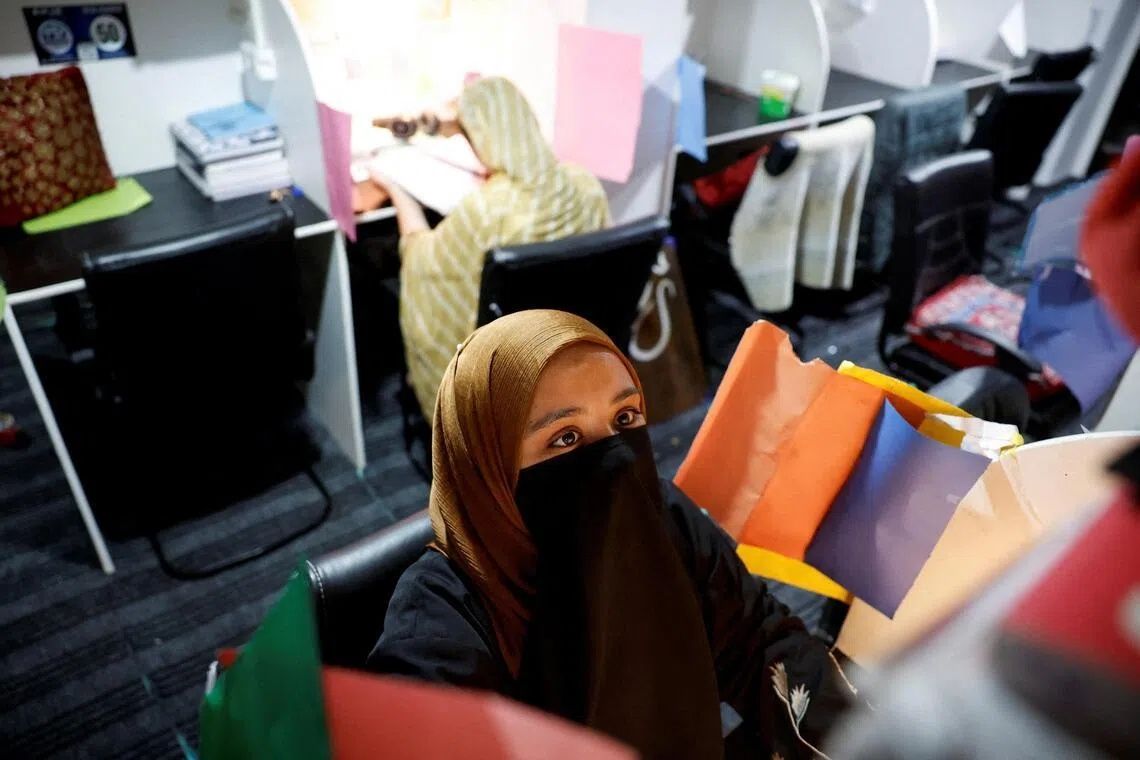
The retesting of India's National Eligibility cum Entrance Test on June 21 represents far more than a routine examination rescheduling. For over 2 million aspiring medical students, the retest embodies a profound frustration with institutional failures and a concerning trend of high-pressure education systems collapsing under their own weight. The original examination, administered on May 3, was scrapped following credible allegations that question papers had circulated on social media before the test, prompting authorities to invalidate all results and order a complete retake within six weeks.
The psychological toll on candidates cannot be understated. These students had already invested years in preparation for one of India's most grueling competitive examinations, where success rates hover between merely 5 and 6 per cent. The prospect of medical school admission represents not simply career advancement but often a family's generational aspiration, particularly among middle-class households across urban and semi-urban India. For many candidates, the cancellation and forced retake constitute a second trauma after the already brutal selection process. The compression of the examination cycle—requiring students to maintain peak academic readiness across two separate testing dates separated by only six weeks—creates conditions ripe for burnout and psychological distress.
Alima Javed, a 20-year-old candidate from Srinagar, articulates the cumulative burden facing her peers. Having already endured the mental exhaustion intrinsic to preparing for this examination, she must now contend with the additional anguish of knowing that her previous effort produced a nullified result through no action of her own. This scenario exemplifies a broader institutional failure: when systems designed to facilitate fair competition become compromised, the burden of remediation falls entirely upon candidates rather than administrators. The psychological literature on high-stakes testing consistently demonstrates that such externally-imposed uncertainty generates anxiety levels comparable to genuine academic underperformance, yet without the student possessing any mechanism for self-improvement.
The controversy has mobilized student activism across India's major urban centres, with hundreds of candidates staging demonstrations in New Delhi and other cities. These protests transcend typical educational grievances; they represent a generational statement about institutional trustworthiness and governance standards. The political implications have not escaped Prime Minister Narendra Modi's administration, which finds itself managing a crisis affecting millions of young voters during a politically sensitive period. Education Minister Dharmendra Pradhan has publicly committed to ensuring the retest proceeds with "fair and transparent" protocols, yet such assurances ring hollow to students who witnessed the original examination's integrity compromised.
The government's response to prevent future breaches has proven both aggressive and controversial. Authorities ordered a temporary nationwide block on the messaging application Telegram, arguing that the platform's encryption and channel-recreation features facilitated the question paper leak. This decision drew immediate criticism from digital rights activists and free speech advocates who questioned whether blanket application shutdowns represent proportionate responses to examination security threats. On June 19, an Indian court upheld the ban as legal and reasonable, validating the government's approach yet establishing a troubling precedent for using emergency measures against technology platforms.
Investigative authorities have launched multi-agency probes to trace the leak's origins, examining financial transactions within suspected cheating networks and making arrests across several states. These investigations hint at organized criminal involvement—the notion that examination fraud had evolved into a sophisticated, monetized enterprise rather than isolated individual misconduct. This revelation shifts the discourse from student discipline to systemic corruption, raising uncomfortable questions about how deeply illicit networks had penetrated India's examination infrastructure. Authorities have warned of enhanced penalties for those implicated in exam malpractice, signaling intent to impose exemplary punishment that might deter future breaches.
Second-generation security measures announced by the government include enhanced monitoring at examination centres, stricter procedural controls over question paper handling, and implementation of digital tracking systems. These technical and administrative interventions represent necessary steps, yet their efficacy remains uncertain. Security measures themselves can heighten test-taker anxiety by creating an atmosphere of suspicion and surveillance, potentially undermining the very goal of reducing student stress. Moreover, determined criminal networks possess sophisticated capabilities to circumvent technological countermeasures, suggesting that administrative solutions alone may prove insufficient without simultaneous institutional reforms addressing corruption vectors.
The mental health dimension of this crisis deserves particular attention within the Malaysian and broader Southeast Asian context. Aliya Jalaal, another 20-year-old candidate, reported that the examination uncertainty drove her to seek psychiatric intervention, indicating that high-stakes educational selection processes can precipitate genuine mental health crises. Southeast Asia has documented alarming rates of examination-related student suicide, particularly in education systems structured around highly competitive, binary outcomes. India's situation provides a cautionary case study regarding the psychological consequences when institutional failures compound inherent testing pressures.
For Malaysian observers, this episode offers several instructive lessons. First, even large, well-resourced examination bodies remain vulnerable to compromise if institutional oversight weakens. Second, when breaches occur, the institutional response significantly influences public confidence in educational systems. Third, the psychological costs of high-stakes testing systems require explicit recognition in policy design; security measures and procedural reforms must account for their impact on student wellbeing. Fourth, technological solutions—whether surveillance or platform blocking—cannot substitute for addressing the underlying institutional and corruption issues that enable examination fraud.
The broader implication extends to how Southeast Asian nations conceptualize educational competition. India's examination system, serving as a model for several regional counterparts, demonstrates that scaling elite professional selection to accommodate tens of millions of candidates creates inherent instabilities. The extreme competitiveness—where 94 to 95 per cent of candidates face rejection—generates psychological pressures that correlate with institutional compromises. This creates a vicious cycle where desperation fuels corruption, which in turn destroys public confidence and increases student anxiety.
As Indian medical school hopefuls prepare for their June 21 retake, they do so within an atmosphere of institutional uncertainty despite official reassurances. The government's extraordinary measures—from platform blocking to expanded investigation—may enhance examination security, yet they cannot restore the psychological groundedness that comes from trusting that systems function with integrity. For these 2 million candidates, success on the retest will represent not merely academic achievement but vindication of their faith in institutional fairness—a faith that has been substantially eroded by events beyond their control.

