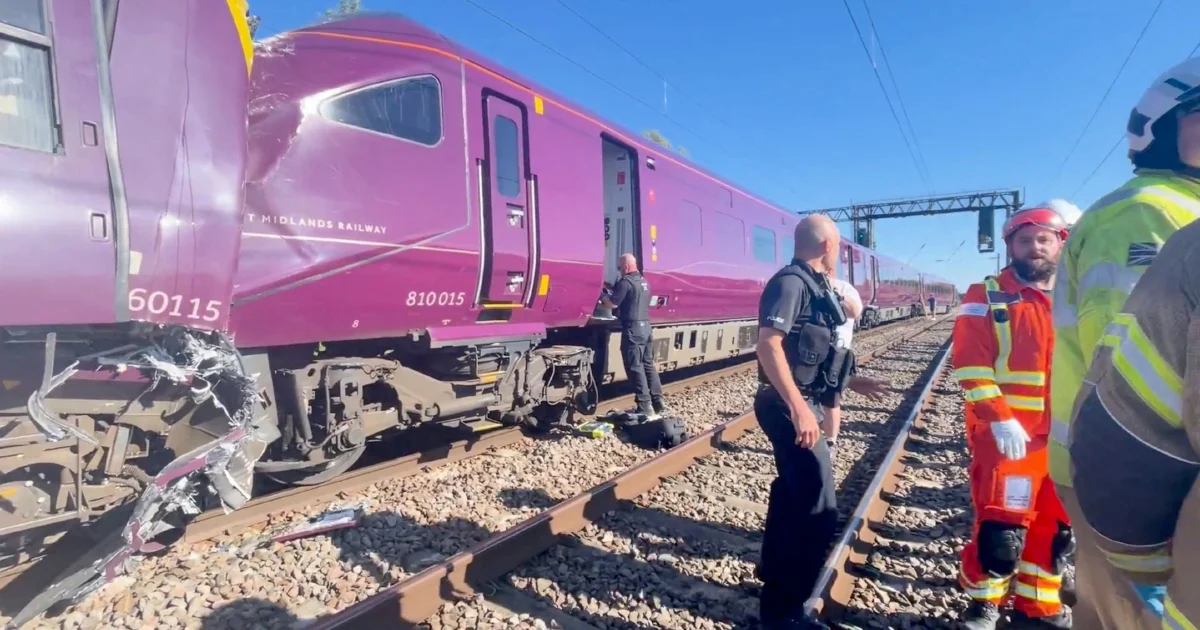
A significant railway disaster unfolded north of the British capital on Friday when two passenger trains came into violent contact, resulting in at least one fatality and widespread injuries across multiple casualties. UK emergency services personnel continue to manage the aftermath of what stands as a major transport incident in the region. According to official statements from the authorities, the collision has affected dozens of individuals, with medical teams prioritising those suffering severe injuries as emergency protocols remain in effect.
Among the injured passengers and staff, eleven have been classified as sustaining "very serious" injuries, prompting coordinated responses from ambulance services, fire and rescue teams, and police departments across multiple jurisdictions. The gravity of injuries sustained varies considerably, complicating the immediate response and necessitating triage decisions at accident locations and receiving hospitals. Medical professionals have mobilised substantial resources to manage the influx of casualties and provide ongoing treatment for those affected by the collision.
Railway collisions, though statistically uncommon in modern Western Europe given extensive safety protocols and technological safeguards, represent amongst the most consequential transport accidents when they do occur. The involvement of two full passenger services magnifies the scale of impact, exposing the inherent risks that persist despite decades of investment in rail infrastructure improvements and safety systems. The Friday incident underscores ongoing conversations within the transportation sector regarding accident prevention measures and emergency response frameworks.
For Malaysian and Southeast Asian observers, railway safety remains an increasingly pertinent concern as regional nations expand their rail networks substantially. Several countries in the region are investing billions in rapid transit systems, intercity rail connections, and integrated transport hubs. The incident in the United Kingdom serves as a sobering reminder of the critical importance of maintenance protocols, staff training, and technological safeguards in preventing catastrophic outcomes. Even in established European networks with mature regulatory environments, such accidents still occur, suggesting that vigilance and continuous improvement represent necessary ongoing commitments.
The circumstances surrounding the collision have initiated formal investigations by UK transport authorities and accident investigation bodies, a standard procedure following major railway incidents. Preliminary inquiries typically focus on identifying mechanical failures, human factors, signal system malfunctions, or environmental conditions that may have contributed to the disaster. Such investigations often extend across weeks or months, generating detailed technical reports that inform policy adjustments and operational modifications across broader railway networks.
Emergency response coordination in this instance involved multiple service sectors working in concert to manage scene safety, casualty evacuation, medical treatment, and information management. The complexity of railway accident response in densely populated regions near major urban centres presents particular challenges regarding access, resource allocation, and communication with affected families. Authorities must simultaneously secure the accident scene, preserve evidence for investigation purposes, provide humanitarian assistance, and manage media and public information flows.
The psychological impact on survivors, witnesses, and first responders represents an often-overlooked dimension of major transport accidents. Trauma support services, counselling provision, and community mental health resources become essential components of comprehensive disaster response alongside immediate medical intervention. Many individuals may experience lasting effects from witnessing or experiencing such incidents, necessitating sustained psychological support frameworks.
Regulation and oversight of railway operations in the United Kingdom falls within the purview of established government bodies and independent safety regulators with substantial technical expertise. Nonetheless, the occurrence of serious collisions despite these frameworks highlights the perpetual tension between operational efficiency, cost containment, and safety maximisation. Transport authorities worldwide continually examine this balance, seeking technological and procedural innovations that enhance safety without rendering rail networks economically unviable.
For developing rail networks in Southeast Asia, partnerships with established European and Asian railway operators and regulators can facilitate knowledge transfer regarding accident prevention and emergency response protocols. Investment in staff training, modern signalling systems, and regular infrastructure maintenance represents crucial foundational work before expanding passenger services substantially. The Friday collision serves as empirical evidence of the consequences when systems fail, regardless of regional context or economic development status.
The broader implications for passenger confidence in rail travel deserve consideration. Major accidents can generate anxiety amongst the travelling public and influence modal choices. However, statistical evidence consistently demonstrates that rail travel, even following serious incidents, remains amongst the safest transport modes when measured across per-kilometre statistics. Continued investment in safety infrastructure and transparent communication regarding accident responses helps maintain public trust in rail networks as viable transport alternatives.
Communications from rail operators and government authorities in the hours and days following such incidents prove critical in shaping public perception and maintaining operational resilience. Clear information regarding the incident circumstances, investigatory processes, and safety measures implemented subsequently demonstrates institutional commitment to passenger welfare and service reliability.