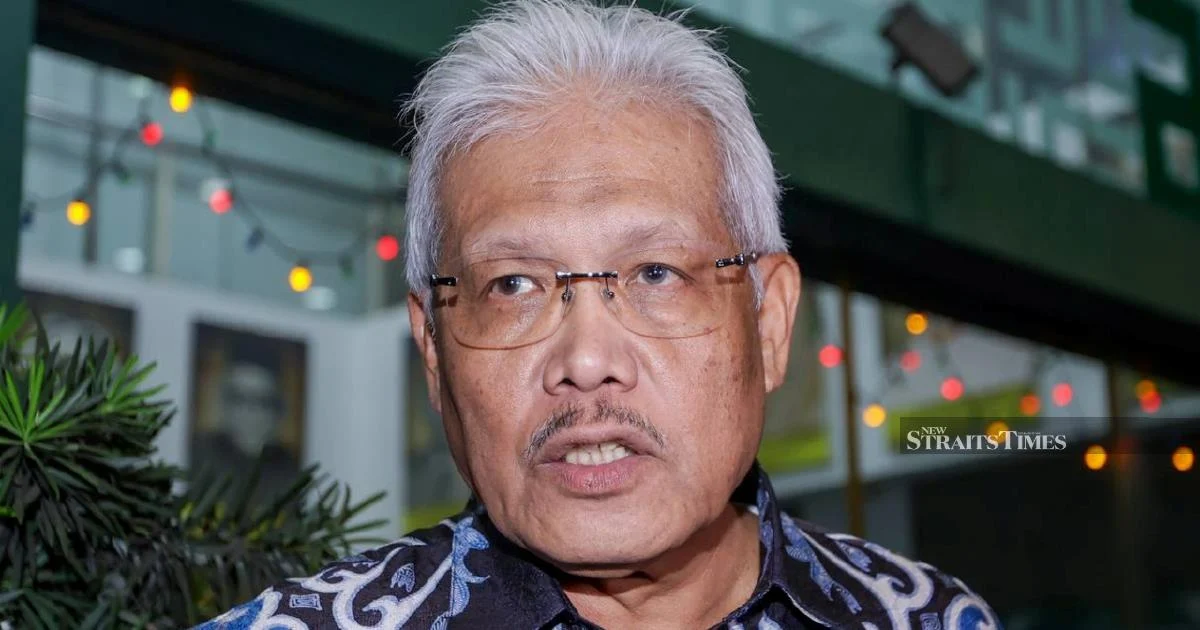
Datuk Seri Hamzah Zainudin is expected to be formally recognised as opposition leader following the submission of an official notice to the Dewan Rakyat Speaker before the legislature reconvenes. The procedural step underscores Malaysia's parliamentary machinery transitioning to accommodate the shifting political landscape that has unfolded in recent months.
The formal notification marks the culmination of negotiations and political realignment that positioned Hamzah at the helm of the opposition coalition. This administrative process, while seemingly technical, carries significant weight in Malaysia's Westminster-style parliamentary system, as it officially designates the leader responsible for coordinating opposition activities in the chamber and accessing corresponding parliamentary privileges and resources.
Hamzah's appointment reflects broader consolidation within the opposition ranks, signalling attempts to establish a cohesive alternative to the current administration. His elevation comes at a juncture when Malaysian politics has witnessed considerable flux, with various political entities recalibrating alliances and repositioning themselves within the fractured landscape that characterises contemporary Malaysian governance.
The timing of the notice submission—deliberately scheduled before parliament's return—indicates efforts to ensure institutional clarity and establish Hamzah's legitimacy as opposition leader within formal parliamentary channels. This procedural correctness is essential for maintaining the dignity of parliamentary institutions and ensuring that all stakeholders recognise the authority and standing of the opposition leadership.
For Malaysian readers and observers tracking parliamentary dynamics, this development carries implications for how opposition-government interactions will unfold during legislative sessions. The opposition leader's role encompasses submitting parliamentary questions, coordinating bloc voting strategies, and articulating alternative policy positions on legislation. Hamzah's confirmation in this position therefore shapes the tenor and effectiveness of parliamentary scrutiny of government decisions.
The announcement originating from Kota Baru reflects the geographic roots and political foundations sustaining the opposition coalition. The location carries symbolic weight, situating the opposition's institutional development within constituencies and communities that form their electoral base, reinforcing the territorial foundations underpinning their parliamentary representation.
From a Southeast Asian perspective, Malaysia's parliamentary structures remain subject to constitutional conventions and procedural protocols that distinguish it from neighbouring legislatures. The formal notification process reflects these institutional frameworks, where opposition leadership carries constitutionally recognised status distinct from mere coalition coordination. This formalisation ensures that parliamentary mechanisms, from attendance rights to speaking privileges, accommodate the opposition's institutional role.
Historically, Malaysia's opposition leadership has shifted multiple times, with each transition requiring procedural regularisation through formal notification to the Speaker. These transitions often reflect underlying electoral and political movements, making them valuable indicators of broader political trajectories. Hamzah's appointment thus represents a datapoint in Malaysia's evolving political narrative, where previous opposition configurations have given way to new arrangements.
The notice submission before the next parliamentary sitting ensures minimal disruption to legislative business and maintains procedural coherence. Rather than introducing administrative confusion mid-session, advance notification allows parliament's administration to adjust protocols, seating arrangements, and procedural accommodations necessary for recognising alternative opposition leadership structures.
For stakeholders monitoring Malaysian politics—from investors concerned with governance stability to regional observers tracking political developments—this formal recognition provides clarity on the opposition's institutional standing and leadership structure. Such administrative certainty, while mundane in appearance, contributes to broader perceptions of institutional predictability that international observers evaluate when assessing Malaysia's political climate.
The opposition leader's role in Malaysia extends beyond symbolic representation. This position grants access to parliamentary resources, enables coordination of committee assignments, and facilitates opposition members' participation in legislative processes. Hamzah's formal recognition therefore unlocks institutional levers enabling the opposition to function effectively as a collective parliamentary force.
Looking forward, Hamzah's confirmed leadership position will likely shape parliamentary dynamics during the next sitting and subsequent legislative sessions. His ability to command opposition discipline, coordinate voting strategies, and articulate compelling alternatives to government policies will determine whether this leadership consolidation translates into genuine political impact or represents merely another institutional rearrangement within Malaysia's chronically fragmented opposition landscape.
The submission of formal notification ultimately represents Malaysia's commitment to observing parliamentary conventions despite the turbulent political environment characterising recent years. By proceeding through established institutional channels rather than attempting to circumvent procedural requirements, the opposition leadership demonstrates respect for parliamentary traditions while securing their position within Malaysia's constitutional framework.