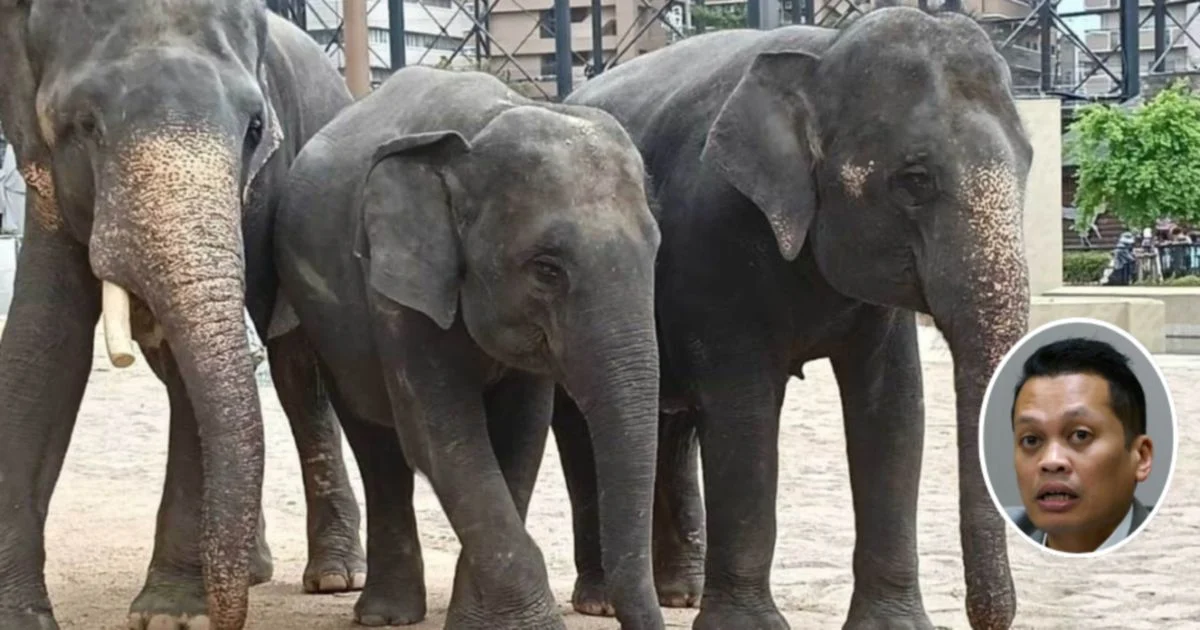
Former Natural Resources and Environmental Sustainability Minister Nik Nazmi Nik Ahmad has categorically rejected claims that he played any role in alleged corruption related to the movement of three elephants destined for a Japanese zoo facility, with authorities investigating whether RM53 million in payments to third parties were improper.
The allegations centre on financial transactions surrounding what appears to be a straightforward wildlife transfer agreement between Malaysian authorities and a Japanese zoological institution. The scale of the sums involved—reported at RM53 million—has raised questions among observers about whether appropriate oversight mechanisms were applied during negotiations and execution of the arrangement. For Malaysian readers familiar with transparency concerns in government dealings, the incident underscores persistent anxieties about the adequacy of checks in international wildlife commerce.
Nik Nazmi's denial comes at a sensitive moment for Malaysia's environmental stewardship narrative. The country maintains one of Southeast Asia's most significant wild elephant populations, with conservation efforts increasingly scrutinised by international partners and domestic stakeholders. Any suggestion of mismanagement or corrupt dealings in elephant welfare or relocation draws immediate attention from global conservation networks and can complicate Malaysia's standing as a responsible custodian of biodiversity.
The minister has served in the Natural Resources portfolio during a period when Malaysia has faced mounting pressure to strengthen protections for endangered wildlife while navigating complex international agreements for animal conservation and research programmes. Elephant transfers, ostensibly undertaken for breeding programmes or research collaboration with foreign zoos, involve multiple government departments and require sign-off from various regulatory bodies. This layered approval process means any irregularities would require coordination across agencies.
The investigation into these payments suggests that authorities are examining whether intermediaries received funds unjustifiably, or whether costs were inflated beyond legitimate transfer expenses. Such practices—if proven—would represent a diversion of public resources under the guise of environmental stewardship. The case carries implications beyond the three individual animals involved, as it touches on how Malaysia manages its natural heritage assets and whether such transactions are shielded from scrutiny through bureaucratic opacity.
For Southeast Asian nations engaged in similar wildlife transfer agreements, the case highlights vulnerabilities in cross-border animal relocation frameworks. These transactions often involve private contractors, logistics firms, veterinary services, and administrative fees spanning multiple jurisdictions. Without robust documentation and transparent tender processes, opportunities for inflated charges or phantom payments multiply. Indonesia and Thailand have encountered comparable challenges in managing wildlife commerce, suggesting a regional pattern requiring coordinated attention.
Nik Nazmi's previous tenure encompassed formulation of wildlife policies and oversight of natural resources management, areas where political decision-making intersects with technical implementation. The allegations implicitly raise questions about institutional safeguards during his watch—whether procurement standards were adequate, whether competitive bidding was enforced, and whether due diligence was conducted on service providers claiming extraordinary fees. Such governance questions resonate with Malaysian audiences concerned about the integrity of public administration across all sectors.
The timing of these allegations appears significant within broader political discourse around accountability in Malaysia's government apparatus. The country has undertaken multiple anti-corruption initiatives in recent years, yet periodic scandals involving public assets continue to undermine confidence in institutional integrity. When allegations surface involving environmental portfolios specifically—areas that command public affection and international attention—they strike at legitimacy across multiple dimensions simultaneously.
Elephant welfare considerations add moral weight to the investigation. International standards for animal relocation demand that transfers serve genuine conservation or research purposes, not profit generation through inflated intermediary costs. If investigations substantiate that Malaysian elephants were transferred while associated payments enriched individuals rather than advancing legitimate objectives, it represents a betrayal of animals entrusted to state protection. This dimension particularly concerns Malaysian civil society organisations focused on wildlife conservation.
The case unfolds within Malaysia's broader commitment to environmental governance, where the Environmental Quality Act and wildlife protection regulations establish frameworks theoretically preventing such irregularities. Yet frameworks remain theoretical unless enforcement mechanisms consistently apply scrutiny to transactions, particularly those involving international partners where documentation can be compartmentalised across jurisdictions. The investigation will ultimately reveal whether existing systems functioned adequately or whether gaps permitted misconduct.
For regional observers, the incident provides instructive lessons about vulnerability points in wildlife management bureaucracies. Elephant transfers between nations represent only one category of international wildlife transaction; similar risks attend timber exports, marine product shipments, and animal breeding programme exchanges. Strengthening transparency in such arrangements benefits conservation efforts while protecting public resources from diversion.
As investigations proceed, attention will focus on documentary evidence, financial flows, and the role of various officials and contractors. Nik Nazmi's categorical denial positions him as one among numerous parties whose actions warrant examination. Whether subsequent findings vindicate or contradict his claims will significantly shape public confidence in Malaysia's capacity to manage natural heritage assets with the transparency and integrity contemporary governance standards demand.

