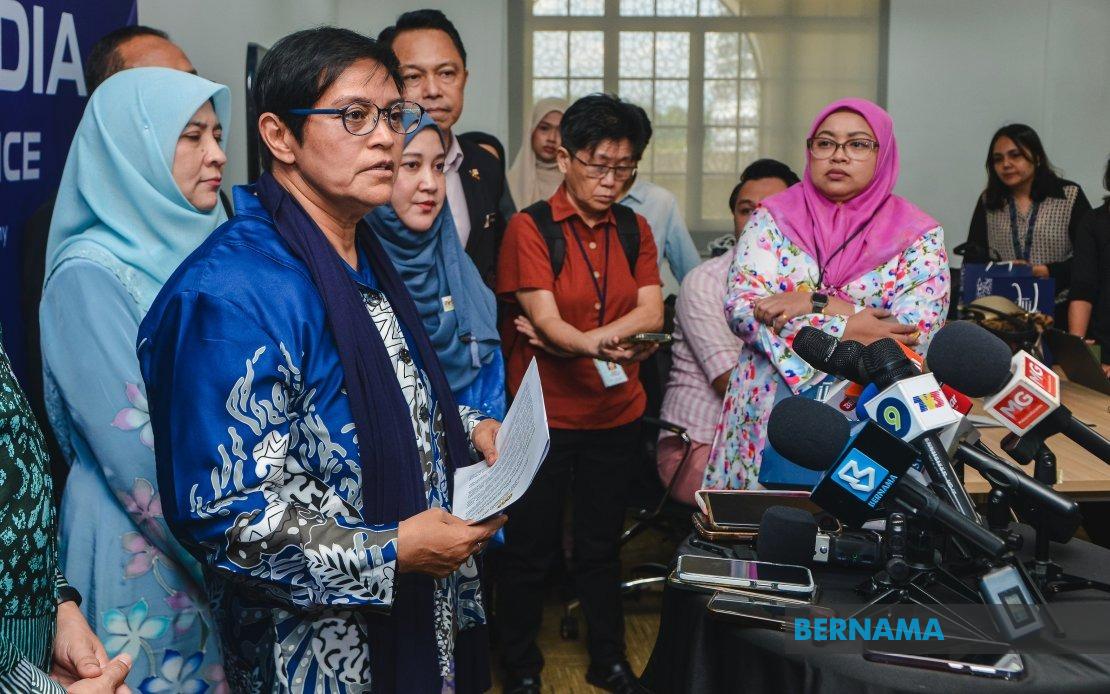
A significant shift in Malaysia's legal framework will hold parents jointly accountable for bullying acts committed by their children under the newly implemented Anti-Bullying Act 2026. Datuk Seri Azalina Othman Said, Minister in the Prime Minister's Department (Law and Institutional Reform), unveiled the provision during the launch of the Anti-Bullying Tribunal headquarters at the Asian International Arbitration Centre in Kuala Lumpur on June 16, marking a departure from traditional criminal law approaches that typically focus solely on individual perpetrators.
The introduction of parental joint liability represents a fundamental restructuring of how Malaysian law addresses bullying-related offences. Unlike conventional criminal provisions where responsibility rests exclusively with the offender, this legislation extends accountability to the family unit. This means parents and guardians may find themselves bearing financial obligations including the payment of fines and associated penalties imposed through tribunal proceedings. The approach reflects an emerging recognition that familial influence and oversight play critical roles in shaping children's behaviour and that shared responsibility mechanisms may prove more effective in deterring misconduct than individual sanctions alone.
Azalina articulated the government's concern about escalating bullying incidents and their devastating consequences, including fatalities resulting from bullying-related trauma. The decision to establish the dedicated tribunal reflects official acknowledgment that existing institutional mechanisms have proven inadequate to address the scale and severity of the problem. By creating a specialized legal body focused exclusively on bullying matters, authorities aim to signal to young people that such behaviour carries genuine legal consequences rather than being dismissed as mere childhood misadventure or school discipline matters.
The Anti-Bullying Tribunal has been staffed with 56 members drawn from legal expertise and child welfare specialization backgrounds, positioning the institution to handle cases with both legal rigour and developmental sensitivity. This composition acknowledges that bullying cases require adjudication grounded not merely in legal doctrine but also in understanding of adolescent psychology, educational contexts, and child protection principles. The tribunal's establishment at the AIAC provides institutional legitimacy while its nationwide operational structure ensures geographic accessibility.
To maximize access to justice and accommodate diverse victim circumstances, the tribunal operates through a distributed model encompassing six physical and virtual hearing zones strategically positioned across the country. These facilities leverage existing infrastructure within the Legal Affairs Division, the Insolvency Department, the Legal Aid Bureau, and vacant courtroom spaces, demonstrating a pragmatic approach to resource allocation. This network ensures that victims and complainants need not travel excessive distances or navigate complex procedural requirements to initiate cases, a critical consideration in a geographically dispersed country like Malaysia.
Crucially, the legislation empowers victims to pursue cases directly before the tribunal regardless of whether bullying occurred within institutional settings such as schools or hostels. This provision eliminates the need for complainants to exhaust internal institutional complaint mechanisms before seeking formal legal redress, potentially reducing delays and ensuring independent adjudication of matters that institutions themselves might be reluctant to escalate. The shift recognizes that institutional self-regulation has limitations and that victims benefit from direct access to impartial legal forums.
To facilitate complaint submission and case registration, the tribunal has implemented a digital portal enabling online case filing. This technological infrastructure reduces barriers to access particularly for rural populations, individuals with mobility constraints, or those uncomfortable with in-person complaint procedures. Digital accessibility has become essential to modern justice administration and its integration into the tribunal's operations reflects contemporary understanding of how legal systems can enhance citizen engagement.
The provision of joint parental liability within the Anti-Bullying Act 2026 carries significant implications for Malaysian families and education sectors. Parents may face financial consequences for children's misbehaviour, creating powerful incentive structures for parental monitoring and intervention in children's social behaviour and peer relationships. This mechanism theoretically encourages greater parental engagement in children's school experiences and social networks, though implementation will require careful calibration to avoid disproportionately penalizing families experiencing socioeconomic hardship or those with children exhibiting uncontrollable behavioural disorders.
From a Southeast Asian perspective, Malaysia's legislative innovation positions it among regional frontrunners in developing comprehensive anti-bullying frameworks with teeth. Many neighbouring jurisdictions rely on administrative rather than legal approaches to bullying, treating it as an educational matter rather than a legal wrong. Malaysia's establishment of a dedicated tribunal with specialized personnel and nationwide infrastructure represents institutional commitment that extends beyond rhetorical government commitment to tangible resource allocation and specialized adjudication capacity.
The legislation's emphasis on shared family responsibility reflects broader social policy trends recognizing that individual behaviour exists within relational contexts and that legal accountability structures must account for these contextual factors. However, the extent to which joint parental liability will prove effective depends substantially on implementation nuances including how tribunals assess parental culpability, what evidentiary standards apply, and how penalties account for family circumstances. These operational questions will substantially influence whether the provision achieves its deterrent objectives or generates unintended consequences.
Azalina's framing of the tribunal launch emphasized raising awareness among children regarding bullying's seriousness and the availability of formal legal channels for redress. This communicative dimension constitutes a crucial component of the legislation's effectiveness, as legal provisions require public knowledge and confidence to achieve behavioural modification. Educational campaigns targeting students, parents, and educators will likely accompany tribunal operations to ensure awareness of rights and responsibilities under the new framework.
For Malaysian education stakeholders including school administrators, teachers, and parents, the Anti-Bullying Act 2026 fundamentally alters the landscape of responsibility and liability. Schools retain their own disciplinary authority but must now contend with parallel legal processes that may subject families to judicial intervention. This dual-track system creates complexity requiring coordination between institutional and legal authorities to avoid contradictory findings or duplicative proceedings. Professional development for educators regarding the new legal framework will be essential to ensuring coherent institutional responses.