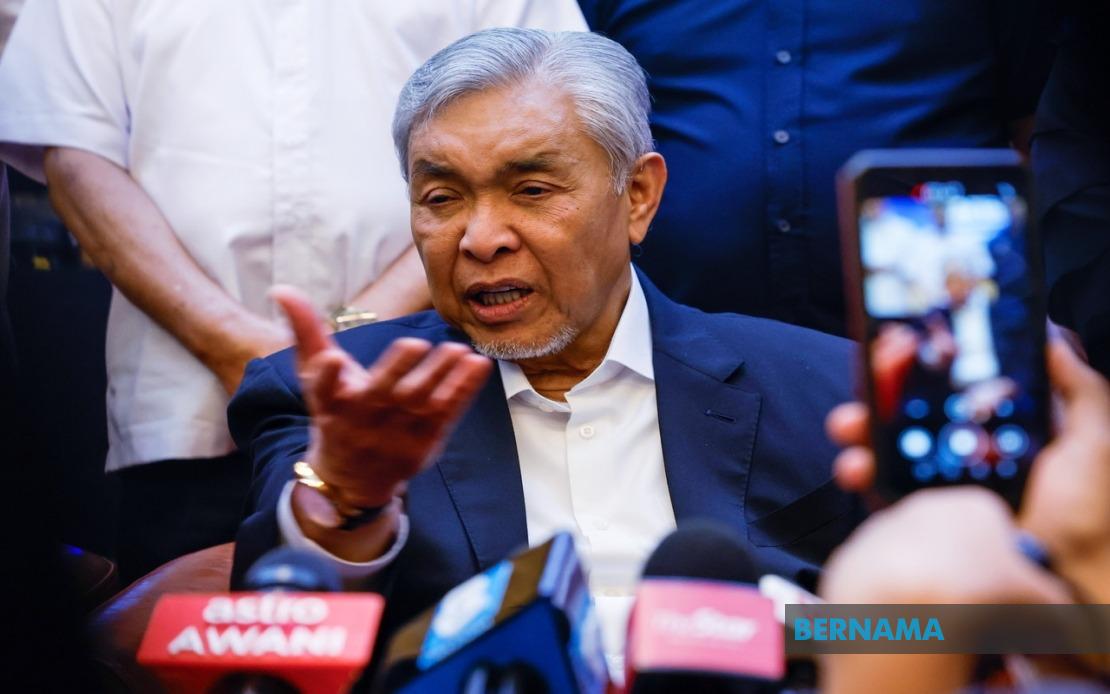
Deputy Prime Minister Datuk Seri Dr Ahmad Zahid Hamidi has urged the administration set to govern Negeri Sembilan following state elections to prioritize policies that foster entrepreneurial success and elevate the state's economic standing on the global stage. Speaking at the Negeri Sembilan Entrepreneurs Gathering Programme in Seremban, Ahmad Zahid stressed that the incoming state government must establish a supportive environment capable of nurturing Bumiputera business owners who can compete not merely within domestic markets but also across international borders. His remarks underscore a broader policy direction from Kuala Lumpur aimed at leveraging state-level administration to strengthen the nation's entrepreneurial ecosystem.
The Deputy Prime Minister, who simultaneously serves as Rural and Regional Development Minister, emphasized that crafting a business-conducive ecosystem forms a central pillar of federal government strategy. He framed entrepreneurial empowerment as intrinsically linked to economic resilience and national competitiveness. Rather than issuing directives from the federal capital, Ahmad Zahid positioned the incoming state administration as a crucial partner in executing this vision, suggesting that local policymakers carry responsibility for translating these principles into concrete regulatory and developmental frameworks. This approach acknowledges that state governments possess distinct advantages in understanding local business contexts and removing ground-level obstacles to entrepreneurial activity.
Ahmad Zahid highlighted Negeri Sembilan's exceptional geographic positioning as a foundational advantage for economic expansion. Located in proximity to Malaysia's administrative heartland and serving as a major commercial gateway, the state possesses inherent structural advantages that remain underexploited. He encouraged entrepreneurs to recognize and capitalize upon emerging opportunities embedded within industrial supply chains and specialized market niches. Importantly, he framed business success not as purely materialistic but as inseparable from religious and ethical obligations, encouraging business owners to discharge zakat responsibilities as part of sustainable commercial practice. This framing attempts to reconcile market-driven entrepreneurship with Islamic principles, a recurring theme in Malaysian economic policy discourse.
The role of MARA, the primary federal agency supporting Bumiputera entrepreneurship, featured prominently in Ahmad Zahid's remarks. Rather than measuring organizational success through capital disbursement volume, he redirected focus toward progression metrics that track how many entrepreneurs advance from nano and micro-scale operations toward established small and medium-sized enterprises capable of competing internationally. This reframing suggests dissatisfaction with traditional metrics emphasizing spending volumes and reflects international best-practice approaches to entrepreneurship support. Ahmad Zahid explicitly called for MARA to establish collaborative relationships with Negeri Sembilan's incoming government, indicating that fragmented federal-state efforts have perhaps hindered past outcomes.
Negeri Sembilan possesses strengths across multiple economic sectors that the incoming administration should leverage strategically. Manufacturing, logistics, agri-food production, halal industries, tourism and the digital economy represent the state's primary competitive advantages. Ahmad Zahid outlined a development agenda targeting simultaneous advancement across these domains through high-impact infrastructure projects, strengthened technical and vocational training systems, modernization of small business operations, expansion of the halal sector's ecosystem and revitalization of tourism attractions. Rather than dispersing resources thinly, this integrated approach concentrates effort across complementary sectors where cumulative advantage effects could generate transformative economic growth.
The Malaysia Vision Valley initiative emerged as a symbolic expression of Ahmad Zahid's aspirations for Negeri Sembilan's transformation. He articulated an expansive vision transcending purely economic metrics, positioning the state as an integrated ecosystem simultaneously offering residential appeal, employment opportunities, business viability, investment returns and generational advancement pathways. This multidimensional framing reflects recognition that sustainable economic development requires balanced attention to quality-of-life dimensions alongside commercial metrics. The emphasis on creating an attractive environment for younger demographics suggests acknowledgment that demographic trends and youth migration represent critical long-term challenges for state economies.
Ahmad Zahid's comments arrive amid broader federal-state negotiations regarding development priorities and resource allocation. While delivered ostensibly as encouragement, his remarks carry implicit expectations that Negeri Sembilan's incoming administration will adopt policies aligning with federal entrepreneurship and Bumiputera advancement objectives. The emphasis on business-friendliness potentially signals federal openness toward regulatory relaxation or incentive structures that private sector advocates have long advocated. For Malaysian states, such signals from deputy leadership positions often precede formal policy pronouncements and resource commitments.
The timing of these remarks, coinciding with state electoral processes, reflects broader Malaysian political dynamics wherein federal leaders campaign for preferred electoral outcomes by articulating policy visions. Ahmad Zahid's emphasis on entrepreneurial empowerment resonates across demographic groups concerned with economic opportunity and social mobility. By framing the incoming government's role as facilitating rather than directing business activity, he positioned market-enabling governance as the federal government's preferred model.
For Negeri Sembilan's entrepreneurs and business associations, Ahmad Zahid's statements established benchmarks against which incoming administrations will be judged. Business community stakeholders will likely reference his entrepreneurship and business-friendliness language when advocating for specific policy changes or investment incentives. The implicit partnership model Ahmad Zahid proposed between federal agencies and state government creates accountability expectations extending beyond electoral cycles. Whether incoming administrations can satisfy these expectations while responding to competing local demands remains uncertain.

