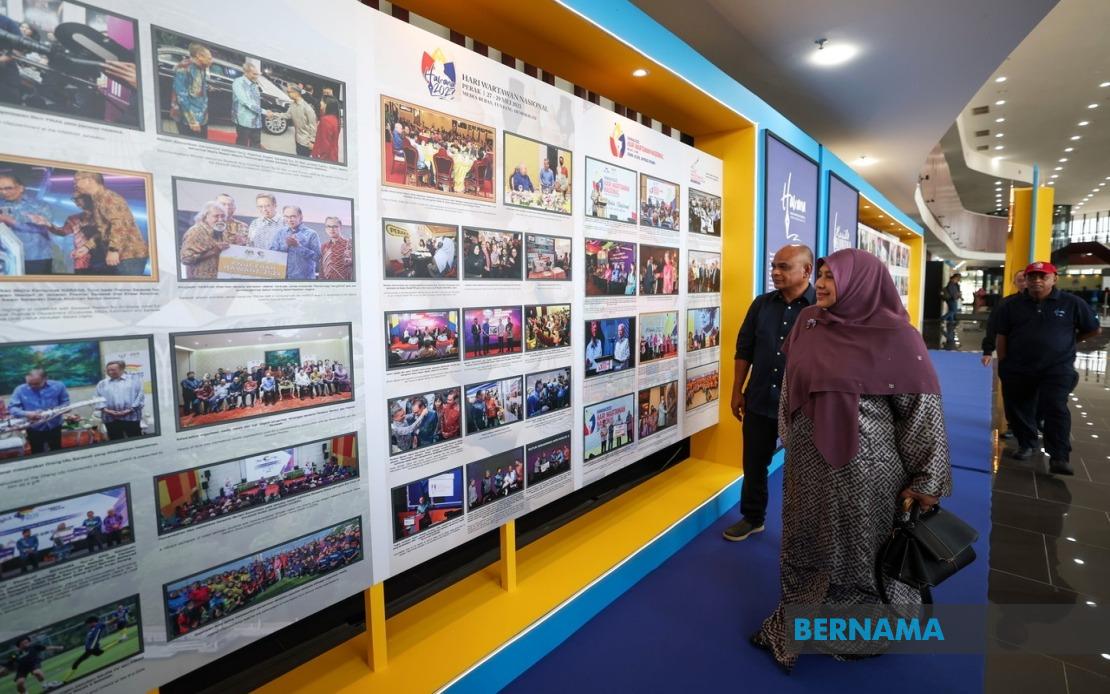
Malaysia's premier journalism gathering will kick off tomorrow in Penang as the National Journalists' Day (HAWANA) 2026 summit prepares to welcome Prime Minister Datuk Seri Anwar Ibrahim as the official guest. Organisers have spent the past three days conducting final preparations at PICCA@Arena Butterworth Convention Centre, with the event expected to draw around 1,000 media practitioners from across Malaysia and internationally to tackle the theme of "Media Integrity Strengthens Credibility".
The working committee overseeing HAWANA 2026 has brought preparations to approximately 80 percent completion, according to Bernama chief executive officer and committee chairman Datin Paduka Nur-ul Afida Kamaludin. Multiple rehearsal sessions have been conducted to guarantee smooth execution of what is positioned as a strategic platform for generating innovative ideas and establishing the trajectory of contemporary journalism in the nation. The summit represents one of the most significant gatherings of media professionals on Malaysia's calendar, serving as a barometer for industry priorities and challenges.
Choosing Butterworth as the venue rather than the traditional location of Kuala Lumpur represents a deliberate shift in the event's geography, one that required meticulous logistical consideration. Nur-ul Afida acknowledged that the northern location introduces distinct challenges, particularly regarding accommodation availability and transportation networks that journalists and other attendees would need to navigate. The planning process therefore demanded extensive coordination with hotel operators throughout Penang to ensure adequate lodging capacity and smooth travel arrangements for both the organising team and participating media personnel.
The relocation northward is anticipated to influence attendance figures compared to previous editions held in the capital. Officials recognise that moving the summit away from Kuala Lumpur, where accessibility and convenience traditionally favour larger turnouts, may result in lower numbers due to factors such as work obligations, travel time, and competing personal responsibilities. This geographic consideration underscores a broader tension in event planning between regional inclusivity and logistical efficiency—a challenge that resonates beyond Malaysia's media sector to other industries managing national gatherings.
Beyond the main summit proceedings, HAWANA 2026 incorporates a broader programme of supplementary events organised collaboratively by the Malaysian Media Council, the Federation of Malaysian Media Clubs (GKMM), and the Malaysian Press Institute (MPI). These satellite gatherings provide thematic depth and networking opportunities that extend the intellectual engagement across multiple platforms, allowing participants to explore specific dimensions of media practice and policy in smaller, more focused settings.
The summit's thematic focus on media integrity carries particular weight in the contemporary Malaysian context, where questions about news reliability, misinformation, and public trust in journalism institutions have intensified. By positioning credibility as a consequence of integrity, organisers signal their conviction that professional standards and ethical practice form the bedrock upon which audience confidence must be constructed. This framing reflects both defensive positioning—addressing persistent criticism of media performance—and aspirational ambition to elevate professional norms across the industry.
The prime minister's scheduled 3 pm opening remarks tomorrow will likely provide official recognition of journalism's role in Malaysia's democratic and economic functioning. Such high-level political endorsement validates the media sector's strategic importance while potentially signalling government priorities regarding media regulation, digital transformation, and the industry's contribution to national development narratives.
Organised by the Ministry of Communications with Bernama as the implementing body, HAWANA functions as Malaysia's foremost mechanism for acknowledging media practitioners' contributions, dedication, and professionalism. The event's institutional weight derives partly from this formal government integration, which contrasts with self-directed industry conferences by lending official status and resources. This governmental partnership also shapes the summit's tone and permitted discourse, influencing which topics receive emphasis and how industry challenges are framed.
The timing of HAWANA 2026 arrives amid broader global conversations about journalism's future viability, technological disruption to news distribution, and evolving relationships between media institutions, platforms, and audiences. Malaysia's media sector navigates these currents while managing distinctive local conditions including linguistic diversity, regional competition, and particular regulatory frameworks. The Penang gathering thus offers opportunity for Malaysian media leaders to exchange perspectives on whether industry responses to these challenges are adequate and aligned across organisations.
For regional observers, HAWANA 2026 provides a window into how one Southeast Asian nation's media establishment addresses questions of professional standards and public credibility during a period of significant industry transformation. Other regional media sectors facing comparable pressures around digital transition, audience fragmentation, and competitive commercial environments may find Malaysian approaches instructive. The summit's emphasis on integrity as credibility's foundation suggests a conviction that technical or commercial solutions alone cannot sustain public trust—a proposition that carries resonance across borders.
As media practitioners begin arriving in Butterworth throughout tomorrow morning, the summit will function as both retrospective recognition of the profession's contributions and prospective forum for imagining journalism's evolution. The balance between celebration and critical examination of industry challenges will likely shape the event's value to attendees seeking not merely validation but substantive engagement with threats to and opportunities for Malaysian journalism's future sustainability and relevance.