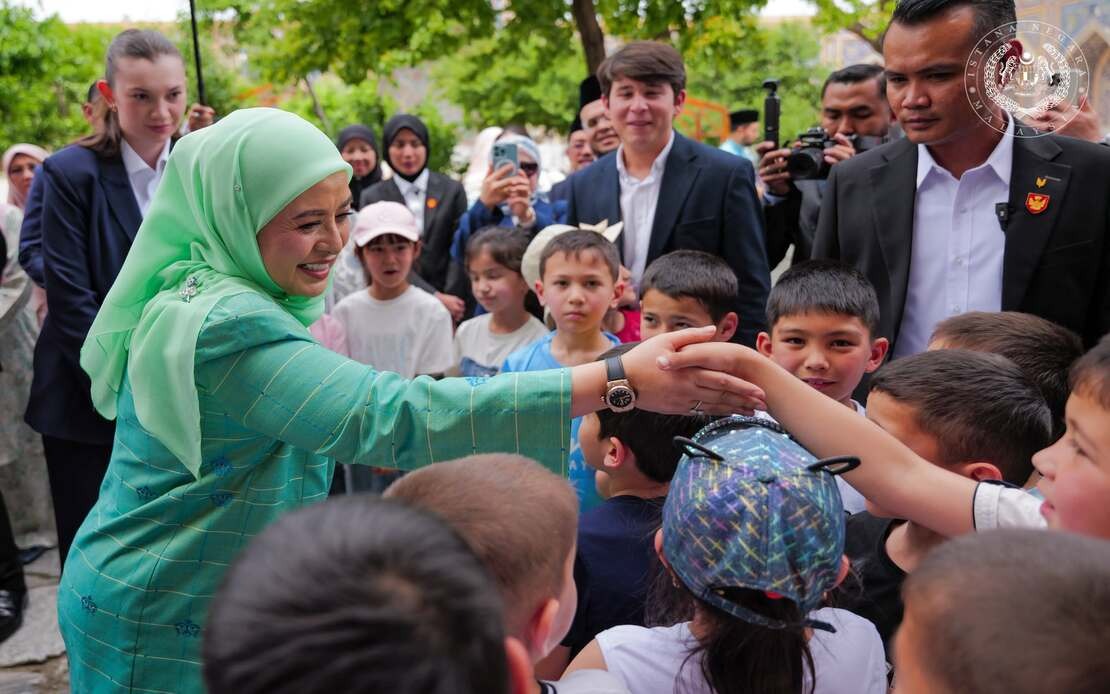
Malaysia's Queen, Raja Zarith Sofiah, has renewed emphasis on mutual respect as a cornerstone value that underpins the nation's enduring social fabric and communal harmony. Speaking through an official statement posted on the Facebook page of Sultan Ibrahim Sultan Iskandar, the Queen highlighted how this foundational principle has consistently shaped Malaysian society and contributed substantially to both national unity and collective well-being. Her intervention at a time of heightened focus on community relations underscores the monarchy's continuing role in articulating shared values that transcend sectarian and ethnic boundaries.
The Queen's remarks carry particular weight given Malaysia's pluralistic demographic composition and history of successfully maintaining interfaith and intercommunal relations despite occasional tensions. By anchoring her message in the concept of mutual respect—rather than invoking more divisive or narrower identities—the Queen positioned this principle as belonging to all Malaysians regardless of their religious faith or ethnic background. This approach reflects a long-standing constitutional tradition in which the monarchy serves as a unifying institution above partisan factionalism, capable of addressing the entire nation in inclusive language.
In her statement, the Queen specifically drew attention to Islamic teachings on civility and neighbourly conduct, citing a hadith attributed to Abu Hurairah RA and documented by Al-Bukhari. The prophetic tradition she referenced encapsulates multiple obligations central to Islamic ethics: believers are enjoined to refrain from harming their neighbours, to treat guests with honour, and to maintain standards of speech by either expressing goodness or maintaining silence. By presenting this Islamic framework for respectful behaviour, the Queen demonstrated how religious principles and national cohesion are mutually reinforcing rather than contradictory, offering a theological foundation for the societal values she advocated.
This grounding in religious teaching serves several important functions within Malaysia's public discourse. For Muslim citizens, it reinforces that their faith tradition contains robust resources for promoting harmony and respectful coexistence. Simultaneously, by emphasizing universal principles of neighbourliness and courtesy that resonate across faith communities, the Queen signalled that such values are not exclusively Islamic property but rather shared aspirations of Malaysian society. This nuanced approach avoids the false choice between religious identity and inclusive nationalism that sometimes mars public discussions in plural societies.
The Queen's remarks were illustrated through reference to a personal encounter that occurred in February at the main entrance of Istana Negara. During that occasion, she engaged graciously with more than one hundred tourists representing various nationalities and backgrounds. The anecdote demonstrated how mutual respect operates in practical interactions between the Queen, as representative of Malaysian sovereignty and culture, and international visitors seeking to experience the country. Rather than remaining abstract, the principle gained tangible meaning through the Queen's demonstrated courtesy toward foreigners, modelling the comportment she advocated.
This episode carries implications beyond mere ceremonial significance. Malaysia's tourism sector and international standing depend substantially on the country's reputation for welcoming diversity and treating visitors with courtesy. The Queen's visible engagement with foreign tourists implicitly endorsed the nation's openness to the world and reinforced a message that hospitality and respect are not tangential courtesies but central Malaysian values. For countries in Southeast Asia navigating complex questions about balancing national identity with regional and global integration, the Queen's example suggested that such integration need not compromise core values.
The timing of the Queen's intervention merits consideration within Malaysia's broader social and political context. Periodic reminders from the institution of the monarchy about foundational national values often serve to recalibrate public discourse when tensions have risen or polarization has increased. By reaffirming mutual respect at this juncture, the Queen positioned the monarchy as a guardian of the constitutional consensus that enabled Malaysia's formation and continues to condition its peaceful functioning. This custodial role, rooted in the Malaysian constitution, grants the institution particular authority to speak on matters of national unity.
The Queen's emphasis on courteous conduct both domestically and internationally also addressed a dimension of national image-building that receives less attention than economic or diplomatic initiatives. How Malaysians treat one another, and how they receive outsiders, shapes perceptions of the country that no marketing campaign can fully control. By articulating mutual respect as a core national value, the Queen contributed to establishing an aspirational standard against which Malaysian behaviour could be measured and improved. She was, in effect, calling the nation to live up to its own best understanding of itself.
Moreover, the Queen's invocation of Islamic sources while advocating for conduct that benefits all inhabitants reflected a particular vision of how Malaysia's constitutional settlement negotiates the relationship between Islam's special position and the rights and dignity of non-Muslim citizens. The framework presented—in which Islamic principles generate ethical obligations toward all neighbours regardless of their faith—suggested that the interests of religious communities and the interests of national cohesion fundamentally align rather than conflict. This represents a consistent monarchical message, one that has historically served Malaysia well in periods of both relative harmony and heightened sectarian sensitivity.
For Malaysian readers and observers across Southeast Asia, the Queen's statement carries lessons about the mechanics through which pluralistic societies maintain cohesion without requiring citizens to abandon their particular identities. The answer, according to this royal articulation, lies not in forcing a false unity that denies difference, but in establishing shared commitments to basic principles—mutual respect, neighbourly conduct, careful speech—that allow different communities to coexist while pursuing their distinct paths. This vision, grounded in specific religious and cultural traditions yet articulated in universally resonant language, offers a template that other diverse societies might study.
The Queen's careful deployment of religious teaching alongside inclusive nationalism also demonstrates how institutional actors can help shape the terms of public conversation. By choosing to emphasize Islamic sources that counsel respect for all and restraint in speech, rather than teachings that might be invoked to justify exclusion or dominance, the Queen modelled a selective use of tradition oriented toward social peace. This curating function—deciding which aspects of inherited wisdom to foreground—represents an important, if underappreciated, contribution that national institutions make to maintaining the civic health of plural democracies.