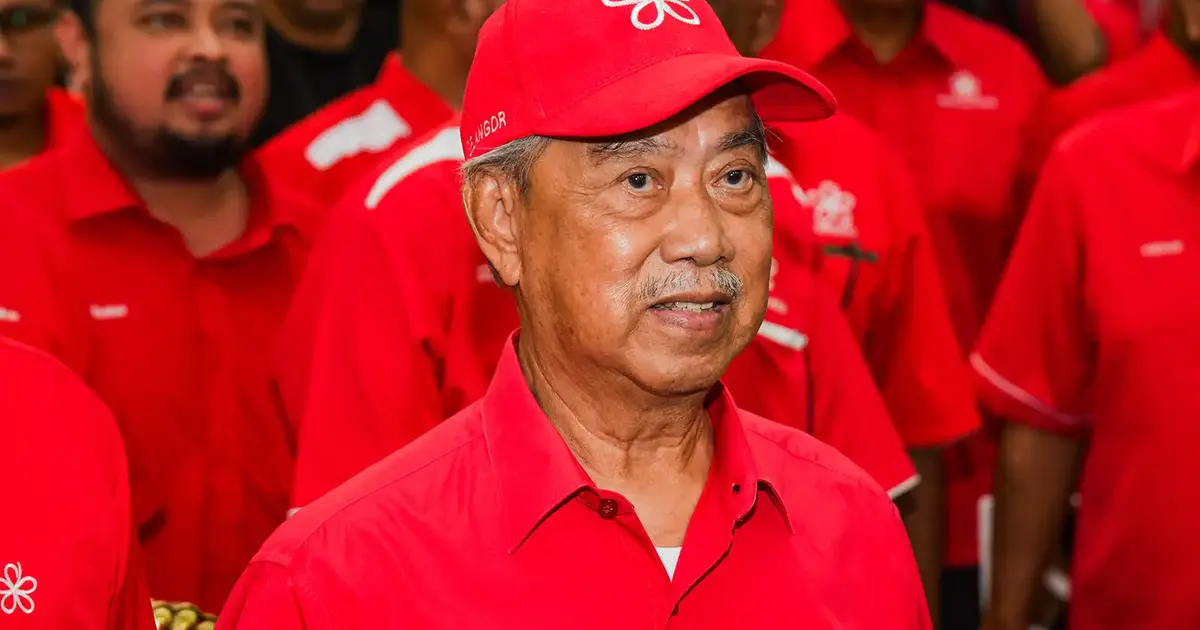
Bersatu president Muhyiddin Yassin has expressed confidence that his party can successfully court non-Malay voters without relying on its former alliance partner Parti Islam Se-Malaysia (PAS), signalling a strategic pivot in the party's coalition-building approach ahead of forthcoming electoral contests. The assertion represents a significant shift in Bersatu's political positioning, suggesting the party believes it can broaden its appeal beyond its traditional Bumiputera voter base by repositioning itself as independent from PAS's ideological framework.
Muhyiddin's optimism stems from his analysis of past electoral performance, which he attributes not to inherent limitations within Bersatu itself but rather to voter reservations about PAS's particular brand of Islamic politics. According to his assessment, substantial segments of the non-Malay electorate—comprising Chinese, Indian, and other minority communities representing approximately 40 per cent of Malaysia's population—have historically steered clear of coalitions featuring PAS because of discomfort with what they perceive as the party's rigid religious positioning and rhetoric. This interpretation suggests that previous electoral setbacks reflected coalition-level resistance rather than fundamental rejection of Bersatu's own platform.
The Bersatu president's confidence carries considerable weight within Malaysian political circles, as it implies a deliberate deprioritisation of the Bersatu-PAS partnership that dominated coalition dynamics in recent years. For Malaysian observers, this signals evolving fault lines within Malay-Muslim political blocs and the possibility of reconfigured electoral alliances in upcoming contests. The statement also reflects Muhyiddin's recognition that Malaysia's demographic diversity requires sophisticated political messaging—parties cannot rely solely on ethnically-segmented voter bases if they aspire to govern effectively or build sustainable parliamentary majorities.
Historically, Bersatu emerged from the Pakatan Harapan coalition before pivoting toward Perikatan Nasional, a partnership that included PAS. During this period, the party faced consistent challenges penetrating non-Malay constituencies, winning minimal representation among Chinese and Indian voters. Muhyiddin's current argument posits that these difficulties resulted from voter perception that Bersatu was merely a vehicle for PAS's ideological agenda rather than an independent political force with its own distinctive policy platform addressing diverse community concerns.
For non-Malay voters in Malaysia, this repositioning carries practical implications. If Bersatu successfully distances itself from PAS's political identity and cultivates independent policy positions on religious freedom, secular governance, and minority community protections, the party could plausibly compete for opposition-minded non-Malay votes currently anchored within Democratic Action Party (DAP) and other non-communal political entities. Such a shift would fundamentally alter Malaysia's electoral mathematics, potentially fragmenting opposition unity while offering Bersatu an alternative growth trajectory.
The regional context further contextualises Muhyiddin's confidence. Throughout Southeast Asia, Islamist parties have experienced mixed fortunes when attempting to broaden appeal beyond core constituencies. Thailand's Experience with Puea Thai, Indonesia's evolution of Prosperous Justice Party, and the Philippines' regional Muslim political parties suggest that religious-oriented parties pursuing wider electoral bases require deliberate ideological repositioning and distinct messaging strategies. Muhyiddin appears to recognise that Bersatu cannot maintain simultaneity as both a Bumiputera-focused party and a credible vehicle for non-Malay political participation without explicit separation from overtly religious political partners.
Critically, however, Muhyiddin's assessment may underestimate structural barriers confronting any party seeking to transcend Malaysia's established ethnic voting patterns. Decades of electoral sociology research demonstrates that communal voting orientations run extraordinarily deep, shaped by historical experiences, institutional frameworks, and media consumption patterns that reinforce group-based political preferences. Chinese Malaysian voters, for instance, have demonstrated remarkable consistency in supporting DAP or similar non-communal parties across multiple electoral cycles, suggesting that coalition reconfiguration alone may insufficient to generate substantial vote-switching toward Bersatu.
Moreover, the credibility challenge facing Bersatu cannot be overlooked. The party's recent history includes pivots that some observers characterise as opportunistic rather than principled, including its formation circumstances and subsequent strategic repositioning. For non-Malay voters accustomed to viewing Malaysian political parties through the lens of trustworthiness and ideological coherence, Bersatu's track record may present obstacles to genuine political rehabilitation that rhetorical repositioning alone cannot overcome. Whether voters perceive Muhyiddin's current positioning as authentic rebranding or tactical repositioning will substantially influence the party's electoral prospects.
Bersatu's potential success in attracting non-Malay support would reshape Malaysia's political geography considerably. A three-way or more fragmented electoral landscape among Bumiputera-focused parties, non-communal opposition forces, and independent candidates could introduce unprecedented complexity into coalition formation processes and governance arrangements. For Malaysia's minority communities, such fragmentation could theoretically enhance their bargaining power in post-election coalition negotiations, though it equally risks marginalising minority concerns if fragmented coalition governments prove unstable or ineffective.
Muhyiddin's confidence ultimately reflects broader tensions within Malaysian politics regarding the sustainability of ethnically-segmented party systems in an increasingly sophisticated electorate. Whether Bersatu can authentically transform itself into a genuinely non-communal political force, or whether its efforts remain constrained within Bumiputera-majority frameworks regardless of rhetorical claims, will become apparent through concrete policy articulation and demonstrated governance commitments rather than presidential assertions alone. The coming electoral period will provide crucial evidence regarding whether Malaysian voters remain willing to consolidate political identities along historical ethnic lines or whether nascent appetite exists for political entities offering genuinely cross-communal platforms.

