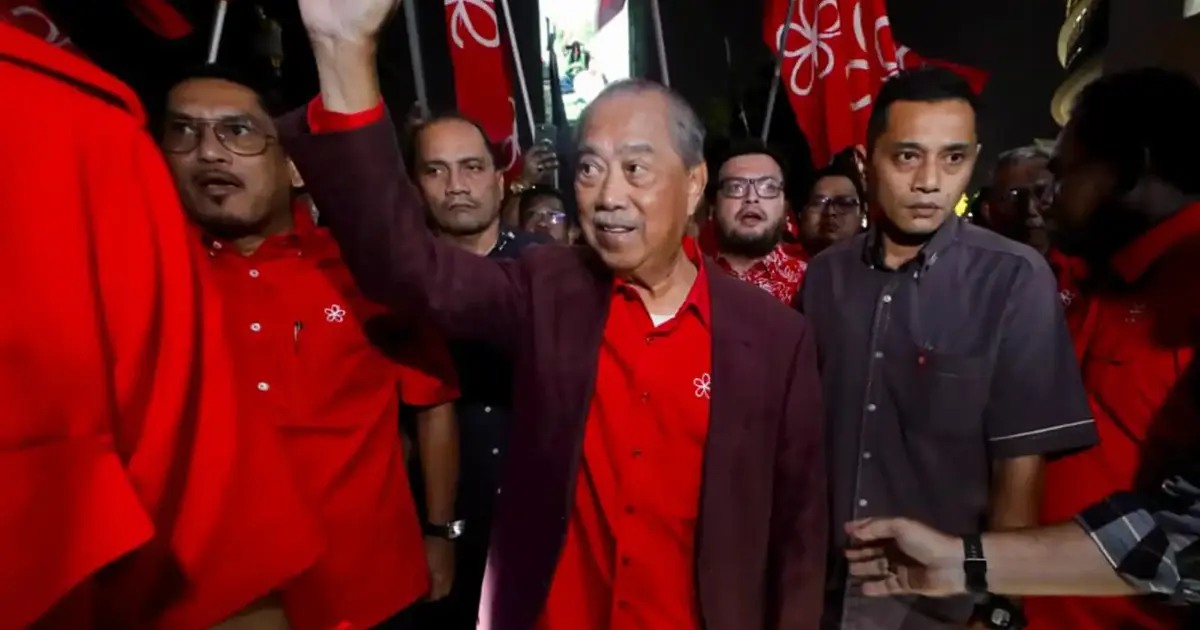
Malaysian United Indigenous Party (Bersatu) leader Muhyiddin Yassin has demonstrated significant grassroots backing, with over 200 party members gathering in his support as the party prepares for a consequential internal gathering that is poised to shape its political trajectory in coming months.
The show of solidarity underscores Muhyiddin's continued influence within Bersatu's party machinery, despite periodic tensions that have marked the coalition's recent history. The assembled supporters reflect a cross-section of party loyalists who remain committed to his leadership direction as the party navigates complex political terrain in Malaysia's federal and state landscapes. Such demonstrations of support carry weight in internal party dynamics, where the consolidation of backing from grassroots members can significantly influence decision-making at leadership levels.
The forthcoming Bersatu meeting represents a pivotal moment for the party as it addresses multiple strategic imperatives simultaneously. Foremost among these is the preparation for state elections scheduled in Johor and Negeri Sembilan, two constituencies that hold considerable political significance within the wider Malaysian electoral landscape. These state contests will serve as important barometers of Bersatu's electoral viability and its capacity to maintain or expand its presence in crucial state assemblies where it currently holds representation.
Electoral planning for these two states carries implications that extend beyond their immediate boundaries. Johor, as Malaysia's southern industrial powerhouse with substantial economic and demographic weight, represents territory where strong performance could reinforce Bersatu's standing as a consequential political force. Negeri Sembilan, meanwhile, offers opportunities for consolidation within a state where Bersatu has established some measure of political presence. Success in either or both contests would meaningfully enhance the party's bargaining power within Malaysia's broader political ecosystem.
Equally significant to the electoral agenda is the discussion surrounding Bersatu's relationship with the Pan-Malaysian Islamic Party (PAS), an ally with which Bersatu has navigated a complex partnership spanning several years. The nature of this coalition has evolved considerably, reflecting both shared political interests and inherent tensions that periodically surface when interests diverge. The forthcoming meeting appears positioned to recalibrate this partnership, potentially clarifying expectations, delineating spheres of influence, or resolving outstanding grievances that may have accumulated.
The PAS-Bersatu alignment represents a fundamental structural element within Malaysia's political opposition framework. Both parties have worked to present a united front against ruling coalitions, yet their distinct voter bases, ideological emphasis, and territorial strongholds create natural friction points that require continuous management. PAS's focus on Islamic-oriented governance contrasts with Bersatu's broader multiethnic appeal, a tension that surfaces repeatedly in joint political ventures.
Muhyiddin's consolidated backing ahead of this meeting suggests he enters negotiations with strengthened internal legitimacy. The ability to command over 200 supporters in a public demonstration signals that party grassroots remain aligned with his vision, a crucial asset when navigating internal party discussions. In Malaysian political culture, where personal leadership and demonstrated support carry substantial weight, such mobilizations serve as both symbolic affirmation and practical leverage.
For Malaysian observers monitoring political developments, the Bersatu meeting carries implications for the broader trajectory of opposition politics. The success or failure of electoral preparations in Johor and Negeri Sembilan will indicate whether this coalition possesses the coherence and strategic acuity necessary to mount competitive challenges. Simultaneously, the recalibration of the PAS-Bersatu relationship will signal whether these two parties can sustain collaborative arrangements or whether internal strains will force greater independence in political positioning.
The timing of this gathering occurs against a backdrop of shifting Malaysian political dynamics, where coalition formations and electoral alliances remain fluid and subject to rapid reconfiguration. Bersatu's ability to present a unified front, project clear electoral strategy, and maintain productive partnerships with allied parties will substantially determine its political relevance in the period ahead. The meeting therefore represents not merely an internal party procedure but a significant moment in Malaysia's broader political repositioning.
For Southeast Asian observers, Bersatu's internal cohesion and strategic direction carry relevance for understanding Malaysia's political stability and the viability of its democratic institutions. The demonstrations of support for Muhyiddin and the substance of discussions regarding electoral strategy and coalition management offer windows into how Malaysian political parties navigate the complex terrain of democratic competition, internal governance, and coalition maintenance in a rapidly evolving regional context.

