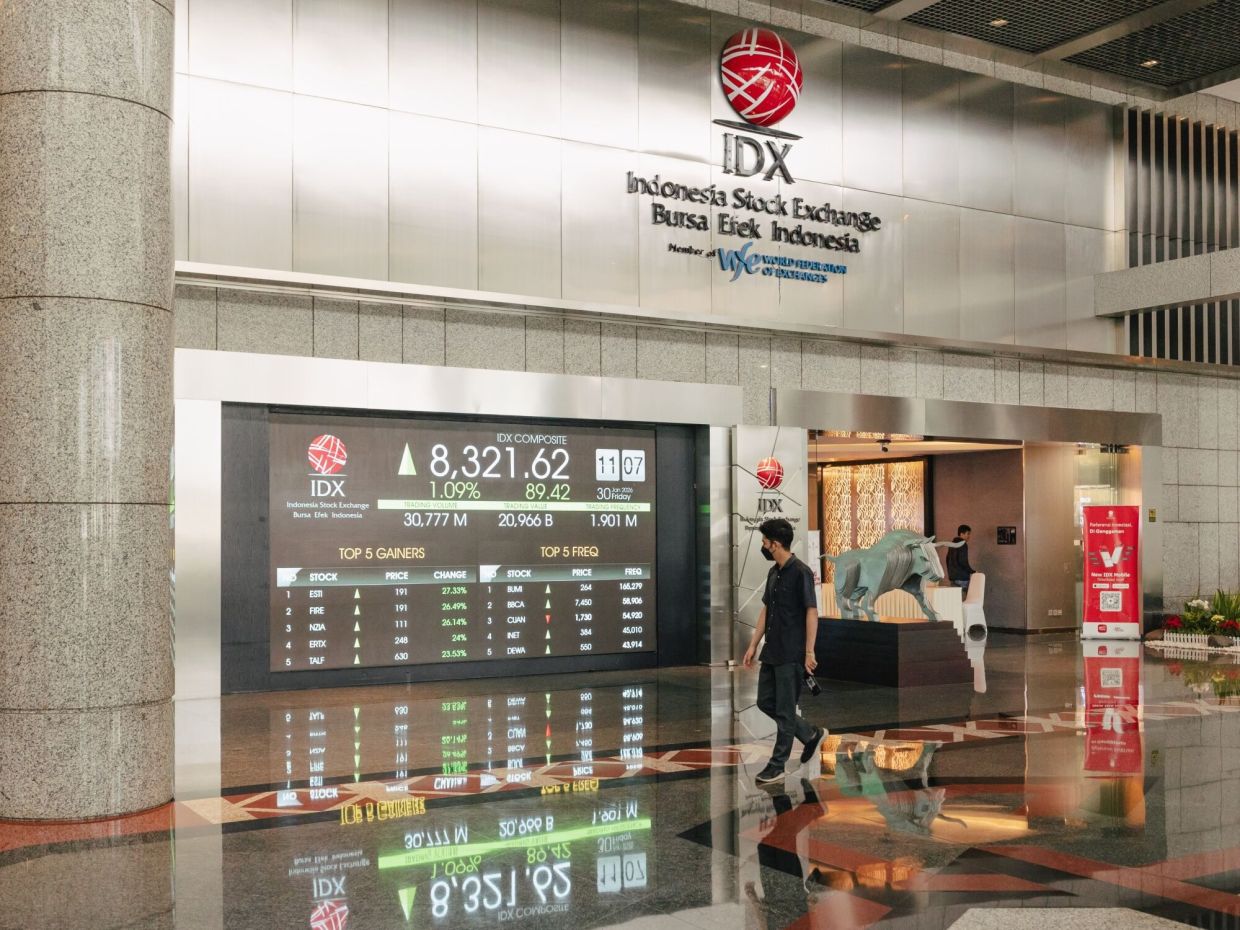
Global index provider MSCI has reignited alarm about Indonesia's suitability for foreign investment, pointing to murky ownership structures and coordinated trading activity that suggest fundamental weaknesses in market integrity. The timing is particularly bruising for Southeast Asia's largest economy, which will face MSCI's crucial classification decision within the coming week—a ruling that could precipitate up to $13 billion in capital flight if the index giant demotes Indonesia from emerging market to frontier status.
Thursday's market accessibility review from MSCI represents a significant escalation of the transparency saga that has gripped Indonesia's capital markets since January, when the index provider first warned of potential downgrade risks. The fresh assessment specifically downgraded Indonesia's information flow criterion to negative, reflecting systemic problems in how shareholding data is disclosed and how trades are executed. These deficiencies matter enormously because they distort price discovery mechanisms and prevent international fund managers from accurately calculating what portion of a company's shares are genuinely available for purchase by foreign investors—a critical measure known as free float.
The ramifications of MSCI's scrutiny have already been profound. Indonesia's stock market has become the worst performer among major emerging markets globally, with the benchmark Jakarta Composite Index plummeting 29 per cent so far this year. Foreign investors, spooked by both the transparency questions and broader macroeconomic deterioration, have dumped approximately $3.65 billion worth of Indonesian equities during 2026. For a nation that once ranked as a darling among emerging market investors, this reversal underscores how quickly investor sentiment can evaporate when governance credibility erodes.
Indonesian authorities have scrambled to address MSCI's concerns through a series of remedial steps, beginning after the January warning prompted dramatic personnel changes at the Indonesia Stock Exchange and the Financial Services Authority, with the heads of both institutions resigning on the same day. Regulators subsequently raised the minimum free float requirement for listed companies from 7.5 per cent to 15 per cent, a substantial tightening aimed at preventing individual tycoons from maintaining excessive control over publicly traded enterprises. Yet despite these moves, transparency anxieties have persisted, with MSCI extending its review in April and subsequently removing six companies from its indexes in May—most with significant connections to prominent business tycoons—signalling that the index provider remains unconvinced by the pace of institutional reform.
Not all market observers share the gloomiest interpretation of MSCI's assessment. Mohit Mirpuri, a fund manager at SGMC Capital in Singapore, suggested that the latest review, while concerning, should be read more judiciously than alarming headlines might indicate. He noted that only one accessibility measure actually deteriorated, whereas Indonesia continues to score favourably relative to major peer economies including South Korea, China, and India across several important benchmarks. Mirpuri's base case scenario is that Indonesia will successfully retain its emerging market classification, though this analysis underscores how fragile market confidence has become—even partially positive news requires significant interpretive charity.
The opacity problems that MSCI has flagged extend beyond the domestic governance realm into currency market dysfunction, a particularly pressing issue for multinational investors seeking to move capital in and out of rupiah-denominated assets. MSCI's review noted that Indonesia lacks an efficient offshore currency market while simultaneously facing constraints in the onshore forex market, compounding the difficulty of executing large international transactions without moving prices significantly. This infrastructure gap matters acutely for institutional investors managing large positions, as it effectively increases the cost of capital allocation to Indonesia.
The broader context amplifies the stakes considerably. Indonesia under President Prabowo Subianto faces mounting economic headwinds that extend well beyond the stock market's governance failures. Populist policy initiatives combined with genuine concerns about fiscal sustainability have pummelled the rupiah to record lows, forcing Bank Indonesia to aggressively raise interest rates in recent weeks to defend the currency. The $1.4 trillion economy, which weathered emerging market crises better than many peers in previous cycles, has suddenly become a source of instability rather than resilience in regional financial conditions.
International credit rating agencies have registered their own loss of confidence. Both Moody's and Fitch revised Indonesia's debt rating outlooks to negative earlier this year, with both agencies citing eroded policymaking credibility as their primary rationale. When credit raters and index providers simultaneously flag governance concerns, it typically signals that problems run deeper than episodic policy errors—suggesting instead structural weaknesses in institutional capacity and political will to implement sustained reform. For Malaysian investors and financial institutions, Indonesia's woes carry particular significance given the deep regional trade, investment, and currency linkages between Southeast Asia's two largest economies.
The MSCI decision next week will likely hinge on whether the index provider judges Indonesia's recent reform efforts as credible and sufficient, or merely cosmetic responses designed to temporarily mollify international critics. A downgrade would automatically force passive index-tracking funds to sell their Indonesian holdings, since those funds replicate whatever company selection and weighting MSCI prescribes. Active fund managers benchmarked to MSCI indexes would simultaneously face pressure to reduce exposure to avoid underperformance. The cascading effect of such forced selling would almost certainly depress Indonesian equities further, potentially triggering additional policy deterioration and reinforcing negative expectations.
Indonesia's capital markets regulator and the stock exchange have been notably quiet about the latest MSCI assessment, neither responding to requests for comment on Thursday's developments. This silence may reflect genuine uncertainty about how to address MSCI's concerns, or alternatively, a determination to allow market dynamics to speak for themselves ahead of next week's classification verdict. Either way, the coming days will prove consequential for Indonesia's standing among global investors and its broader economic trajectory.

