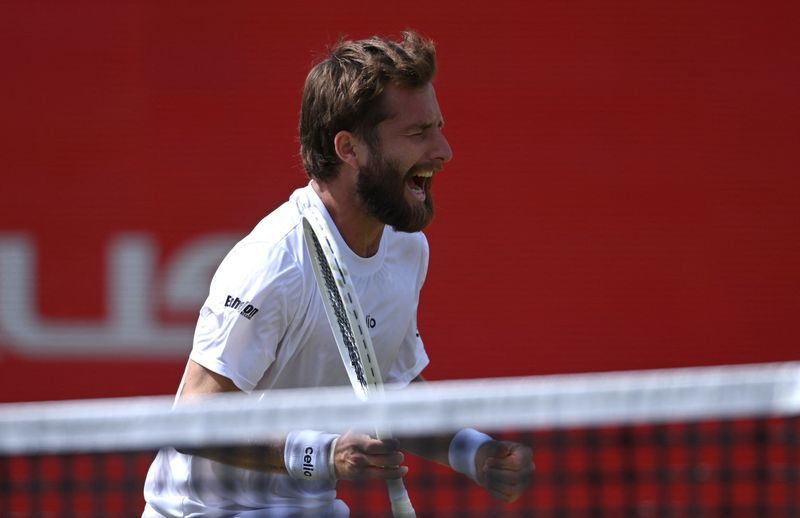
French tennis player Corentin Moutet's brief run at London's prestigious Queen's Club championship has proved costly after disciplinary sanctions effectively wiped out his earnings from the tournament. The 27-year-old, currently ranked 36th in the world, incurred a $40,000 fine from the ATP for conduct deemed unsportsmanlike during an on-court interview with the BBC following his opening-round victory over fellow Frenchman Giovanni Mpetshi Perricard. The penalty represents nearly the entirety of his $43,000 prize purse for advancing to the second round, leaving him with minimal financial benefit despite his competitive success on the grass courts.
The incident unfolded when Moutet was being interviewed immediately after his match victory. During the conversation, he used profanity seven times while discussing his performance, including a particularly heated response to being aced on match point by a 142mph second serve. When the interviewer politely requested that he refrain from repeating the specific expletive, Moutet continued using it three additional times before the BBC was forced to terminate the interview early. Formal apologies were subsequently issued to both the courtside audience and television viewers, marking an awkward moment in what should have been a celebratory post-victory appearance.
Following the disciplinary action, Moutet's appeal of the ATP fine has been filed, suggesting the player contests the severity of the punishment. However, given the precedent of professional tennis conduct standards and the clarity of the on-air incident, observers question whether the appeal will succeed in reducing the substantial financial penalty. The fine essentially transforms what should have been a tournament highlight into a financial loss, illustrating how conduct violations in modern professional tennis can overshadow on-court achievements and create meaningful consequences for players.
Moutet's behaviour at Queen's Club sits within a troubling pattern of disciplinary issues that have plagued his career. In 2022, the French player was defaulted from the Adelaide International after directing profanities at the umpire during his match against Serbian competitor Laslo Djere. That incident represented a more severe sanction—complete removal from competition—demonstrating that tennis authorities take verbal misconduct seriously, whether directed at officials or broadcast media. The combination of these incidents raises questions about whether Moutet requires additional support in managing emotions during high-pressure competitive situations.
Beyond the individual incident at Queen's, the French Tennis Federation has previously intervened in Moutet's career trajectory. In 2022, the federation took the step of withdrawing support from the player due to behavioural concerns, a measure that can significantly impact funding, coaching access, and tournament preparation opportunities for developing professionals. This institutional response from France's governing body suggests that his disciplinary problems have moved beyond isolated incidents to represent a broader pattern recognised by the national federation as requiring intervention.
The financial impact of this Queen's fine carries broader implications for professional tennis economics. Lower-ranked players like Moutet depend on consistent tournament earnings to maintain their careers, fund coaching teams, and cover travel expenses. A single $40,000 penalty effectively erases weeks of tournament prize money for players outside the elite tier, making such sanctions particularly consequential. For context, Moutet earned just enough to cover his fine through reaching the second round, meaning his entire effort at Queen's—travel, preparation, and competitive labour—generated no net financial return.
Moutet's subsequent exit from Queen's came at the hands of Spain's Alejandro Davidovich Fokina in the second round, meaning his tournament run ended shortly after the interview incident. This raises questions about whether the controversy and surrounding disciplinary proceedings affected his mental state heading into his next match. Professional athletes often struggle with the psychological aftermath of public criticism or institutional discipline, potentially impacting their competitive focus and performance in immediate subsequent matches.
The incident also reflects the evolving landscape of professional tennis media engagement. Broadcasters increasingly expect athletes to participate in on-court interviews as contractual obligations, yet players remain subject to strict conduct standards during these appearances. The tension between creating engaging, authentic television moments and maintaining decorum standards creates a challenging position for competitors who may be emotionally charged immediately after intense competition. Moutet's apparent attempt to later frame his language as joking on Instagram suggests he may not fully grasp how his comments were perceived by audiences and governing bodies.
For Malaysian and regional tennis fans, the incident underscores the universal application of professional conduct standards across the international circuit. Whether competing at Australian, European, or other tournaments globally, players face consistent expectations regarding respectful behaviour during media obligations. This standardisation protects the sport's image and ensures that talent alone—regardless of nationality—cannot exempt players from disciplinary consequences when they breach conduct codes. The Queen's incident serves as a reminder that professional tennis operates within structured governance systems with real financial and competitive consequences.
Looking forward, Moutet faces the dual challenge of competing at the highest professional levels while managing what appears to be a struggle with emotional regulation during moments of frustration. His ranking suggests capability to compete against top players, yet repeated disciplinary incidents risk becoming a defining characteristic of his career rather than his tennis ability. Whether his ATP appeal succeeds or his federation provides additional support structures, the 27-year-old must demonstrate genuine behavioural change to rebuild both his professional reputation and his career trajectory.

