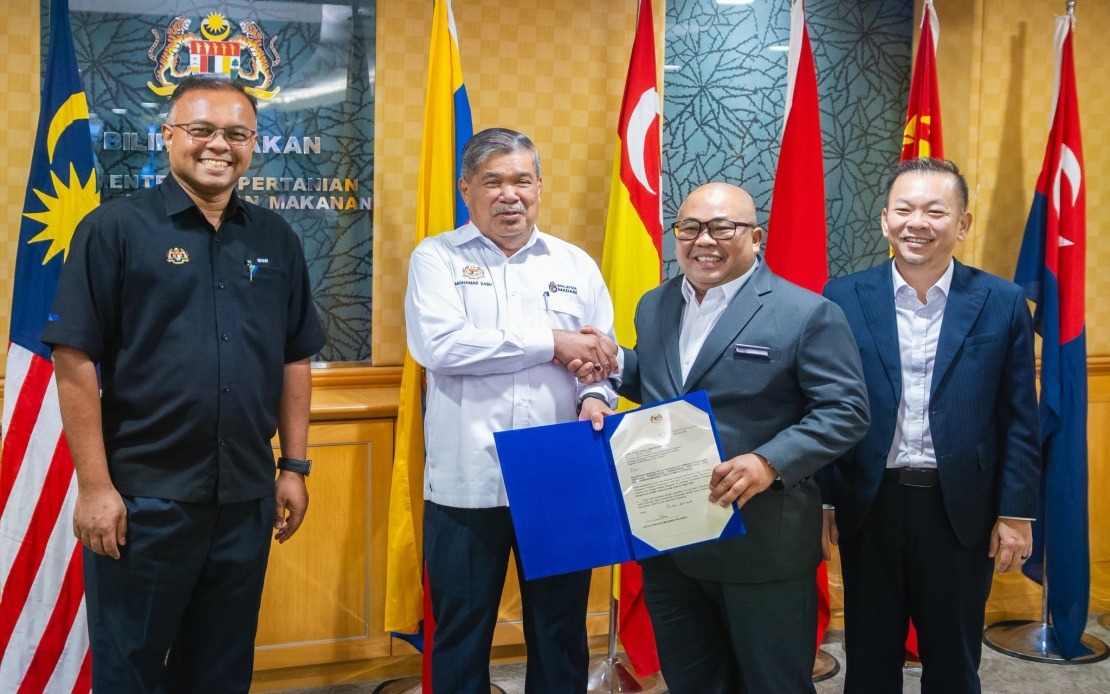
The Federal Agricultural Marketing Authority (FAMA) has a new chief. Faisal Iswardi Ismail, who previously served as deputy director-general overseeing food security and operations, has been elevated to director-general of the statutory body, with his appointment taking effect from August 1. The formal presentation of his appointment letter took place at a post-Cabinet meeting in Kuala Lumpur on August 5, conducted by Agriculture and Food Security Minister Datuk Seri Mohamad Sabu.
The leadership transition reflects the government's confidence in Faisal Iswardi's capability to steer FAMA through a critical period for Malaysia's agricultural sector. His promotion from within the organization underscores a continuity approach, as he brings institutional knowledge and existing operational experience to the role. Previously managing the food security and operations portfolio, Faisal Iswardi has demonstrated expertise in the very areas that define FAMA's core mandate in the contemporary Malaysian economy.
FAMA operates as a crucial intermediary in Malaysia's agricultural ecosystem, serving as the primary conduit through which locally produced farm goods reach consumers and commercial buyers. The organization manages critical functions including product aggregation, quality standardization, market intelligence, and price stabilization mechanisms. For farmers scattered across Peninsular Malaysia, Sabah, and Sarawak, FAMA serves as an essential market access point, particularly for smallholders who lack individual marketing infrastructure or bargaining power against larger distributors and retailers.
Minister Mohamad Sabu publicly expressed his confidence in the new director-general through a Facebook post, framing Faisal Iswardi's appointment within the broader context of Malaysia's food security aspirations. The minister acknowledged that FAMA shoulders substantial responsibility as the nation navigates the complexities of ensuring adequate domestic agricultural supplies while supporting the livelihoods of farming communities. His remarks highlighted the interconnected nature of market access, supply chain efficiency, and farmer prosperity.
The timing of this appointment carries particular significance for Malaysia's agricultural policy landscape. The country has been grappling with production challenges in key commodities, seasonal price volatility, and the need to modernize value chains to compete in regional and global markets. FAMA's role in stabilizing prices, facilitating direct relationships between producers and buyers, and promoting agricultural entrepreneurship becomes ever more important as Malaysia seeks to enhance food sovereignty while managing import dependencies.
Faisal Iswardi's ascension also represents a personnel transition within Malaysia's agricultural administration during a period of structural and strategic recalibration. With responsibilities spanning the marketing, logistics, and operational dimensions of agricultural commerce, the director-general position requires both technical acumen and stakeholder management skills. The incoming chief must balance competing interests: smallholder farmer income stability, competitive pricing for consumers, commercial viability for agribusinesses, and government objectives regarding food security and rural development.
MAFA's scope extends beyond mere commodity trading. The organization increasingly engages with agricultural modernization, providing market information to farmers, facilitating adoption of improved production techniques, and helping producers add value to their output. These functions have become essential as Malaysian agriculture transitions toward higher-value production and integration into more sophisticated supply chains. Faisal Iswardi, given his operations background, is positioned to drive improvements in these areas.
The agricultural sector remains a politically sensitive domain in Malaysia, particularly in rural constituencies where farming remains economically significant. Any disruption in farm income, input availability, or market access generates immediate political consequences. FAMA's performance directly influences public perception of government competence in supporting rural communities, making the caliber of its leadership consequential for political stability as well as agricultural productivity.
Faisal Iswardi's promotion also signals internal succession planning at FAMA, suggesting the organization is developing human capital reserves from within rather than seeking external appointments. This approach, when executed effectively, builds institutional continuity and allows new leadership to implement reforms with the benefit of understanding existing processes, relationships, and constraints. However, it also carries risks if the organization becomes insular or resistant to fresh perspectives that outsiders might bring.
Moving forward, attention will focus on Faisal Iswardi's policy priorities and operational initiatives. Key areas likely to merit attention include digitalization of market information systems, integration of smallholders into modern value chains, expansion of FAMA's physical infrastructure, and enhancement of export competitiveness for Malaysian agricultural products. The director-general's approach to these challenges will shape FAMA's trajectory and, by extension, influence the commercial viability of farming across Malaysia.
FAMA's effectiveness in coming months will be measured by various metrics: farmer satisfaction and adherence to the authority's marketing channels, price stability indicators, market share retention, and progress in connecting producers with premium market segments. Mohamad Sabu's public endorsement suggests the minister is invested in Faisal Iswardi's success, potentially enabling the director-general to pursue initiatives that might face resistance in other administrative contexts. The appointment therefore represents both a personnel change and an implicit policy signal regarding government priorities in agricultural commerce and farmer support mechanisms.

