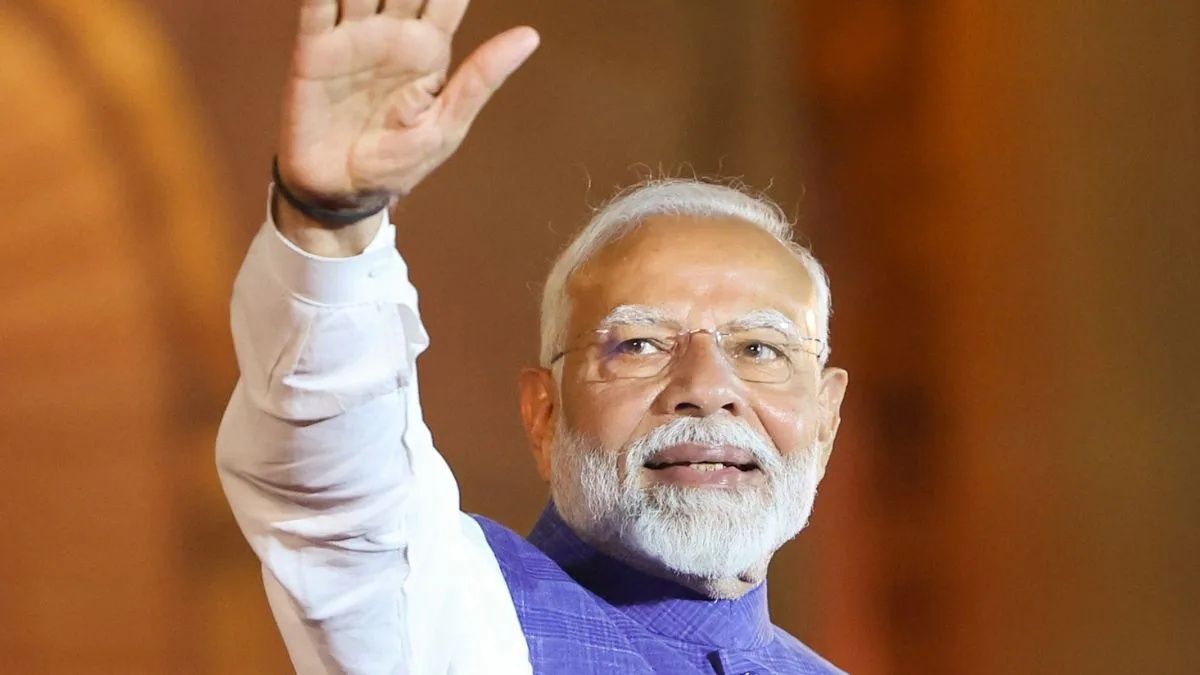
Prime Minister Narendra Modi will spearhead India's 12th International Day of Yoga (IDY) celebrations from Kolkata's historic Red Road on Sunday, June 21, underscoring his administration's commitment to promoting holistic wellness through the philosophy of "Healthy Body, Healthy Mind." The choice of Kolkata as the primary venue for this flagship national event marks a significant moment for both the yoga movement and India's political landscape, with early-morning mass demonstrations of the Common Yoga Protocol expected to draw thousands of participants, including senior government officials and members of the public.
The decision to host the main gathering in Kolkata carries substantial political implications, arriving just as the Bharatiya Janata Party secured a decisive victory in West Bengal's recent Assembly elections, displacing the long-ruling Trinamool Congress from power. Senior BJP leadership has signalled that the state will become a focal point for the Modi government's development agenda in coming years, with infrastructure investment and modernisation initiatives likely to accelerate. The selection of Red Road—one of the city's most vibrant public spaces steeped in civil gatherings, military heritage, and environmental initiatives—demonstrates how the government strategically leverages major national events to affirm its presence and commitment to newly gained political territories.
The theme for this year's celebrations, "Yoga for Healthy Ageing," reflects an emerging global demographic challenge that carries particular relevance for Southeast Asia. As populations across the region experience rising life expectancy but often lack adequate frameworks for ensuring those additional years remain active and fulfilling, yoga's time-tested approach offers a culturally rooted alternative to Western wellness models. Union Minister of State for Ayush Prataprao Jadhav emphasised that the real challenge facing ageing societies is not merely extending lifespan but ensuring those extended years remain healthy, independent, and purposeful—a consideration increasingly urgent as Malaysia, India, and other regional economies navigate ageing workforces and rising healthcare costs.
The logistical scale of this year's International Day of Yoga reflects unprecedented institutional enthusiasm across India. The Ministry of Ayush's Yoga Sangam Portal has registered approximately 600,000 organisations, a milestone demonstrating the breadth of grassroots engagement with yoga practice beyond urban centres and elite circles. This massive network of participating institutions—spanning schools, workplaces, community centres, and residential complexes—will simultaneously engage in yoga practice alongside Prime Minister Modi, creating a symbolic moment of national unity around wellness and traditional knowledge systems.
The global dimension of these celebrations underscores India's broader diplomatic strategy in positioning itself as a guardian of ancient wellness traditions. Around 2,500 organised events are taking place worldwide, with participation coordinated through 211 Indian missions operating across the globe. For Malaysian readers and those across the Southeast Asian region, this expansion represents India's soft power initiative to establish yoga not merely as physical exercise but as a philosophical framework for living that can transcend cultural and religious boundaries. This approach has proven particularly successful in Malaysia, where yoga has gained mainstream acceptance across diverse communities.
In a parallel initiative demonstrating the integration of yoga with environmental stewardship, Kolkata witnessed enthusiastic participation in "Daud Se Dhyan 2026 – From Movement to Stillness," an event organised under the Swachhata Se Swagat Programme. This initiative interweaves the core values of health, cleanliness, civic responsibility, and overall well-being, reflecting a holistic vision where physical wellness cannot be divorced from environmental consciousness and social responsibility. Such integrated approaches resonate with Southeast Asian audiences increasingly concerned about balancing development with sustainability.
The Ministry of Culture's parallel initiative to organise yoga programmes at 100 iconic locations across India demonstrates an institutional commitment to embedding wellness practices within the nation's cultural heritage sites. This strategy effectively positions yoga as intrinsic to Indian civilisational identity rather than as an imported wellness trend, a distinction that strengthens its credibility and appeal among traditionalists and modernists alike. For regional observers, this cultural integration offers a model for how ancient practices can be revitalised and recontextualised for contemporary audiences without losing authenticity.
The West Bengal government's directive mandating participation in IDY celebrations for all government employees—whether at office locations, residential complexes, or designated public venues—reveals how yoga has transitioned from an optional wellness activity to a state-endorsed practice embedded within governance structures. While such mandatory participation raises questions about individual choice, it simultaneously demonstrates institutional confidence in yoga's benefits and reflects a broader global trend where governments increasingly intervene to promote population health through preventive practices rather than relying solely on curative medical systems.
Minister Jadhav's emphasis on yoga's capacity to simultaneously strengthen physical health, promote mental well-being, and enhance quality of life speaks to a growing recognition that fragmented approaches to wellness—treating physical and mental health as separate domains—remain inadequate for addressing contemporary health challenges. This integrative philosophy carries particular importance for Malaysia and Southeast Asia, where rapid urbanisation and economic development have created populations simultaneously experiencing material prosperity and rising rates of stress-related illnesses, metabolic disorders, and mental health conditions. Yoga's holistic framework offers an accessible counterweight to lifestyle-driven disease patterns.
The scale of institutional preparation for this year's IDY celebrations—from the 600,000 registered organisations to the coordinated global participation across Indian missions—suggests that yoga has achieved a status within Indian society comparable to other major national observances. This institutionalisation ensures sustainability of the yoga movement beyond individual enthusiasm or government advocacy cycles, establishing it as a permanent feature of Indian public health and cultural identity. For Malaysia's multicultural society, observing India's success in promoting yoga across diverse communities while maintaining its traditional essence offers instructive lessons in heritage preservation and cultural exchange.
As the International Day of Yoga celebrations unfold from Kolkata on June 21, they represent more than a symbolic affirmation of wellness philosophy or a display of institutional coordination. They demonstrate how ancient knowledge systems can be strategically revitalised, integrated with contemporary health frameworks, and deployed as instruments of soft power while simultaneously addressing genuine population health challenges. The unprecedented scale of participation—from local government employees to millions practising simultaneously across the globe—transforms yoga from a niche wellness practice into a mass movement, validating its relevance to modern anxieties and aspirations across cultures and development contexts.

