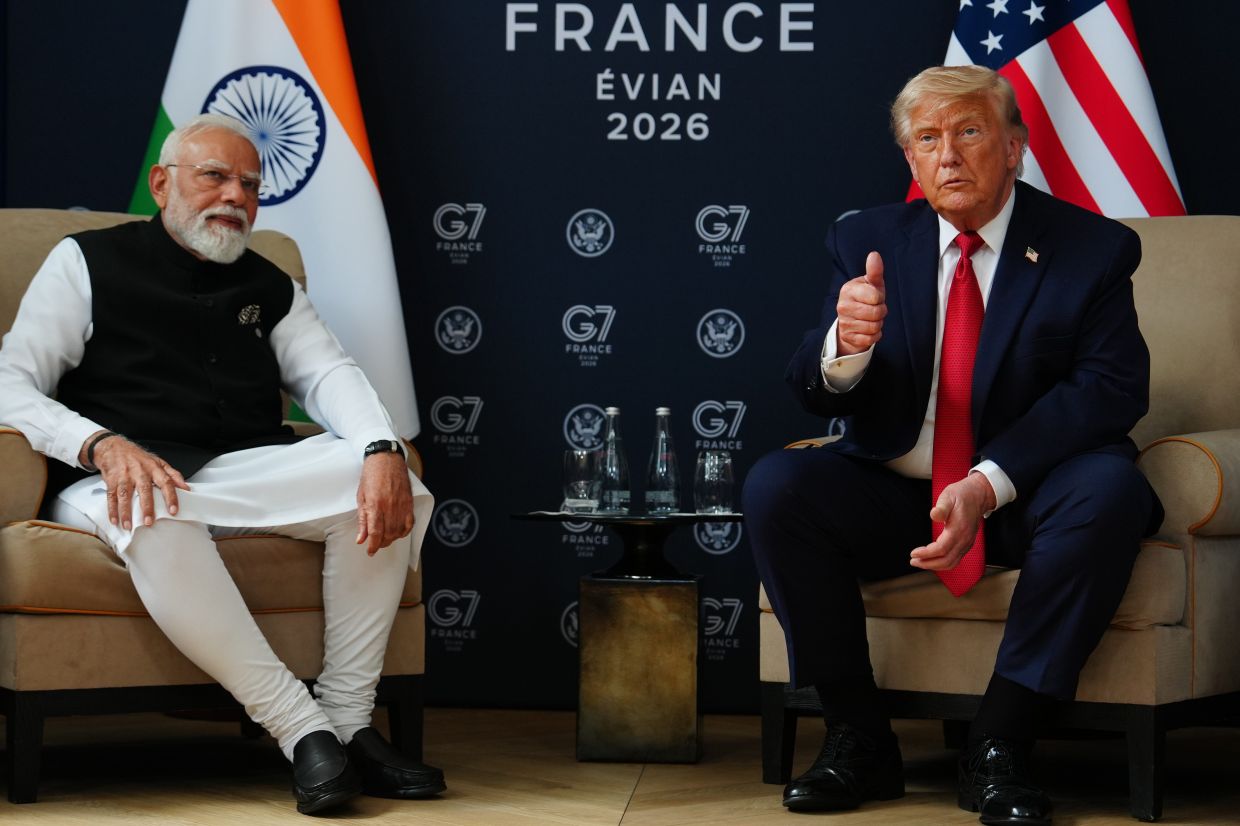
Prime Minister Narendra Modi declared that negotiations between India and the United States have achieved "significant progress" towards a comprehensive trade agreement, following his meeting with President Donald Trump at the G7 summit in Evian, France. The face-to-face encounter on Wednesday marked the first direct engagement between the two leaders since their February 2025 discussions in Washington, underscoring the importance both nations place on concluding a commercially viable accord. India's foreign ministry characterised the discussions as notably satisfactory, emphasising that negotiators have been instructed to expedite finalisation of what would constitute an interim bilateral trade agreement addressing longstanding market access and tariff disputes.
Trump's characterisation of the negotiations reflected his characteristic rhetorical style, telling assembled reporters that the two countries stood "very close" to a breakthrough. The US president lauded Modi's negotiating prowess, describing him as "one of the toughest" he has encountered whilst simultaneously employing colourful personal observations. His acknowledgment of India's negotiating strength carries particular weight given Trump's own reputation as a hardline trade negotiator who has repeatedly reshaped American commercial policy through aggressive tariff strategies and bilateral negotiations.
The trajectory towards a comprehensive trade framework has extended across multiple administrations and represents a strategic priority for both nations. Washington and New Delhi established an ambitious target of elevating bilateral trade to US$500 billion by 2030, a considerable expansion from current levels that would fundamentally reshape their economic relationship. The two economies currently engage in considerably more modest commercial exchange, making this objective contingent on substantial tariff reductions, regulatory harmonisation, and elimination of non-tariff barriers that have historically impeded market access for American and Indian businesses respectively.
Progress stalled considerably following February's initial understanding, when the United States Supreme Court invalidated Trump's sweeping tariff measures. This legal setback prompted the Trump administration to launch fresh investigations into alleged unfair trading practices targeting multiple countries including India, whilst simultaneously imposing a blanket 10 percent tariff that created additional uncertainty for negotiators. These developments threatened to derail momentum built through preliminary discussions, as Indian officials grappled with potential escalatory scenarios that could have fundamentally altered the negotiating environment.
India's Commerce Minister Piyush Goyal provided an optimistic assessment in early June, suggesting the nations had resolved approximately 99 percent of disputed issues constituting the first tranche of the agreement. This formulation suggests the comprehensive deal may be structured in phases, with an initial interim agreement addressing the most pressing commercial disputes followed by subsequent tranches addressing more complex sectoral issues. The staged approach permits each side to claim meaningful victories whilst maintaining flexibility for future negotiations, potentially explaining why officials have described imminent finalisation as achievable despite lingering technical disagreements.
The visit by US Trade Representative Jamieson Greer to India the week following the G7 summit indicated concrete momentum, suggesting substantive negotiations rather than merely ceremonial exchanges. Trade representative missions typically occur when negotiating teams have substantially narrowed outstanding differences and require high-level political decisions to resolve final contentious issues. Greer's participation signals that the Trump administration views the India trade talks as sufficiently advanced to warrant the personal attention of a senior trade official whose involvement typically indicates proximity to agreement.
Beyond strictly commercial considerations, Modi utilised the bilateral engagement to press security and humanitarian concerns directly affecting Indian interests across the volatile Middle Eastern region. The Indian prime minister urged Trump to safeguard Indian seafarers operating commercially across Middle Eastern waters, referencing the deaths of three Indian sailors killed during a US military strike against a commercial vessel positioned off Oman on June 10. This tragic incident exposed Indian nationals to the escalating military dynamics between Washington and regional powers, highlighting how geopolitical tensions create tangible risks for Indian citizens and commercial interests far from home.
The Middle East conflict has imposed considerable economic burdens on South Asian economies already grappling with significant structural challenges. Iran's closure of the Strait of Hormuz disrupted energy supplies flowing through this critical chokepoint responsible for transporting vast quantities of petroleum and liquefied natural gas destined for Asian markets. For India specifically, which depends heavily on imported energy resources to fuel economic growth, such disruptions ripple through supply chains affecting fuel costs, agricultural inputs dependent on fertiliser, and food production systems reliant on energy-intensive processes. These cascading effects explain Modi's grave warnings that the Middle East's instability would continue inflicting economic damage across the Global South for extended periods regardless of when direct hostilities eventually concluded.
India's vulnerability to Middle Eastern disruptions reflects broader structural dependencies that differentiate its position from developed economies possessing diversified energy sources and strategic reserves. Whereas the United States maintains substantial domestic energy production and the capacity to cushion against supply shocks through strategic petroleum reserves and financial resources, India confronts far more constrained options for rapidly substituting energy sources or absorbing price volatility. This asymmetry explains why Modi has consistently advocated for diplomatic solutions to Middle Eastern conflicts, positioning regional stability as essential infrastructure for sustaining economic development trajectories benefiting hundreds of millions of Indian citizens.
The timing of trade negotiations concurrent with appeals for Middle Eastern stability reflects how contemporary great power diplomacy frequently interweaves commercial arrangements with security cooperation. By combining commercial incentives with security partnerships addressing Indian vulnerabilities, both Washington and New Delhi signal their intent to establish durable bilateral cooperation extending beyond the narrow confines of tariff schedules and market access commitments. This integrated approach potentially establishes foundation for sustained partnership spanning trade, security, and regional stability concerns that shape competition between major powers across the Indo-Pacific and beyond.
For Malaysian readers and Southeast Asian observers more broadly, the US-India trade negotiations carry significance extending beyond the bilateral relationship. A comprehensive US-India agreement would reshape commercial dynamics across Asia, potentially establishing templates for American engagement with other regional partners whilst simultaneously elevating India's economic leverage within Asian markets. The agreement's specific provisions regarding tariff structures, rules of origin, and sectoral access could create both opportunities and challenges for ASEAN economies competing with India across multiple industrial sectors whilst simultaneously engaging in their own commercial negotiations with both Washington and New Delhi.
The convergence of trade negotiations with geopolitical concerns regarding Middle Eastern stability underscores how twenty-first century international relations increasingly blend economic and security dimensions. For India pursuing major power status, elevated bilateral engagement with Washington offers pathways for managing global economic transitions whilst maintaining autonomy in foreign policy. Conversely, American interests in strengthening partnerships with democratic major economies in Asia justify commercial concessions India might extract during these negotiations, suggesting both sides perceive durable engagement as strategically valuable beyond immediate commercial calculations. The momentum evident from June's discussions suggests formal agreement may materialise within months, reshaping trade relationships and commercial opportunities across Asia.

