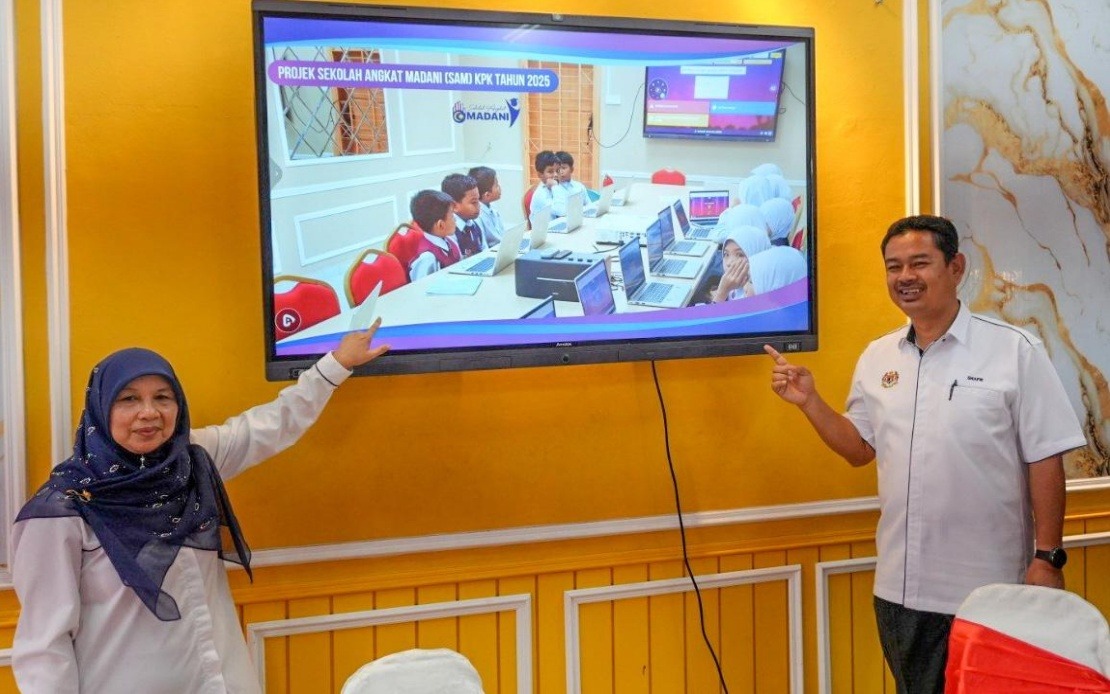
The Ministry of Plantation and Commodities (KPK) has unveiled a comprehensive RM100,000 investment in SK Bendang Kering, a rural school in Kuala Kangsar, as part of its broader school adoption initiative. The handover ceremony, conducted at the school premises in Ipoh on June 19, was officiated by KPK deputy secretary-general (Strategic Planning and Management) Shafie Taib, marking a tangible step in the government's push to narrow educational disparities between urban and rural communities.
The funding represents more than a simple capital injection; it forms part of a structured programme where the Malaysian Rubber Board (LGM) serves as the implementing agency, working in coordination with the ministry. This administrative arrangement underscores the KPK's commitment to embedding education support within sectoral development initiatives, aligning human capital building with broader economic objectives. The scheme reflects recognition that educational access in peripheral areas requires sustained institutional support and dedicated resource allocation to match contemporary learning standards.
Physical infrastructure improvements have been prioritised, with the allocation financing upgrades to critical school facilities. The assembly area, main hall, and reading corners have been refurbished to create more conducive spaces for student gathering and independent learning. Additionally, preschool classrooms have been enhanced to support early childhood development programmes, a critical foundation stage often neglected in rural settings where resources are constrained.
Technology integration forms a cornerstone of the modernisation effort. Interactive smartboards have been installed across classrooms, enabling educators to employ multimedia teaching methodologies that research consistently shows improve student engagement and comprehension. The provision of air conditioning units addresses the practical reality of Malaysia's tropical climate, ensuring that learning spaces remain comfortable during extended school hours, thereby reducing absenteeism and improving concentration levels among students.
Beyond brick-and-mortar improvements, the programme encompasses complementary soft interventions designed to elevate academic outcomes. An academic performance scheme concentrating on Malay, English, Science, and Mathematics has been implemented, with structured incentive mechanisms rewarding students who achieve excellence. This targeted approach recognises that these foundational subjects form the bedrock for subsequent educational advancement and labour market competitiveness, particularly crucial for students from economically disadvantaged backgrounds who may lack private tuition access.
Character and leadership development initiatives constitute another pillar of the comprehensive intervention. The Student Leadership Motivation Camp and Student Talent Development Camp are designed to cultivate non-cognitive skills increasingly recognised as vital in contemporary employment landscapes. These programmes operate on the premise that educational quality extends beyond academic credentials to encompass resilience, communication abilities, and interpersonal competencies that determine long-term career trajectories and social integration.
The selection of SK Bendang Kering reflects deliberate policy prioritisation of rural educational equity. Government statements emphasise that peripheral areas must not fall behind in accessing facilities that align with contemporary learning paradigms. This philosophy tacitly acknowledges historical underinvestment in rural schools and positions the adoption scheme as corrective intervention, though the scale and replicability of such efforts across Malaysia's numerous rural institutions remains an underlying policy question.
For Malaysian and Southeast Asian readers, this initiative carries significance beyond Kuala Kangsar. Rural education remains persistently disadvantaged across the region, with infrastructure gaps and teacher shortages contributing to achievement disparities that perpetuate intergenerational poverty. Malaysia's approach—employing sectoral ministries as education partners—offers a model whereby commodity-focused agencies contribute to human capital development, creating potential synergies between resource-based industries and educational outcomes.
The programme's emphasis on technology-enabled learning addresses a recognised gap that became acute during pandemic disruptions, when schools lacking digital infrastructure struggled disproportionately. By provisioning smartboards and allied resources, the initiative acknowledges that technological access represents a contemporary educational fundamental, equivalent to libraries in previous generations. This positioning recognises Malaysia's aspirations toward high-income status, requiring workforce capabilities aligned with knowledge economy demands.
Integrating academic incentives with talent identification mechanisms suggests a dual strategy: supporting struggling learners through structured programmes whilst simultaneously identifying and nurturing high-potential students who might otherwise remain invisible in resource-constrained settings. This dual approach maximises the probability that the intervention generates measurable improvements across the achievement spectrum rather than narrowly concentrating benefits among already-advantaged cohorts.
The sustainability implications of such initiatives warrant consideration. Single-cycle funding allocations, whilst immediately impactful, require complementary commitments to teacher professional development, ongoing resource replenishment, and institutional change to produce lasting transformation. Whether SK Bendang Kering receives sustained follow-up support will determine whether this intervention catalyses systemic improvement or represents temporary facility enhancement without corresponding pedagogical advancement.
Looking forward, the KPK's school adoption approach potentially establishes a template for expanded sectoral engagement with education. If successful outcomes at SK Bendang Kering generate evidence of improved student performance and reduced achievement gaps, this could justify wider replication, encouraging other ministries to establish parallel adoption schemes. Such expansion would represent meaningful diversification of education financing beyond traditional budgetary mechanisms, potentially accelerating the pace of rural school modernisation nationwide.

