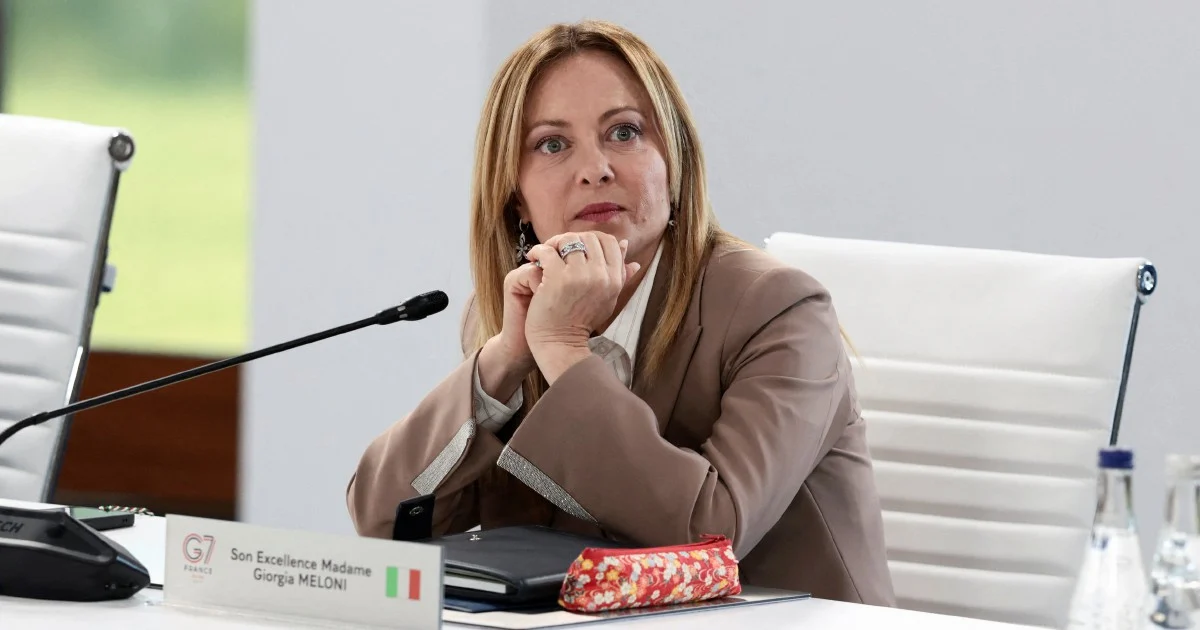
When Donald Trump took the oath of office for his second presidential term in 2025, Italian Prime Minister Giorgia Meloni stood alone among European leaders in receiving a personal invitation to the inauguration ceremony. Her presence at the Capitol signalled what many observers interpreted as the beginning of a strengthened alliance between Washington and Rome, one that promised to reshape transatlantic relations and position Italy as America's primary interlocutor in European affairs. The symbolism appeared unmistakable: after years of European governments maintaining cautious distance from Trump, here was Italy's right-wing leader stepping forward to embrace the returning American president.
The initial promise of that golden age now appears to have been remarkably short-lived. In the months following Trump's return to the White House, Meloni has progressively distanced herself from the administration, moving from diplomatic partner to increasingly vocal critic. This transformation reflects far more than simple disagreement over policy details; it signals a fundamental recalibration of Meloni's political position and raises important questions about the stability of European-American relations during this second Trump presidency.
Meloni's pivot carries significant implications for Southeast Asia and the broader Indo-Pacific region. Italy, despite being geographically distant, wields considerable influence through its European Union membership and strategic position within NATO. When European leaders abandon their initial pro-Trump positions, it suggests that the practical realities of Trump's policies may be creating friction even among his natural allies—particularly among right-leaning governments that might otherwise share his nationalist instincts. This erosion of support from ideological sympathisers could reshape how regional powers, including those in Southeast Asia, calculate their own approaches to Washington.
The reasons behind Meloni's reversal remain complex and multifaceted. European leaders face domestic political pressures, economic concerns, and security considerations that often conflict with Trump's America First agenda. When Trump threatens tariffs on European goods, questions the value of NATO alliances, or adopts isolationist positions on international conflicts, even sympathetic leaders like Meloni must respond to their own constituencies who depend on transatlantic trade and security guarantees. Italy's economy, vulnerable to global trade disruptions, gives Meloni concrete reasons to resist policies that her American counterpart champions.
The security dimension adds another layer. European nations, including Italy, remain deeply dependent on the American security umbrella in an era of Russian aggression in Ukraine and broader geopolitical uncertainty. Trump's rhetorical positions on military support for Ukraine and his apparent willingness to challenge longstanding alliance commitments create genuine anxiety among European policymakers. Meloni, despite her nationalist credentials, cannot ignore these fundamental dependencies when formulating her government's response to American initiatives.
Meloni's transformation also reflects the particular challenges faced by European right-wing populists when confronted with actual power in Washington. Trump's actual governance style differs significantly from the rhetoric of his campaign promises. Italian voters and businesses expect their government to protect Italian interests within the European framework, not to subordinate Italian policy to Washington's demands. Where Meloni as an opposition politician could adopt sweeping pro-Trump rhetoric, Meloni as prime minister bears responsibility for concrete outcomes affecting Italian citizens and the Italian economy.
For regional observers in Southeast Asia, this dynamic offers instructive lessons about the durability of political alignments based on ideology or personal relationships between leaders. The initial assumption that Meloni's attendance at Trump's inauguration represented the solidification of a durable partnership has proven naïve. International relations, even among ideologically aligned governments, remain fundamentally grounded in material interests, strategic calculations, and domestic political constraints. Southeast Asian governments weighing their own relationships with the Trump administration should recognise that proximity to American power does not automatically translate into favourable policy outcomes.
The Meloni case also illustrates the fracturing of the Western alliance that characterised Trump's first presidency. His second term appears likely to witness similar tensions, with even sympathetic European leaders finding themselves forced into public opposition to American initiatives. This fragmentation could create space for alternative power centres, including China and Russia, to pursue their own objectives in regions like Southeast Asia where the West's unified opposition becomes less credible or effective.
Moreover, Meloni's shifting stance demonstrates the limits of personal diplomacy and bilateral relationships as substitutes for institutional frameworks and alliance structures. Trump's apparent reliance on direct, personality-based connections with foreign leaders proved insufficient to maintain Italian loyalty when broader policy divergences emerged. This suggests that Southeast Asian governments should invest in durable institutional relationships and clear mutual interest frameworks rather than betting on personal relationships with American leaders, however apparently close.
The trajectory of Meloni's relationship with Trump raises fundamental questions about Trump's ability to maintain coalition unity during his second term. If the European leader most sympathetic to Trump's ideological orientation and most willing to embrace his rhetoric has become a critic, this suggests deeper problems with Trump's approach to alliance management. The absence of a coherent strategy for accommodating legitimate allied concerns, combined with the American president's tendency toward unilateral action, may prove increasingly costly.
Looking forward, Meloni's public criticism of Trump signals that European leaders will push back against policies they perceive as damaging to their interests, regardless of their ideological affinity for Trump himself. This resistance will likely prove more durable than during Trump's first presidency, as European governments have had time to prepare alternative arrangements and develop contingency plans. For Southeast Asia, this means the Trump administration will face a less unified Western alliance and potentially greater latitude to pursue regional objectives without Western consensus.