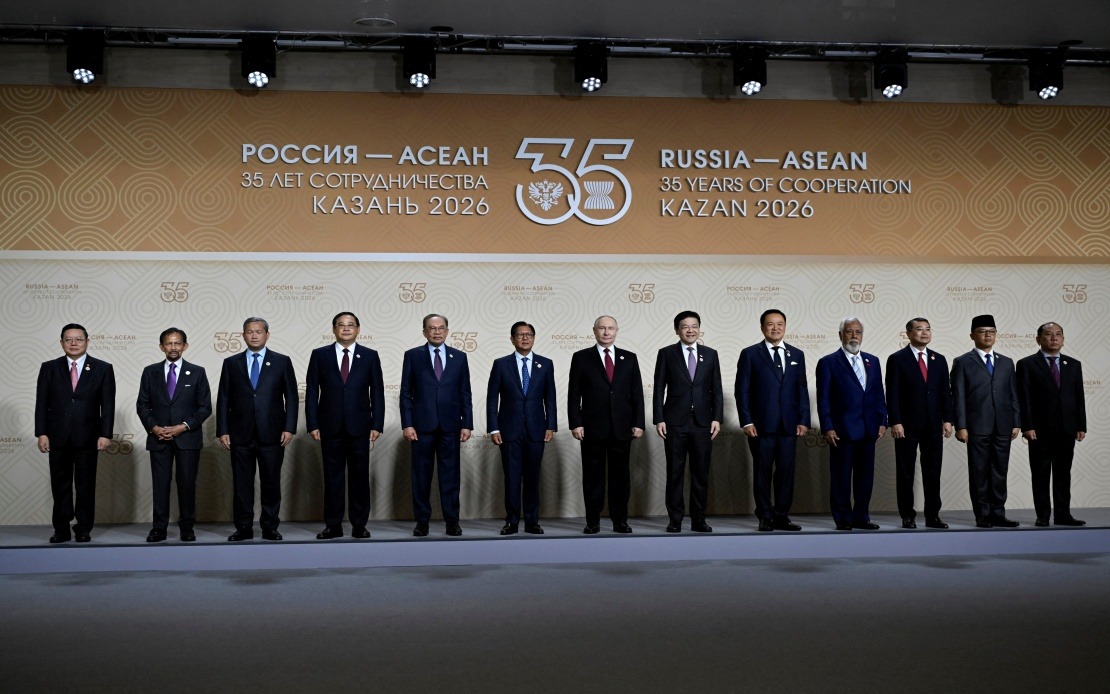
Philippine President Ferdinand R. Marcos Jr has identified substantial room for growth in relations between ASEAN and Russia, particularly through expanded engagement in cutting-edge technology sectors that represent a significant departure from traditional bilateral economic frameworks. Speaking following his participation in the ASEAN-Russia Commemorative Summit held in Kazan, Marcos underscored that while the partnership has matured over the past three decades, it has not yet realised its full commercial and strategic potential. The Philippine leader's remarks reflect a broader regional reassessment of how ASEAN nations calibrate their international engagement patterns, moving beyond conventional alliances to explore emerging opportunities.
The three-decade history of ASEAN-Russia dialogue provides a foundation for future cooperation, though Marcos acknowledged that growth has proceeded at a measured pace. He noted significant variation across ASEAN member states, with certain nations advancing further in their bilateral ties with Moscow than others have managed. This uneven development across the bloc reflects differing strategic priorities, geographic positioning, and economic interests within ASEAN's diverse membership. Some countries have cultivated deeper security, energy, and defence partnerships with Russia, while others maintain more limited engagement, creating an asymmetrical landscape that complicates region-wide initiatives.
Marcos specifically highlighted advanced technology, artificial intelligence, data centre infrastructure, and power generation as priority areas where collaboration could yield tangible benefits. These sectors represent a fundamental shift from the economic cooperation models that traditionally dominated ASEAN-Russia relations, which historically centred on energy exports, resource trade, and basic manufacturing exchanges. The emergence of these technology-intensive domains creates novel partnership possibilities precisely because they did not feature prominently in earlier decades of engagement, allowing both parties to establish fresh frameworks without the constraints of entrenched historical arrangements.
The recognition of Russia's expanding capabilities in these technological domains signals Manila's pragmatic assessment of Moscow's relevance to ASEAN's development trajectory. Rather than viewing Russia solely through Cold War-era or energy-supplier lenses, Marcos positioned the country as a potential partner in digital infrastructure and advanced sectors that will shape Southeast Asian competitiveness. This reframing carries implications for how ASEAN nations approach great-power relations more broadly, suggesting a willingness to compartmentalise engagement across different issue areas rather than adopting wholesale alignment with any single external power.
Marcos characterised ASEAN's current phase of strategic evolution as a transformative moment in which the bloc is "growing up fast" and substantially reorienting its international partnerships. This phrasing reflects the maturation of ASEAN economies and their increasing confidence in diversifying engagement beyond traditional Western-aligned relationships. The Philippine president's language suggests that ASEAN sees itself as less constrained by historical bipolar divisions and more able to pursue pragmatic partnerships tailored to specific sectoral and developmental objectives. For Malaysian policymakers and business leaders, this regional trajectory carries implications for how bilateral relationships with external powers are negotiated and managed.
The recent commemorative summit, which marked over 35 years of formal ASEAN-Russia dialogue relations, produced substantive outcome documents designed to structure future cooperation. The Kazan Declaration 2026 and the ASEAN-Russia Comprehensive Plan of Action for 2026–2030 establish institutional frameworks and programmatic priorities for the partnership's next phase. These documents move beyond symbolic gestures toward concrete mechanisms for collaboration, including joint initiatives in culture and energy cooperation. Such formalisation suggests both sides intend to translate diplomatic rhetoric into measurable results that benefit their respective populations and economic sectors.
The focus on energy cooperation within the expanded partnership framework reflects Russia's traditional strength in hydrocarbon production and export, while simultaneously positioning Moscow as a contributor to ASEAN's power generation and infrastructure modernisation. Southeast Asian nations face substantial energy demands driven by rapid industrialisation, population growth, and expanding middle-class consumption. Russia's technical expertise and resource availability position it as a potential collaborator in meeting these demands, particularly as ASEAN transitions toward more diversified energy portfolios. However, such cooperation must navigate complex geopolitical considerations, including Western sanctions regimes and environmental concerns surrounding fossil fuel expansion.
The emphasis on science and technology-driven sectors reflects broader global trends toward digital transformation, automation, and artificial intelligence integration across economic activities. ASEAN economies, despite their dynamism, face skills gaps and infrastructure deficits in these domains. Russian capabilities in mathematics, computer science, and software development could complement ASEAN efforts to accelerate digital adoption and technological capacity-building. Data centre infrastructure represents a particularly strategic domain, as ASEAN's digital economy expansion requires robust local data processing capabilities to ensure data sovereignty and operational resilience.
Marcos's references to momentum generated by shifting global alignments suggest his perception that traditional bipolar frameworks no longer rigidly constrain ASEAN decision-making. Rather than viewing regional nations as locked into Western-aligned positions, he portrayed them as increasingly autonomous agents capable of calibrating relationships based on specific sectoral interests and mutual benefit calculations. This autonomy, however, remains constrained by geopolitical realities, security alliances, and economic dependencies that continue shaping available options for individual ASEAN members and the bloc collectively.
The expansion of ASEAN-Russia engagement carries implications for Malaysia's own bilateral and regional strategies. As a significant ASEAN economy with diversified international partnerships, Malaysia has pursued pragmatic engagement with Russia in energy and trade while maintaining security relationships with Western powers. The institutionalisation of broader ASEAN-Russia frameworks could create opportunities for Malaysian firms in infrastructure development, energy transition, and technology sectors. Simultaneously, it requires careful calibration to avoid strategic overextension or dependence that could complicate Malaysia's balancing act among competing external powers.
For Southeast Asian observers, Marcos's characterisation of this partnership moment as a "new day" encapsulates a broader regional confidence in pursuing independent diplomatic and economic strategies. The ASEAN bloc, representing over 650 million people and substantial collective economic weight, increasingly views itself as capable of engaging multiple external partners on differentiated terms rather than adhering to bloc-level alignments dictated by external powers. This approach aligns with ASEAN's historical preference for strategic autonomy, though sustaining such independence amid great-power competition remains challenging.
The concrete outcomes of the Kazan summit will ultimately determine whether rhetoric about expanded partnership translates into substantive collaboration. Success requires both ASEAN member states and Russia to translate goodwill into specific projects, institutional mechanisms, and investment flows. The comprehensiveness of the cooperation plan and the political will to implement its provisions across multiple ASEAN capitals will test whether this partnership can overcome historical underperformance and structural obstacles. For Malaysian stakeholders, monitoring progress in technology transfer, energy infrastructure projects, and scientific collaboration will indicate whether expanded ASEAN-Russia engagement generates tangible benefits beyond diplomatic engagement.

