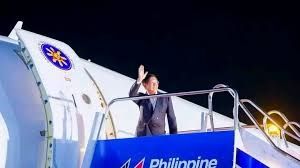
Philippine President Ferdinand R. Marcos Jr departed for Kazan, Russia, late on Tuesday, June 16, to chair the Philippines' participation in the Asean-Russia Commemorative Summit and conduct bilateral discussions with Russian President Vladimir Putin. The presidential aircraft left Villamor Airbase in Pasay City shortly after 11.55 pm, carrying Marcos and his official delegation on what the First Lady described as a brief but strategically significant mission. Despite a combined 26-hour travel commitment, the President would spend approximately 38 hours in Russia, underscoring the concentrated nature of his diplomatic agenda at a time when global attention focuses on supply chain vulnerabilities and geopolitical stability.
The summit holds symbolic and substantive weight, marking the 35th anniversary of formal relations between the Association of Southeast Asian Nations and Russia while simultaneously commemorating five decades of bilateral ties between Manila and Moscow. Marcos emphasised that this inaugural presidential visit to Russia arrives at a moment when regional cooperation mechanisms face scrutiny from competing great-power interests. As Asean chair for 2023, the Philippines has positioned itself as custodian of the bloc's foundational principle of centrality in regional architecture, a role that carries particular significance given current tensions across the Indo-Pacific.
The bilateral discussions between Marcos and Putin will concentrate on energy and food security, two domains where Southeast Asia faces genuine vulnerability. The Philippines, as a net importer of both agricultural commodities and refined petroleum products, confronts price volatility that directly affects household budgets and industrial competitiveness. Russia's position as a major grain exporter and energy producer makes engagement with Moscow strategically relevant for Manila, particularly as supply-chain diversification becomes a policy priority across Southeast Asia. The timing reflects broader concerns among developing economies about the sustainability of current global commodity markets.
Marcos used his departure statement to articulate Asean's vision for structured cooperation with Russia across multiple sectors. The announced agenda encompasses peace and security frameworks, bilateral trade and investment flows, technological collaboration including digital transformation initiatives, scientific research partnerships, educational exchanges, tourism development, and cultural people-to-people connections. This expansive scope reflects a deliberate strategy to position Russia engagement as comprehensive rather than narrowly transactional, potentially appealing to other Asean members with diverse economic relationships with Moscow.
The summit itself, scheduled for June 17 and 18 in Kazan, will bring together all ten Asean leaders alongside Putin for what organisers describe as a commemorative gathering designed to review three decades of multilateral cooperation. The expected adoption of key cooperative documents suggests substantive agenda-setting rather than ceremonial proceedings. For the Philippines, steering these deliberations toward consensus positions on contentious geopolitical questions while maintaining commitment to international law and rules-based order presents a delicate diplomatic balancing act.
Marcos explicitly invoked the Philippines' 2023 Asean chairmanship theme, "Navigating Our Future, Together," positioning Russia engagement within a broader vision of inclusive regional architecture. This rhetorical framing attempts to situate the Asean-Russia partnership as compatible with the bloc's stated commitment to openness and non-alignment, addressing potential criticism that engagement with Russia during heightened international tensions somehow compromises Asean's institutional independence. The language reflects careful diplomatic calibration between maintaining principled positioning and acknowledging Russia's legitimate interests in regional affairs.
For Manila, the summit serves multiple strategic objectives beyond immediate bilateral gains. The Philippines seeks to demonstrate its capacity to facilitate dialogue among major powers while preserving Asean's collective voice on matters of mutual concern. Energy security discussions carry particular urgency given the Philippines' substantial reliance on fossil fuel imports and its vulnerability to price shocks that cascade through transportation, manufacturing, and household costs. Similarly, food security conversations address a perennial concern for an archipelago that imports significant rice quantities despite agricultural self-sufficiency efforts.
The geopolitical context cannot be separated from the summit's commercial dimensions. Global energy markets remain volatile following Russia's invasion of Ukraine, and many Asian economies have grappled with supply disruptions and cost inflation. The Philippines, while not directly sanctioning Russia, faces pressure from Western allies while maintaining pragmatic engagement with major suppliers. Marcos's trip signals that Manila intends to manage these competing interests through dialogue rather than alignment with either bloc, a positioning consistent with Asean's traditional non-aligned orientation.
The First Lady's emphasis on the trip's significance despite its brevity highlights how Philippine leadership frames international engagement for domestic audiences. By connecting Russia discussions explicitly to Filipino household concerns about fuel and food prices, the administration signals that foreign policy directly addresses citizen welfare. This domestic framing proves particularly important in the Philippines, where public opinion on international relations remains sensitive to perceptions of national disadvantage in global economic arrangements.
Asean's collective approach to Russia engagement has evolved cautiously since 2022, with the bloc avoiding formal condemnation while expressing concern about regional stability. The Asean-Russia summit represents an opportunity to recalibrate this relationship constructively, emphasising shared interests in economic cooperation, security dialogue, and institutional frameworks that benefit all parties. For the Philippines specifically, successful chairing of substantive deliberations enhances its credibility as a regional leader capable of managing complex multilateral relationships.
The bilateral talks between Marcos and Putin will likely explore concrete mechanisms for enhanced Philippine-Russian cooperation beyond the multilateral Asean framework. This includes potential energy supply agreements, agricultural trade arrangements, and possibly security cooperation in maritime domains where Russian and Philippine interests intersect. Such discussions occur within constraints imposed by international sanctions regimes and Philippine alliance commitments, factors that limit the scope of practical collaboration even as diplomatic engagement proceeds.
Ultimately, the summit represents Asean's determination to maintain constructive engagement with major powers while preserving institutional autonomy and commitment to international law. For the Philippines as chair, steering this delicate course while advancing tangible economic gains for Filipino citizens demonstrates the complex diplomacy required of regional powers navigating contemporary geopolitical competition. The emphasis on energy and food security reflects understanding that Southeast Asian concerns transcend bloc rivalries, focusing instead on the material conditions affecting regional populations.