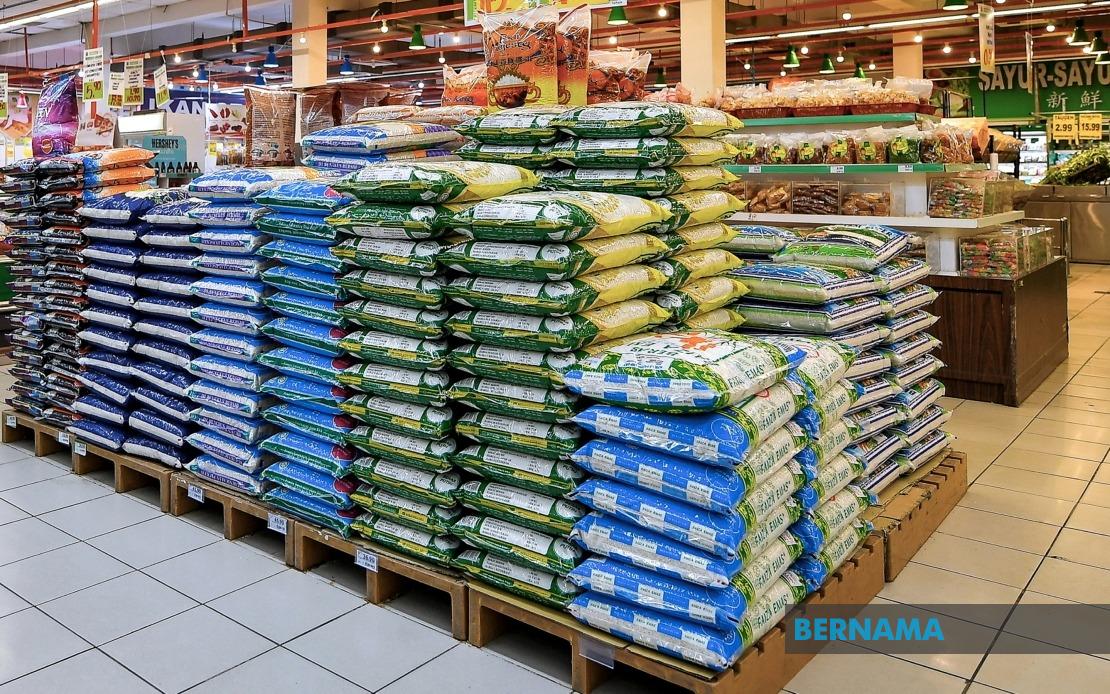
The Malaysian government has moved to reassure the public about food security in the face of international economic turbulence, with Economy Minister Akmal Nasrullah Mohd Nasir confirming on July 13 that the country maintains adequate reserves of its staple grain. Speaking during a briefing on the global supply crisis in Kuala Lumpur, Akmal Nasrullah underscored that current rice buffer stocks can sustain the nation's domestic demand for approximately six months, providing a significant cushion against potential disruptions that might emanate from wider market volatility.
The assurance on supply adequacy represents a calculated policy position designed to manage public sentiment during a period when international commodity markets face considerable uncertainty. By publicly quantifying the duration for which existing reserves can meet consumption needs, the government aims to demonstrate preparedness and competence in managing a critical resource that directly affects household spending patterns and social stability. For Malaysian consumers already contending with inflationary pressures in other sectors, confirmation of steady rice availability offers tangible relief and predictability in meal planning and household budgeting.
Beyond the supply guarantee, Akmal Nasrullah reinforced the government's commitment to preventing retail price escalation. The administration has pledged that Local White Rice, commonly abbreviated as BPT in market terminology, will not experience any price increases from current levels. This price freeze represents a deliberate counter-inflationary measure aimed at protecting lower-income households, for whom rice constitutes a significant portion of food expenditure and budget allocation. The commitment reflects recognition that rice price volatility can trigger broader consumer price pressures and undermine purchasing power across the economy.
These policy pronouncements emerged from discussions held during a National Economic Action Council meeting, chaired by Prime Minister Datuk Seri Anwar Ibrahim at the Parliament building, where government officials evaluated responses to the international supply crisis. The inclusion of food security assurances in the council's agenda underscores how seriously policymakers regard the intersection of global economic uncertainty and domestic consumer welfare. In a region where food security carries both practical and political dimensions, maintaining confidence in supply chains becomes a governance priority alongside traditional economic management.
The government's announcement must be understood within the context of climate-driven agricultural challenges and rising production costs that have squeezed domestic farming communities. Recognizing these pressures, authorities have implemented direct support mechanisms designed to sustain local paddy cultivation and protect farmer livelihoods. Through the Paddy Farmers Plowing Incentive programme, the government distributed RM45.98 million to 118,908 paddy farmers across Peninsular Malaysia, acknowledging that agricultural producers face mounting operational difficulties from both environmental variability and input cost inflation.
This farmer support initiative carries strategic importance beyond immediate welfare considerations. By maintaining viable domestic paddy cultivation through financial assistance, the government reduces long-term dependency on imported rice, thereby insulating consumers from international price fluctuations and supply disruptions. Agricultural self-sufficiency in staple foods represents a critical component of food security policy, particularly for a nation whose geography and population density create inherent vulnerabilities in commodity supply chains. The investment in domestic farming thus serves multiple policy objectives simultaneously: supporting rural livelihoods, maintaining productive capacity, and enhancing national resilience against external shocks.
The timing of these announcements reflects broader anxieties circulating through Southeast Asian policymaking circles regarding food security in an era of climate volatility and geopolitical fragmentation. Several major rice-producing countries have implemented export restrictions in recent years, fundamentally altering regional supply dynamics and creating unpredictability for importing nations. Malaysia's position as a net importer of rice means that international market disruptions carry direct consequences for domestic consumers, making proactive government management of reserves and pricing essential to maintaining public confidence and social cohesion.
The six-month reserve capacity cited by the Economy Minister should be understood as both a reassurance and a strategic planning parameter. While this timeframe provides meaningful protection against short-term supply shocks, it also suggests that government planners operate within a defined risk assessment framework. The identification of six months as the critical threshold implies ongoing monitoring of reserve levels, seasonal demand patterns, and international market conditions to ensure that buffers remain adequate across varying temporal horizons and consumption scenarios.
From a Southeast Asian perspective, Malaysia's explicit commitment to supply stability and price controls establishes a policy benchmark within the region. As countries throughout the area contend with food inflation and supply chain uncertainties, the Malaysian government's coordinated approach—combining reserve management, price commitments, and domestic producer support—demonstrates a comprehensive strategy for balancing consumer protection with agricultural sector sustainability. This integrated approach offers lessons for regional policymakers wrestling with similar challenges and competing objectives in food security governance.
The broader significance of these announcements extends to signaling government capacity and commitment to managing citizens' material welfare during periods of international instability. In political economies where food affordability directly influences public sentiment and electoral calculus, clear and credible assurances on supply and pricing can enhance government legitimacy. The public articulation of specific numerical commitments—six months of supply, fixed rice prices, distributed farmer subsidies—creates measurable benchmarks against which government performance can be evaluated, thereby establishing accountability alongside the reassurance function of the policy statements.

