The Malaysian government is moving to deepen its engagement with young people as a central strategy to counter the spread of extremism and misinformation in an increasingly digital society. This initiative stems directly from an address by Sultan Nazrin Shah, the Sultan of Perak, who emphasised last week that religious leaders must assume greater responsibility in reaching out to youth populations and addressing the vulnerabilities that leave them susceptible to radical ideologies and false narratives online.
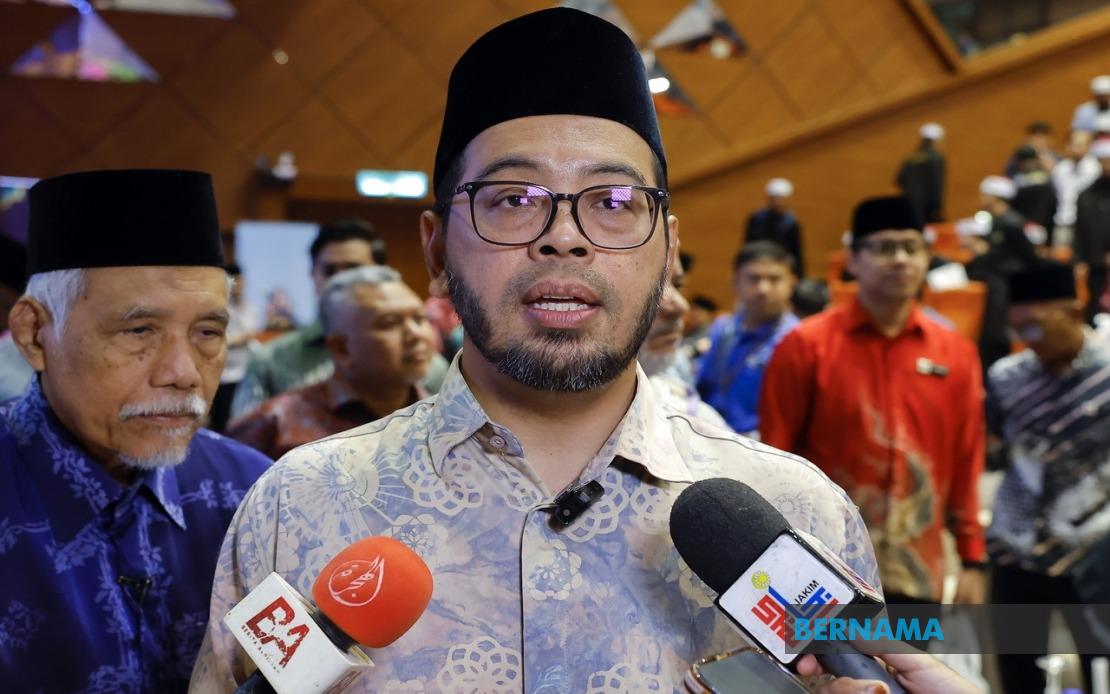
Dr Zulkifli Hasan, Minister in the Prime Minister's Department (Religious Affairs), announced on June 18 that his department would place the Sultan's message at the heart of its strategic planning. Speaking after presiding over the National and International Tokoh Ma'al Hijrah Premier Lecture 1448/2026 in Putrajaya, Dr Zulkifli emphasised the government's commitment to translating the royal address into concrete programmes and initiatives. The ministry intends to incorporate the Sultan's guidance into its ongoing work, ensuring that the concerns and recommendations articulated by the Palace become operational principles guiding departmental activity.
Sultan Nazrin's intervention reflects growing concern among Malaysia's leadership about the multifaceted pressures confronting young people today. The Sultan highlighted that contemporary youth navigate a complex landscape marked by climate anxiety, geopolitical instability, economic precarity, and the fragmenting effects of digital polarisation. These structural challenges create psychological space into which extremist recruitment efforts and coordinated disinformation campaigns can gain purchase. The Sultan's diagnosis suggests that addressing youth vulnerability requires not merely law enforcement responses but sustained, authentic engagement from trusted religious figures who can offer meaning-making frameworks and moral guidance.
The emphasis on religious leadership is particularly significant in the Malaysian context. Islam occupies a constitutionally entrenched role in national life, and Islamic religious authorities command substantial moral authority among Muslim-majority populations. By calling upon these figures to engage more proactively with youth, Sultan Nazrin was invoking an existing institutional infrastructure that, if properly mobilised, could reach young people in mosques, Islamic study circles, and community settings where secular government messaging might carry less weight. This represents a partnership model in which state resources and policy-making capacity combine with the grassroots legitimacy and pastoral credibility of religious institutions.
The threat environment that Sultan Nazrin identified has tangible dimensions in Malaysia and across Southeast Asia. Over the past decade, the region has witnessed recruitment campaigns by transnational militant groups, the proliferation of online echo chambers promoting sectarian narratives, and the weaponisation of religious language by actors seeking to radicalise young adherents. Social media platforms, while offering enormous benefits, have also created environments where extremist content spreads rapidly and where algorithmic amplification can trap users in ideological feedback loops. Young people, still developing their critical capacities and often seeking belonging and purpose, can be particularly vulnerable to these dynamics.
Misinformation presents a parallel challenge. False narratives about religious minorities, fabricated political allegations, and distorted interpretations of Islamic teaching circulate widely on digital platforms, often designed to provoke communal tensions or undermine institutional trust. Young Malaysians navigating these information ecosystems require guidance in developing media literacy and discernment. Religious leaders, whose legitimacy derives from doctrinal knowledge and spiritual authority, are well-positioned to help young people distinguish authentic religious teaching from distorted versions deployed for political or destructive ends.
Dr Zulkifli's statement that the department will "mainstream" the Sultan's messages suggests an institutional commitment to systematic integration rather than ad-hoc response. This implies that programmes across religious education, youth mentorship, digital literacy, and community engagement will be evaluated and redesigned to align with the Sultan's framework. The ministry might develop new curriculum materials, expand mentoring networks, create digital platforms for religious guidance, or establish formal channels through which young people can access trusted religious counsel on contemporary issues.
The timing of this initiative coincides with broader regional and global grappling with extremism and information disorder. Southeast Asia has become a focal point for international counter-extremism efforts, with governments, civil society organisations, and tech companies collaborating on prevention strategies. Malaysia's approach, grounded in religious engagement rather than securitised responses alone, offers a distinctive model emphasising prevention through positive engagement rather than purely through surveillance and enforcement.
The success of this initiative will depend on several factors. Religious leaders must themselves receive training in contemporary digital dynamics and youth psychology to ensure their engagement resonates authentically rather than appearing didactic or out-of-touch. Programmes must address the underlying drivers of youth vulnerability—economic opportunity, political voice, social inclusion—rather than treating extremism and misinformation as isolated phenomena amenable to religious exhortation alone. Resources must be adequate and sustained, recognising that countering entrenched online narratives requires long-term commitment rather than episodic campaigns.
For Malaysian observers and policymakers, Sultan Nazrin's address and the government's response signify recognition that technological change has fundamentally altered the landscape of youth development and risk. The religious sector, long a pillar of social cohesion and moral formation, is being invited to assume renewed prominence in navigating these challenges. Whether this approach succeeds in measurably reducing youth vulnerability to extremism and misinformation will offer important lessons for other Muslim-majority democracies grappling with similar pressures. The coming months will be crucial in determining whether the ministry's commitment translates into programmes that meaningfully improve young Malaysians' resilience in an increasingly complex information environment.

