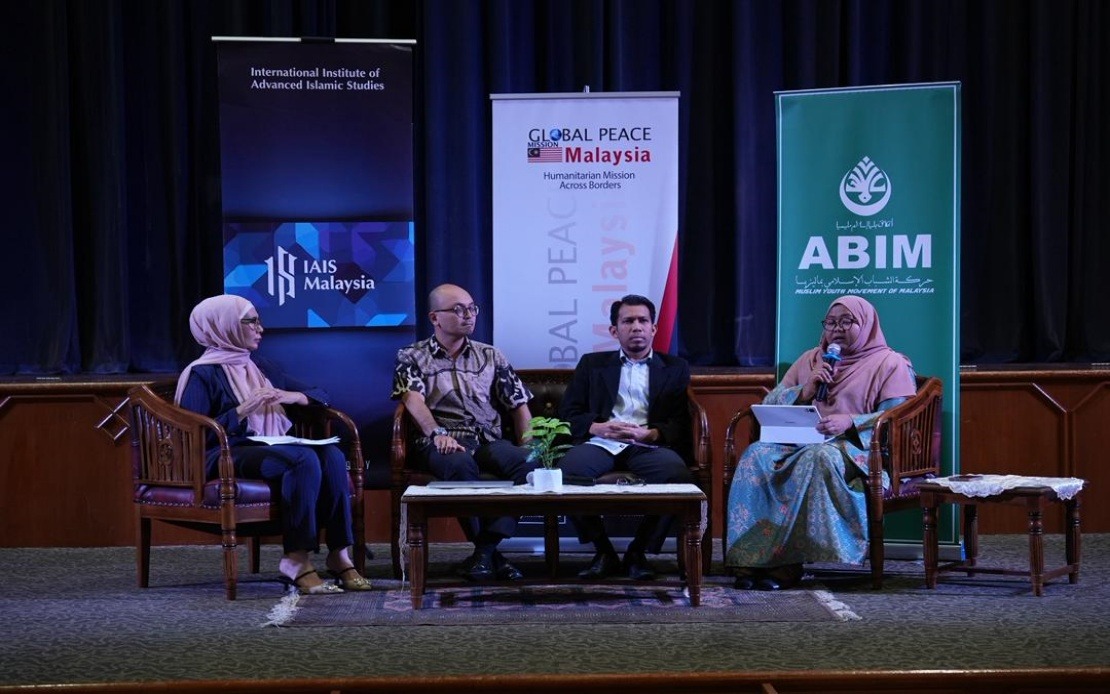
Malaysia's civil society and humanitarian organisations have collectively called for a strategic shift in how the government addresses refugee challenges, with stakeholders converging in Kuala Lumpur to adopt a 10-point resolution framework that seeks to navigate the complex intersection of national security, public sentiment and international humanitarian responsibility. The Kuala Lumpur: Solidarity with Refugees Conference, held on June 20 in conjunction with World Refugee Day 2026, brought together representatives from non-governmental organisations, academic institutions, international bodies and community leaders at the International Institute of Advanced Islamic Studies (IAIS) Malaysia to chart a path forward on an issue that remains contentious and often polarised in public discourse across Southeast Asia.
The conference's primary call centres on government action to formulate what organisers describe as a holistic action plan—one that explicitly recognises the legitimate concerns Malaysian communities harbour regarding security, law enforcement and social stability, while simultaneously acknowledging the nation's long-standing humanitarian commitments to displaced populations. This framing represents a deliberate attempt to reclaim what conference organisers characterise as the "middle ground" in refugee discussions, moving away from what they view as increasingly polarised narratives that have come to dominate both public conversation and social media platforms in recent years.
Angkatan Belia Islam Malaysia (ABIM) president Ahmad Fahmi Mohd Samsudin outlined the conference's strategic intent, emphasising that the resolutions embody direct insights from non-governmental organisations actively engaged with refugee communities across Malaysia. These organisations, he explained, possess ground-level understanding of both the genuine integration challenges and the misconceptions that often cloud policy discussions. The declarations will now be circulated to Members of Parliament and relevant institutional stakeholders, with ABIM actively seeking follow-up engagement with the Home Ministry and National Security Council to translate conference outcomes into concrete policy discussions.
Joint organisers Global Peace Mission (GPM) Malaysia, ABIM and IAIS Malaysia deliberately positioned this gathering as a corrective intervention in Malaysia's refugee discourse. The conference specifically aimed to address what organisers identify as persistent misinformation, anti-refugee sentiment and what they characterise as dehumanising rhetoric that has gained traction, particularly across digital platforms. By bringing diverse stakeholders into structured dialogue, the conference sought to demonstrate that refugee issues need not be treated as binary propositions between security and compassion, but rather as multifaceted challenges requiring nuanced, evidence-based solutions.
One crucial dimension that emerged from the conference's deliberations centres on Malaysia's paradoxical position within international refugee frameworks. While Malaysia has not acceded to the 1951 Refugee Convention, the nation possesses substantial historical experience managing refugee populations fleeing conflicts in Vietnam, Syria, Bosnia and Palestine—experience that Ahmad Fahmi suggests should inform contemporary policy-making rather than being overshadowed by contemporary anxieties. This historical perspective becomes particularly relevant as Southeast Asia grapples with ongoing displacement crises, whether from Myanmar's Rohingya emergency or other regional conflicts that continue generating asylum seekers.
The resolutions adopted at the conference construct a deliberately expansive framework for action. Beyond rejecting all forms of hatred, discrimination and dehumanisation directed at refugees and asylum seekers, the 10-point package explicitly commits to addressing what it terms "legitimate public concerns" grounded in verifiable evidence rather than speculation or inflammatory rhetoric. This distinction—between fact-based policy concerns and emotionally-driven xenophobia—runs through the entire resolution package and reflects organisers' conviction that Malaysian society remains capable of distinguishing between genuine security discussions and inflammatory scapegoating.
A particularly significant component of the conference outcomes addresses data infrastructure and institutional coordination. Participants endorsed strengthening collaboration between Malaysia's government apparatus, the United Nations High Commissioner for Refugees (UNHCR) and other international and local stakeholders to develop more robust systems for refugee data collection, registration and documentation. Such institutional improvements could theoretically enhance the transparency and orderliness of refugee management systems, potentially reducing the information vacuum that often gets filled by speculation and misinformation.
The conference placed considerable emphasis on countering information disorder as a mechanism for reducing anti-refugee sentiment. Resolutions call for enhanced public education initiatives, strengthened media literacy programmes and systematic efforts to combat hate speech and xenophobic narratives that organisers argue threaten broader social cohesion beyond refugee-specific contexts. This framing is particularly significant: conference participants essentially contended that unchecked anti-refugee sentiment represents not merely a humanitarian concern but a potential social stability issue that could extend prejudice beyond displaced populations toward other marginalised communities.
Another substantive resolution addresses the digital harassment and disinformation campaigns targeting refugee advocacy organisations and humanitarian workers. By calling for establishment of communication and advocacy mechanisms to counter attacks, slander and hate campaigns on social media, conference participants recognised that NGOs and activists working on refugee issues have become targets of coordinated hostility, which in turn may discourage engagement with refugee communities and limit the evidence-based advocacy necessary for policy improvement. This resolution essentially seeks to create institutional buffers protecting humanitarian workers from digital attacks.
The conference's adoption of these resolutions reflects broader Southeast Asian dynamics regarding refugee governance. Throughout the region, governments face mounting public pressure regarding immigration and refugee admissions, particularly as economic anxieties intersect with cultural and security concerns. Malaysia, hosting one of the world's largest refugee populations relative to its own demographics, faces particular pressures as local communities compete for resources and services with displaced populations. The conference's insistence on balancing legitimate community concerns with humanitarian obligations thus speaks to tensions affecting multiple Southeast Asian nations simultaneously.
Ahmad Fahmi's closing remarks highlighted what organisers perceive as an escalating risk trajectory—the possibility that anti-refugee sentiment, if permitted to fester without responsible policy response, could metastasise into broader discriminatory attitudes affecting multiple vulnerable populations. This framing recasts refugee policy not as an isolated humanitarian concern but as foundational to maintaining inclusive, cohesive Malaysian society. The conference thus positions the resolutions as preliminary steps toward a more informed national conversation, one that acknowledges both genuine security and social considerations while resisting dehumanising narratives increasingly prevalent in public discourse.
Looking forward, the conference outcomes now enter a critical implementation phase. Whether Malaysia's government, particularly the Home Ministry and National Security Council, will substantially engage with these resolutions and translate them into revised policy frameworks remains uncertain. However, the breadth of stakeholder participation and the deliberate effort to construct a middle-ground consensus position suggest that refugee advocacy organisations in Malaysia are becoming more strategically sophisticated in how they frame policy demands, acknowledging rather than dismissing legitimate public concerns while systematically addressing misinformation and xenophobia.

