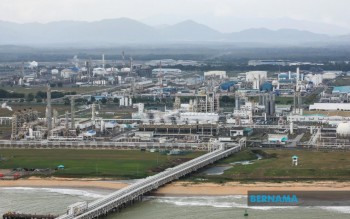
Malaysia's decision to examine the feasibility of creating a national petroleum reserve reflects growing recognition among policymakers and analysts that energy security can no longer be treated as a routine administrative matter but demands strategic intervention. The initiative, announced by Prime Minister Datuk Seri Anwar Ibrahim, positions the country ahead of what many observers believe will be an extended period of volatility in global oil markets, driven less by one-time crises than by persistent geopolitical friction at critical chokepoints.
The Strait of Hormuz remains the primary concern. Roughly one-fifth of the world's petroleum supplies—approximately 20 million barrels daily—flow through this narrow waterway, a geographical reality that makes it perpetually vulnerable to disruption. Yet what distinguishes the current environment is the shift in how analysts assess this risk. Rather than viewing threats to the strait as episodic events separated by periods of stability, market observers now characterize the danger as structural and recurring. SPI Asset Management's Stephen Innes articulated this evolution in thinking, arguing that the combination of repeated threats, shipping delays, elevated insurance premiums and constrained tanker availability has embedded a persistent risk premium into global energy pricing. This premium is unlikely to dissipate until alternative infrastructure—additional pipelines, bypass routes and diversified export pathways—becomes operational, a process estimated to require years rather than months.
Recent military incidents underscore the expanding geographic scope of energy-supply threats. Reports of Houthi attacks on vessels in the southern Red Sea, coupled with assaults on Saudi tankers following American strikes on Iranian targets, demonstrate that disruption risks now span multiple critical passages simultaneously. This geographic dispersion carries profound implications for Southeast Asia, where energy-dependent economies have historically concentrated their threat assessments on the Strait of Hormuz. Should the Gulf and Red Sea routes experience concurrent disruptions, the region would face not merely elevated crude costs but cascading effects across freight expenses, supply chains and overall economic stability.
For Malaysia specifically, the vulnerability is acute and multidimensional. Despite producing approximately 570,000 barrels of crude oil daily, the country remains structurally dependent on imports of refined petroleum products. More strikingly, 69.2 per cent of Malaysia's crude oil imports originate from suppliers accessible only through the Strait of Hormuz, a concentration that leaves the nation exposed to any sustained interruption in that waterway. This import dependency, combined with the nation's energy-intensive manufacturing base and growing electricity demands, creates a compelling case for establishing strategic reserves that can provide breathing room during supply emergencies.
Analysts distinguish between commercial inventories and strategic reserves in ways policymakers must understand. Commercial stocks exist primarily to ensure operational continuity in normal circumstances—buffer supplies that smooth minor supply fluctuations and support logistics efficiency. Strategic reserves function differently; they constitute emergency insurance designed to sustain critical sectors and essential services during prolonged or severe disruptions when normal supply chains fail. BMI oil and gas analyst Tariro Chiweza emphasized that commercial inventories, while necessary, lack the scale and protected status required to withstand extended external shocks. A national petroleum reserve represents a complementary layer of protection, not a substitute for existing systems but rather a safeguard activated only when crises demand.
The timing of Malaysia's initiative reflects broader regional challenges that affect Southeast Asian energy markets collectively. Innes urged governments across the bloc to coordinate their approaches to energy resilience through mechanisms such as ASEAN-level agreements on strategic stock levels, advance warning systems for shipping disruptions and coordinated emergency supply protocols. This regional dimension matters significantly because Southeast Asia's collective economic weight gives it leverage in energy markets, yet that influence remains fractured without coordinated strategy. Joint approaches to reserve establishment, supplier diversification and shipping route security could substantially reduce the costs and risks that individual nations face when acting independently.
Establishing an effective reserve requires more than simply accumulating crude oil in storage tanks. Innes outlined a comprehensive framework encompassing several elements: diversification of crude suppliers to avoid over-reliance on any single producing nation or region; development of alternative shipping routes that bypass congested chokepoints; investment in storage infrastructure distributed across multiple locations; and transparent governance rules specifying the conditions under which reserves are deployed and the timelines for replenishment. Without such structural supporting measures, even a substantial reserve could prove inadequate during severe crises or face political pressure for inappropriate drawdown during minor disruptions.
Malaysia's broader energy strategy must address supply-side vulnerabilities alongside demand-management considerations. Chiweza noted that domestic dry gas production is forecast to reach 82.3 billion cubic metres by 2026, a significant expansion that will strengthen the domestic supply foundation. Simultaneously, the country is advancing renewable energy capacity through initiatives including the Solar@PETRA program and the Corporate Renewable Energy Supply Scheme for industry. These investments create a more diverse and resilient energy mix that reduces vulnerability to any single fuel supply disruption. The integration of battery storage, regional electricity interconnectors and nuclear power into Malaysia's long-term planning reflects recognition that energy resilience extends well beyond petroleum supplies into electricity systems and fuel-type diversity.
Price dynamics observed at the time this assessment was compiled—with Brent crude rising 2.97 per cent to US$96.86 per barrel and West Texas Intermediate increasing 1.93 per cent to US$88.76—demonstrate the oil market's sensitivity to geopolitical news. These movements, though modest in absolute terms, underscore how persistent tensions translate into material cost pressures affecting refiners, manufacturers and consumers. A national reserve positioned strategically could dampen such price spikes during supply concerns, providing economic stabilization benefits that extend across the Malaysian economy.
Innes also highlighted often-overlooked dimensions of energy security strategy. He advocated reassessing fuel subsidies that broadly support energy consumption, arguing that more targeted assistance to lower-income households and critical industries would prove more economically efficient and sustainable if elevated oil prices persist. This perspective recognizes that energy resilience ultimately depends on the economic capacity of nations and households to absorb price shocks; subsidies that mask underlying scarcity or volatility create false signals that undermine longer-term adaptive responses. Strategic reserves, supplier diversification and infrastructure investment require significant capital; directing support toward those most vulnerable to energy price movements rather than universal subsidies creates fiscal space for these resilience-building investments.
The conceptual distinction between energy security and energy resilience, as Innes framed it, deserves emphasis for Malaysian policymakers. Energy security focuses narrowly on access to adequate supplies under normal conditions. Energy resilience encompasses the broader capacity of energy systems to maintain function when normal supply routes fail, suppliers prove unreliable or demand spikes unexpectedly. True resilience requires redundancy—backup inventories, alternative suppliers, diverse fuel types and routes—that appears wasteful during normal times but proves invaluable during crises. Malaysia's petroleum reserve initiative represents a recognition that the cost of maintaining such redundancy pales against the economic damage caused by energy supply disruptions.
Looking ahead, Malaysia's success in implementing an effective national petroleum reserve will likely influence neighbouring nations' energy security calculations. The initiative also signals Malaysia's growing confidence in devising homegrown solutions to regional challenges rather than relying exclusively on international markets or external security arrangements. As geopolitical tensions continue reshaping energy markets and supply chains across Southeast Asia, the Malaysian model of combining strategic reserves with supply diversification, renewable expansion and regional coordination may become a template other governments emulate. The window for building resilience before the next major supply disruption is narrowing; the timeliness of Malaysia's deliberations reflects this urgency.

