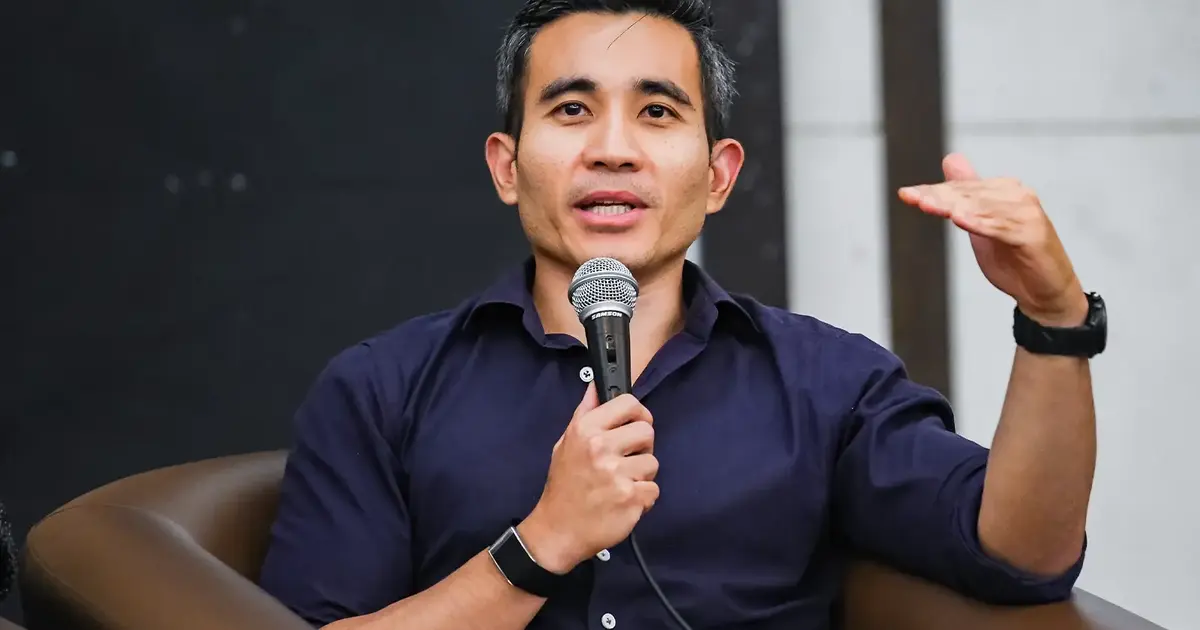
Malaysia's next general election will be dominated by uninspiring but pragmatic political messaging, according to Shahril Hamdan, the former information chief of Umno, one of the country's most influential political organizations. In his assessment of the political landscape ahead of GE16, Shahril contends that no major political party—whether incumbent or opposition—possesses the credibility or capacity to articulate a genuinely transformative agenda that Malaysian voters can believe in.
This stark prediction reflects deeper anxieties about the state of Malaysia's political discourse and the apparent exhaustion of ambitious policy platforms. The observation comes at a time when the electorate remains deeply divided along ethnic, religious, and economic lines, with voters increasingly sceptical of grand promises from the political establishment. The lack of inspired leadership narratives suggests that the coming election may revolve around narrow, transactional appeals rather than compelling visions for national renewal.
Shahril's position carries particular weight given his institutional knowledge of Umno's organizational machinery and strategic communications apparatus. Having served as the party's information chief, he understands the constraints and considerations that shape how major political organizations craft their public messaging. His assessment suggests even the party with the deepest roots in Malaysia's political system recognizes the limitations of what it can credibly promise voters in the current environment.
The absence of transformative narratives in Malaysian politics reflects several structural challenges. The country's economy faces headwinds from global trade uncertainties, rising living costs, and sectoral disruptions that are beyond the scope of any single administration to resolve swiftly. Educational reform, healthcare expansion, and infrastructure development—perennial campaign themes—require sustained investment and cross-party consensus that remains elusive. Political fragmentation has deepened in recent years, making consensus-building more difficult and empowering smaller parties to veto ambitious policy coalitions.
Furthermore, Malaysia's religious and ethnic diversity, while constituting one of the nation's distinctive features, imposes significant constraints on political messaging. Any party proposing substantial changes to constitutional arrangements, affirmative action policies, or religious governance risks triggering backlash among communities that perceive such proposals as threatening their interests. This dynamic effectively boxes in political leadership, pushing campaigns toward incremental adjustments rather than systemic reimagining.
The predicament also reflects broader regional and global trends. Across Southeast Asia, political parties have become increasingly cautious about offering transformative platforms, preferring instead to govern through targeted welfare schemes, infrastructure projects, and selective sector development. The Malaysian electorate, having experienced decades of political instability—including the dramatic events of 2020-2022 that saw multiple changes of government—may itself prefer stability and functional competence over ambitious revolutionary pledges that often disappoint in practice.
For Malaysian voters, particularly younger citizens seeking meaningful change in areas such as environmental sustainability, digital economy participation, and meritocratic advancement, this development carries significant implications. If Shahril's assessment proves accurate, GE16 campaigns will focus on who can manage existing institutions more efficiently rather than which party can reimagine Malaysia's trajectory. This could deepen disengagement among voters who feel their aspirations lack adequate political representation.
The regional dimension matters too. Malaysia's position as a major Southeast Asian economy means that its political stability and policy clarity affect investment flows and economic performance across the region. Elections yielding cautious, functional governance may preserve stability but could also slow the kind of bold economic reforms—in green energy, artificial intelligence capability-building, or digital infrastructure—that regional competitors are pursuing more aggressively.
Shahril's commentary also suggests recognition within Umno itself that the party's traditional electoral coalition has fractured beyond easy repair. Once able to mobilize Malay-Muslim voters around grand narratives of national development and communal advancement, Umno now finds itself competing with rival Malay parties for the same constituency while struggling to maintain relevance among younger, urban, and religiously pluralist segments of society. The party's inability to articulate a credible transformative vision may reflect this structural weakness.
Opposition parties face analogous constraints. While criticism of incumbent governance provides opposition movements with rhetorical ammunition, translating that critique into a coherent alternative platform—one simultaneously ambitious enough to inspire yet realistic enough to convince investors, civil servants, and ordinary Malaysians that implementation is feasible—has proven extraordinarily difficult. The fragmentation of opposition coalitions in recent years has only compounded this challenge.
Looking toward GE16, Shahril's prediction suggests that Malaysian politics will enter a phase characterized by competition over competence rather than vision. Campaigns will likely revolve around which party can deliver better healthcare, cheaper electricity, improved roads, and more responsive governance—all important, but fundamentally limited in scope. Whether this represents a healthy maturation of democratic politics or a worrying decline in political imagination remains contested.
Ultimately, the implications extend beyond campaign aesthetics. If Malaysian political parties genuinely cannot credibly articulate transformative agendas, the burden of driving national change may increasingly fall on technocrats, civil society, and market forces rather than elected leadership. For a democracy, that shift carries profound consequences for questions of legitimacy, accountability, and the relationship between political authority and citizen participation.

