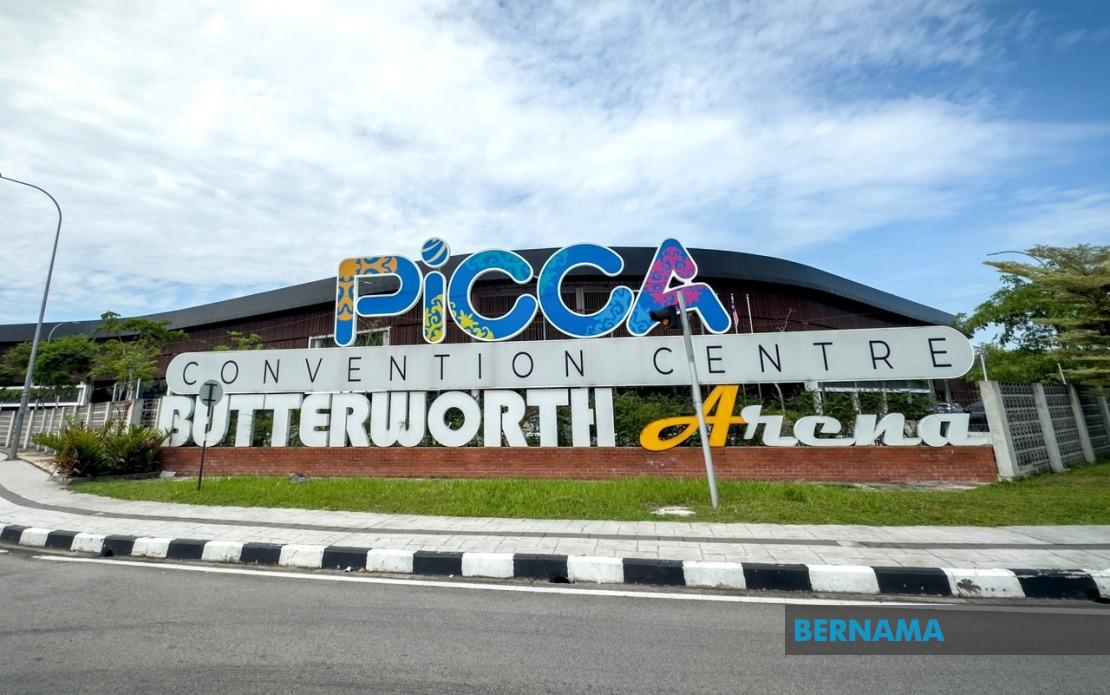
The sixth edition of Malaysia's National Journalists' Day reaches its crescendo today in Butterworth, where approximately 1,000 media professionals from Malaysia and abroad are converging on the PICCA@Arena Butterworth Convention Centre for a celebration centred on institutional credibility and journalistic responsibility. Prime Minister Datuk Seri Anwar Ibrahim will formally open the proceedings at 3 pm, underscoring the government's commitment to recognising the fourth estate's constitutional role as a pillar of democratic governance. The gathering represents more than ceremonial recognition; it signals a moment of reflection on the state of journalism within Southeast Asia's broader information ecosystem.
This year's festivities carry the thematic weight of 'Media Integrity Strengthens Credibility'—a resonant phrase that speaks to persistent anxieties surrounding misinformation, disinformation, and the erosion of institutional trust in public discourse. The selection of this theme occurs against a backdrop of regional challenges: deepfake technology, algorithmic amplification of sensational content, and the fragmentation of media audiences into ideologically reinforced echo chambers. By placing integrity at the heart of HAWANA 2026, Malaysia's Communications Ministry and Bernama—the national news agency implementing the event—are signalling that the profession itself must actively counter erosion of credibility through transparent editorial practices and commitment to verification.
Penang Chief Minister Chow Kon Yeow, Communications Minister Datuk Fahmi Fadzil, and other senior officials will attend alongside international delegations from Indonesia's Antara News Agency, Vietnam News Agency, China's Xinhua News Agency, the Indonesian Journalists Association, and the Malaysia-Indonesia Journalists Friendship Association. This multinational representation matters considerably for Southeast Asian journalism. Cross-border partnerships among news organisations strengthen the region's capacity to report on transnational issues—from environmental degradation to human trafficking—while establishing professional standards and ethical frameworks that transcend national borders. Regional collaboration also buffers individual nations' media landscapes against undue political pressure by embedding journalists within broader professional networks that uphold universal principles of accuracy and independence.
The centrepiece of today's programme involves the bestowal of HAWANA Awards and Special HAWANA Awards to individuals judged to have made substantive contributions to journalism and shaped public consciousness. Beyond individual recognition, these honours serve a broader institutional function: they codify the profession's values and establish exemplars whose careers demonstrate the possibilities of principled reporting. Simultaneously, the Tabung Kasih@HAWANA contributions directed toward media veterans in financial distress acknowledge an often-overlooked reality—that journalism, particularly investigative work and regional reporting, frequently offers inadequate remuneration, leaving practitioners vulnerable in retirement or illness. Support mechanisms for displaced or retiring journalists strengthen the profession's stability and retain institutional memory.
Complementing the formal ceremonies, the RIUH Pi HAWANA Carnival transforms the PICCA Convention Centre's parking area into a multi-day cultural festival. Performances by established Malaysian artists including Exists, Bunkface, Masdo, Sakura Band, Budak Nakal Hujung Simpang, and Chelsea Ng create an accessible entry point for public engagement with the journalism profession. The carnival's juxtaposition of artistic performance, interactive workshops, and commercial product displays deliberately dissolves the boundary between journalism as institutional practice and journalism as cultural force embedded within Malaysian society's creative ecosystem. This approach acknowledges that media literacy and public understanding of journalistic processes require engagement beyond professional conferences—they demand cultural moments that make journalism's importance visible and experiential.
The supporting infrastructure of the RIUH Pi HAWANA Carnival—over 24 local creative product brands and 20 food and beverage vendors—further signals the Malaysian media industry's integration with the broader creative economy. Journalists increasingly function not solely as information gatherers but as content creators participating in multimedia ecosystems where text, video, audio, and interactive formats compete for audience attention. The carnival's emphasis on creative products reflects this evolution, normalising the notion that contemporary journalism necessarily engages with design, production values, and audience experience rather than limiting itself to traditional editorial functions.
Leading up to today's centrepiece, organisers conducted a sustained campaign of engagement events throughout May and June. The HAWANA 2026 Media Forum on May 7 provided space for professional dialogue around thematic concerns. The Strategic Partners Engagement Event on June 4 convened industry stakeholders—news organisations, technology platforms, advertisers—to discuss sustainable models for quality journalism in an era of declining print advertising revenue and algorithmic content distribution. The Fun Walk on June 14 brought journalists and the public into shared physical space, visibly asserting the profession's community presence. This sequenced programming strategy converts a single celebratory event into an extended ecosystem of professional reflection, public education, and stakeholder coordination.
HAWANA's annual commemoration on May 29 anchors itself to historical memory—specifically the publication of Utusan Melayu's inaugural edition on May 29, 1939. This date carries symbolic resonance: it precedes by nearly a decade Malaysia's independence, positioning journalism as integral to nationalist movements and democratic self-determination. By tethering contemporary celebrations to this historical foundation, HAWANA organisers argue implicitly that journalism's contemporary challenges represent not novel crises but recurring tensions between institutional independence and political pressure, between economic sustainability and editorial integrity, between democratisation of publishing technology and maintenance of professional standards. Historical consciousness prevents ahistorical panic while framing current difficulties as generational tests to which journalism has repeatedly risen.
The Communications Ministry's stewardship of HAWANA, implemented through Bernama as executing agent, reflects governmental endorsement of journalism's role in nation-building and information governance. This institutional support simultaneously creates potential tensions: state-sanctioned celebration of press freedom sits uneasily alongside regulatory frameworks that governments invoke to manage media conduct. Malaysian journalism operates within parameters established by laws addressing sedition, defamation, religious sensitivity, and national security—frameworks that international press freedom advocates frequently critique as constraining editorial independence. HAWANA's emphasis on integrity and credibility must therefore be understood not merely as professional exhortation but as implicit negotiation between institutional autonomy and state authority, between the profession's self-conception and governmental expectations regarding media responsibility.
For Malaysian and Southeast Asian readers, HAWANA 2026's grand finale in Penang carries implications extending well beyond ceremonial recognition. The gathering represents a moment when the region's media institutions collectively assert their commitment to professional standards, ethical practice, and public service at a time when journalism's economic model fractures and audiences fragment. International participation signals that excellence in journalism remains transnational concern—that Southeast Asian journalists recognise shared professional values transcending linguistic, ethnic, and national boundaries. The carnival's integration of entertainment, creative enterprise, and public engagement demonstrates that journalism's future viability depends not solely on institutional strength but on cultural integration, public understanding, and demonstrable social value. As misinformation proliferates globally and democratic institutions face unprecedented challenges to legitimacy, the profession's resolve to strengthen credibility through integrity becomes increasingly consequential for Malaysia's democratic health and regional stability.

