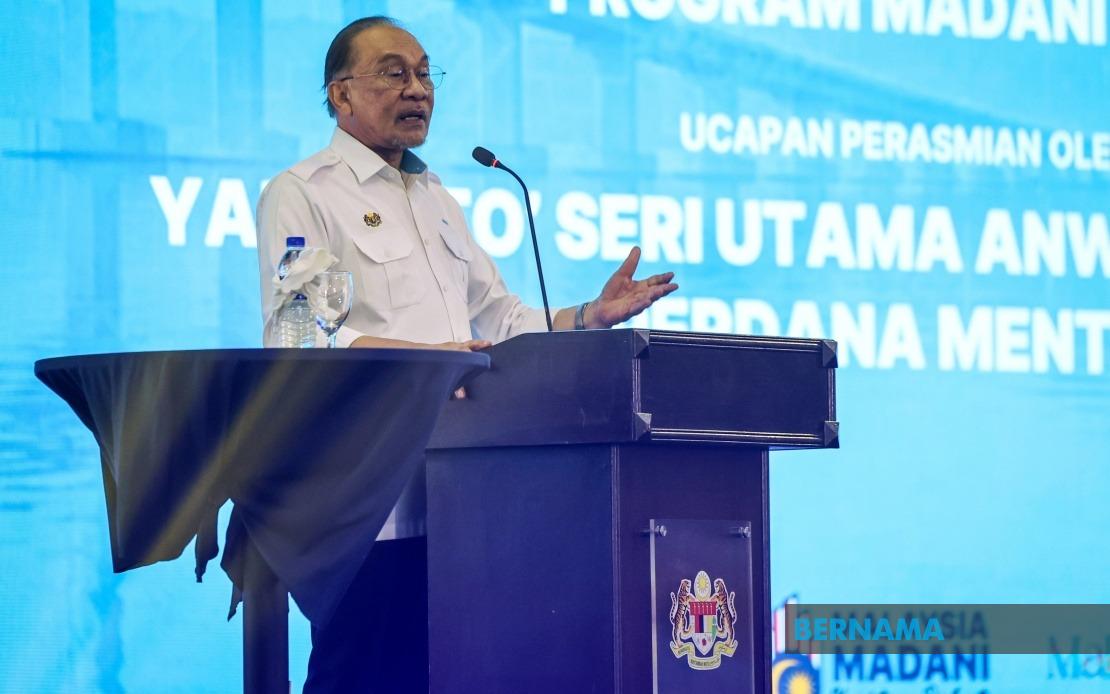
Prime Minister Datuk Seri Anwar Ibrahim has underscored the critical importance of pairing Malaysia's globally accepted halal certification framework with substantive industrial strength if the nation is to solidify its position as the world's leading halal industry centre. Speaking at the opening of the Penang International Halal Expo (PIHEX) 2026 in Bukit Mertajam, Anwar highlighted that while Malaysia's certification system enjoys strong international credibility, this advantage alone is insufficient without accompanying manufacturing, processing, and supply-chain capabilities that can meet the standards being promoted.
The Prime Minister's remarks signal a strategic recalibration in how Kuala Lumpur approaches its halal sector ambitions. Rather than relying solely on the prestige and acceptance of Malaysian halal certification labels overseas, the government is now emphasising the need for concrete industrial infrastructure—including compliant facilities, trained workforces, research and development capacity, and logistics networks—that would enable Malaysia to become a one-stop destination for businesses worldwide seeking to enter halal markets. This shift reflects a maturing understanding that certification authority, while valuable, must be grounded in tangible productive capacity to generate sustained competitive advantage.
Anwar disclosed that conversations with multiple global leaders have revealed substantial appetite for Malaysian halal expertise and certification. He reported that Chinese President Xi Jinping, Brazilian President Luiz Inacio Lula da Silva, and South African President Matamela Cyril Ramaphosa have each independently expressed interest in collaborating with Malaysia on halal sector development and obtaining official Malaysian halal certification for their respective nations' products. The convergence of interest from three major emerging economies across different continents underscores the scale of potential demand for Malaysia's halal services.
The timing of Anwar's remarks at the Penang Bumiputera Entrepreneurs Gathering (HUBPP) is instructive, as it signals that the government views domestic entrepreneurship and bumiputera participation as central to realising the halal sector's potential. By emphasising industry capabilities alongside certification, Anwar is implicitly calling for Malaysian businesses—particularly those involving bumiputera stakeholders—to invest in production facilities, quality assurance systems, and export-ready operations that would demonstrate Malaysia's capacity to serve international markets rather than simply validating others' halal credentials.
Malaysia's halal certification system has indeed become a powerful soft power asset over the past two decades. The Halal Malaysia brand carries weight in Muslim-majority nations and increasingly in non-Muslim countries with significant Muslim populations or growing Islamic finance sectors. However, competitors including Indonesia, Turkey, and increasingly the United Arab Emirates have been building parallel certification systems while simultaneously developing their own halal manufacturing bases. Malaysia risks being relegated to a regulatory role—issuing certificates and standards—while other nations capture the value-added manufacturing and processing activities that generate employment and export earnings.
The strategic partnership approach outlined by Anwar also reflects recognition that halal sector growth extends beyond traditional Islamic goods to encompass pharmaceuticals, cosmetics, food technology, financial services, and logistics. International collaborations with major economies would create frameworks for mutual recognition, technical cooperation, and joint ventures that could position Malaysia as both a standard-setter and a preferred partner for halal value-chain development. This is particularly relevant for Southeast Asian readers, as several ASEAN neighbours possess substantial halal manufacturing capabilities and could become either collaborators or competitors depending on Malaysia's strategic choices.
For Malaysian policymakers, the challenge lies in translating international interest into concrete industrial investment. While halal certification generates licensing revenue and enhances Malaysia's reputation, it does not directly create manufacturing jobs or export opportunities unless accompanied by domestic industry expansion. The government must therefore examine whether current incentive structures, regulatory frameworks, and investment policies adequately encourage Malaysian companies to upgrade facilities, adopt advanced halal assurance technologies, and compete for halal manufacturing contracts that would otherwise be placed in neighbouring countries or emerging halal production hubs.
The announcement of PIHEX 2026 as a platform for showcasing halal capabilities suggests the government recognises this gap and is moving to address it through trade promotion and business networking. However, sustained progress will require coordinated action across multiple agencies and departments—from the Halal Development Corporation to trade bodies, financial institutions, and regional governments—to ensure that infrastructure, financing, standards compliance, and skills training are all aligned toward strengthening Malaysia's halal manufacturing base.
Anwar's emphasis on strategic international collaboration also carries implications for Malaysia's broader trade and diplomatic agenda. By positioning halal certification and industry capability as joint offerings to countries like China, Brazil, and South Africa, Malaysia creates opportunities for deeper economic partnerships that extend beyond the halal sector itself. Such collaborations could encompass technology transfer, investment flows, and market access arrangements that enhance Malaysia's economic resilience and regional standing in the Indo-Pacific and beyond.

