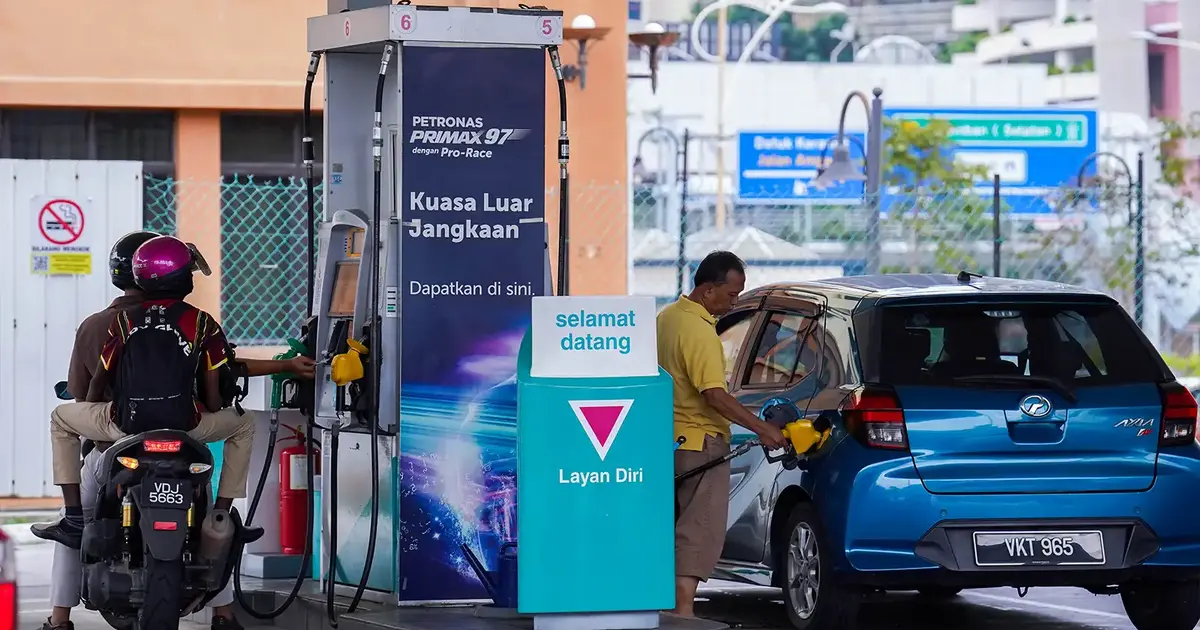
Prime Minister Anwar Ibrahim has sounded an alert about the escalating cost of Malaysia's fuel subsidy scheme, projecting that government expenditure in this area will reach RM40 billion by 2026. The disclosure highlights the intensifying budgetary strain that fuel price support mechanisms are placing on federal finances, a challenge that policymakers must navigate carefully amid broader economic management priorities. Despite these mounting subsidy costs, the Prime Minister has sought to reassure Malaysians that the nation's petroleum reserves remain secure and adequate to meet domestic demand without disruption.
The RM40 billion projected subsidy bill represents a substantial claim on the government's annual budget, illustrating how fuel price support has become one of the more fiscally demanding welfare-related commitments in Malaysia's fiscal framework. This figure underscores the economic tension between maintaining affordability for ordinary Malaysians and sustaining fiscal discipline—a balancing act that has troubled administrations across the region. Successive governments have grappled with the reality that removing or substantially reducing fuel subsidies risks sparking public discontent, while maintaining them drains resources that could be redirected toward education, healthcare, or infrastructure development.
The trajectory toward RM40 billion in annual subsidy spending reflects multiple underlying pressures. Global crude oil prices remain volatile, with geopolitical disruptions and production decisions by major oil-exporting nations continuing to influence market dynamics. When international prices surge, Malaysia's commitment to capping domestic fuel costs at the pump means the gap between market rates and subsidised prices widens, forcing the treasury to absorb larger losses. Additionally, steady growth in vehicle ownership and fuel consumption nationwide contributes to rising total subsidy outflows, regardless of price per litre.
Anwar's emphasis on petroleum supply security carries particular significance for Malaysian consumers and businesses. The nation remains both a petroleum producer and consumer, with domestic reserves concentrated in Peninsular Malaysia and Sarawak. Ensuring that refining capacity, distribution networks, and storage facilities function reliably is essential to preventing supply shocks that could disrupt transport, manufacturing, and daily life. The government's confirmation that supply stability is maintained suggests that infrastructure investments and operational efficiency in Petronas operations are keeping pace with demand, at least for now.
However, the projected RM40 billion subsidy commitment raises uncomfortable questions about long-term sustainability. Malaysia's fiscal position, while more stable than some regional peers, cannot indefinitely absorb such massive annual commitments without trade-offs elsewhere. Economists and policy analysts have repeatedly advocated for subsidy reform mechanisms that target support toward lower-income groups while allowing prices to adjust for higher consumption levels. Such approaches, implemented successfully in select countries, could theoretically maintain affordability for essential transport and cooking fuel while encouraging efficiency and reducing overall fiscal burden.
The tension between affordability and fiscal responsibility also intersects with regional energy transitions. As countries across Southeast Asia explore renewable energy and electric vehicle adoption, Malaysia's continued heavy investment in fuel subsidies may represent resources not deployed toward the technological and infrastructural shifts that long-term energy security increasingly demands. The government's petroleum supply assurances, while necessary for current stability, do not address whether present subsidy levels position Malaysia competitively as regional energy dynamics evolve.
For Malaysian businesses and exporters, subsidised fuel costs have historically provided an indirect competitiveness advantage, reducing transportation and production expenses compared to some regional rivals. Yet if subsidy costs balloon to RM40 billion annually, the broader macroeconomic consequences—crowding out productive investments, constraining fiscal space for development spending, or necessitating higher taxation elsewhere—could ultimately undermine that competitive edge. Supply chain efficiency and industrial productivity depend not just on cheap fuel, but on reliable infrastructure, skilled workforces, and technology adoption—areas where constrained government budgets may struggle to invest adequately.
The Prime Minister's dual messaging—acknowledging the substantial future subsidy burden while reassuring on supply stability—reflects the political and economic complexities that policymakers face. Transparency about fiscal pressures is important for informed public debate, yet premature alarm could unnecessarily concern consumers and businesses. The challenge for the government lies in preparing Malaysians for eventual subsidy reform while avoiding the kind of shock that triggered civil unrest in countries that implemented abrupt removal of fuel support.
Looking ahead, the RM40 billion projection should prompt serious consideration of phased, targeted subsidy reform that protects vulnerable populations while gradually aligning domestic prices closer to market rates. Regional peers have demonstrated that such transitions, when managed carefully with accompanying support programmes for low-income groups, can be implemented without severe disruption. Malaysia's relatively robust administrative capacity and diversified economy provide a foundation for managing such reform more smoothly than some neighbouring nations might achieve.
The government's commitment to maintaining petroleum supply security and affordability reflects genuine concerns about citizen welfare and economic stability. Yet the escalating subsidy trajectory also signals that present policy settings may not be sustainable indefinitely. Policymakers must begin preparing the groundwork—through public communication, targeted assistance programme design, and careful sequencing—for a transition toward more fiscally sustainable fuel pricing, even as they honour current commitments to maintain supply and reasonable affordability for essential consumption.

