As Datuk Seri Dr Mohd Uzir Mahidin stepped down from his position after nine years leading Malaysia's Department of Statistics, he delivered a sobering assessment of the nation's food waste problem: it is fundamentally a symptom of prosperity. Speaking ahead of his retirement after 36 years in public service, the chief statistician identified affluence and urbanisation as the primary drivers of household food discarding, painting a picture of a country where abundance has bred carelessness.
The connection between income and waste stems from a fundamental behavioural shift, Mahidin explained. As Malaysian households have grown wealthier and moved beyond subsistence living, their purchasing decisions have become increasingly detached from actual consumption needs. The expansion of disposable income has spawned a culture of over-purchasing, where consumers acquire items they neither require nor ultimately use. This pattern reflects a broader economic phenomenon: when basic necessities are secured, purchasing decisions become influenced by impulse, promotion, and lifestyle aspirations rather than practical household requirements.
Geographical disparities reveal the starkness of this income-waste relationship. Urban centres, where purchasing power concentrates and consumer culture flourishes, record substantially higher food wastage rates than their rural counterparts. Similarly, states with elevated per capita incomes, particularly Selangor, demonstrate markedly greater disposal rates compared with regions where household expenditure remains more constrained. Yet this urban-rural divide is narrowing. Rural communities increasingly mirror urban consumption patterns as catering services replace home cooking for social gatherings, fundamentally altering waste generation across demographic lines.
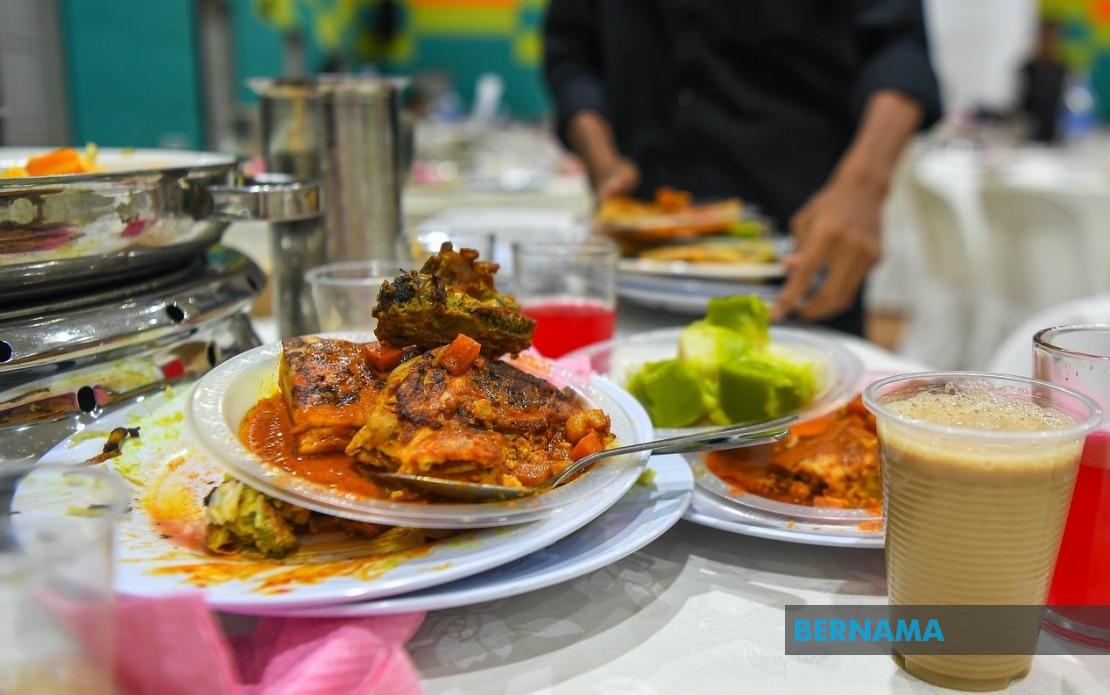
The proliferation of social functions in affluent areas compounds the problem significantly. Mahidin highlighted a peculiar phenomenon in urban Malaysia where multiple events occur simultaneously across the same locality, often featuring identical menus. Guests, particularly in Kuala Lumpur and Selangor, frequently attend several gatherings in a single weekend, with attendance motivated more by social obligation than appetite. This dynamic generates substantial plate waste as invited guests cannot consume the quantities prepared, leaving caterers and hosts with considerable leftovers destined for disposal.
Consumer psychology further exacerbates wastage patterns. When food becomes abundant and heavily discounted through promotional mechanisms, its perceived value diminishes accordingly. Mahidin articulated a crucial economic principle: price signals scarcity value, and when items are artificially cheapened or ubiquitously available, consumers psychologically devalue them. This phenomenon extends beyond groceries to parallel the explosion of online retail, where discounted clothing purchases drive consumption that vastly exceeds actual wardrobes, ultimately generating textile waste at scale.
The National Household Indicators Survey 2025 quantifies the magnitude of this wastage. Malaysian households discard between 31.9 kilogrammes and 97.3 kilogrammes of food annually per capita, representing a staggering range that reflects disparities across socioeconomic segments. The survey reveals that processed and cooked foods generate disproportionately higher waste volumes than raw ingredients, with 94.1 per cent of households reporting disposal of prepared items compared with 88.7 per cent for uncooked food. This distinction carries important implications: household decision-making appears more careful when purchasing raw ingredients but deteriorates markedly once food undergoes preparation.
Waste patterns by food category illuminate specific vulnerability points within household consumption. Vegetables dominate raw food waste at 29.1 per cent, followed by fruits at 22.4 per cent and seafood at 15 per cent. For prepared foods, rice tops the wastage hierarchy at 16.7 per cent, with vegetables again featuring prominently at 15.8 per cent. External food purchases account for 13.8 per cent of cooked waste, suggesting that convenience purchases from restaurants and hawker centres frequently exceed household consumption capacity. These figures underscore how modern food systems, characterised by variety and accessibility, enable purchasing decisions that disconnect from actual meal planning and consumption rates.
A critical infrastructure gap compounds behavioural issues: 79.3 per cent of households commingled food waste with general refuse, indicating that waste separation remains exceptional rather than normative. Only 20.7 per cent of Malaysian households practised food waste segregation, revealing that even where environmental consciousness exists, practical systems enabling separation remain underdeveloped. This infrastructure deficit means that potentially compostable organic material enters landfills where it generates methane emissions, compounding the environmental cost of household food discard beyond the initial production and transportation resources already expended.
Mahidin's departure marks a transitional moment in Malaysian statistical governance at a time when household consumption data increasingly shapes policy priorities. His tenure modernised the Department of Statistics Malaysia into a strategic data institution, yet his parting observations suggest that quantifying Malaysia's waste problem has outpaced policy responses. The challenge confronting the nation transcends statistical documentation; it requires cultivating what Mahidin termed a stronger culture of food appreciation, where abundance becomes an occasion for gratitude rather than inattention.
For Southeast Asia's middle-income economies, Malaysia's experience offers cautionary evidence about development trajectories. As regional peers experience income growth and urbanisation similar to Malaysia's trajectory, they face identical pressures toward consumption expansion and waste generation. Addressing this requires interventions spanning consumer education, catering service regulation, promotional practices, and waste infrastructure investment. Yet the most fundamental requirement may be psychological: fostering social recognition that abundance itself becomes meaningless when accompanied by systematic discard of nourishment that others lack.

