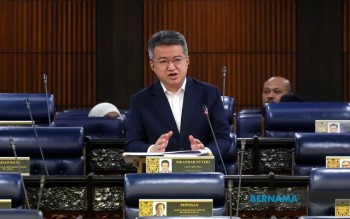
The Malaysian government is holding firm on its current fiscal projections for Budget 2027 despite mounting pressure from geopolitical tensions in West Asia that have lifted global crude oil prices and strained subsidy budgets. Deputy Finance Minister Liew Chin Tong indicated during parliamentary proceedings on July 15 that present economic data from the first half of 2026 does not warrant an immediate recalibration of the government's budget framework. Nonetheless, he acknowledged that officials will continue closely tracking economic developments until the full budget is presented in October, creating space for potential adjustments if conditions deteriorate significantly.
The fiscal challenge confronting Malaysia stems directly from the spike in international oil valuations. The higher crude prices have forced the government to allocate an additional RM40 billion toward fuel subsidies, a substantial burden on the national treasury. This reflects the delicate balance Malaysia must strike between maintaining affordable energy costs for consumers and households while protecting the nation's long-term fiscal health. The subsidy bill represents a major financial obligation that limits flexibility in other spending categories, particularly during a period of global economic uncertainty.
However, the elevated oil market provides a silver lining in the form of increased petroleum-related revenue streams. Liew explained that for every US$1 rise in the barrel price of world crude oil, the government can expect approximately RM300 million in additional petroleum-dependent income. This correlation between higher costs and higher revenues creates a partial offsetting mechanism that helps mitigate the impact of increased subsidy expenditures. While this revenue gain falls short of completely neutralising the subsidy burden, it meaningfully reduces the fiscal gap that would otherwise emerge, thereby making the current projection framework more tenable without fundamental revision.
The government's revenue position is further bolstered by dividends and contributions from Petronas, the national oil corporation, though Liew's statement noted these separate from the petroleum revenue calculations. Beyond energy revenues, the finance ministry is actively monitoring overall tax collection and revenue performance across all government income sources to ensure sufficient funds exist to cover essential operating expenses. This broader revenue monitoring effort reflects official recognition that fiscal stability hinges not merely on energy revenues but on the entire ecosystem of taxation and non-tax income.
The West Asia geopolitical situation has prompted the government to establish enhanced monitoring mechanisms to protect Malaysia's economic stability. The National Economic Action Council has established a crisis management task force that conducts weekly engagement sessions to assess developments and their potential implications for Malaysia. These sessions examine risks to energy supplies, price pressures on essential goods, and broader economic impacts. Such intensive monitoring represents a pragmatic acknowledgment that external shocks, whether from military conflict, shipping disruptions, or further price spikes, require continuous official vigilance rather than static planning.
Liew's statements reveal a confident posture regarding Malaysia's medium-term fiscal consolidation path, even while acknowledging near-term pressures. The government believes it can maintain its fiscal trajectory through a combination of targeted policy approaches. These include the implementation of means-tested subsidy programmes that direct support toward those most in need rather than universal fuel price controls. Additionally, the government continues restructuring its expenditure priorities to eliminate wasteful spending and redirect resources toward productive investments and essential services. Simultaneously, officials are pursuing enhanced efficiency in government spending and pushing tax compliance efforts to broaden the revenue base.
The timing of Budget 2027's October presentation will be crucial, as it provides additional months to gather first-half 2026 economic data and assess whether current trends stabilise or worsen. This delay allows policymakers to incorporate the most recent information on commodity prices, revenue collections, and government spending patterns. If oil prices retreat or stabilise, the subsidy burden may naturally ease, eliminating pressure to revise downward the current fiscal projections. Conversely, if prices climb further or additional geopolitical incidents disrupt oil markets, the government would face harder choices about revenue adjustments or spending reductions.
For Malaysian citizens and businesses, the government's measured approach offers some reassurance regarding budget stability and the maintenance of current subsidy frameworks through 2027. However, the underlying fiscal vulnerability exposed by the RM40 billion subsidy jump underscores the medium-term risks of maintaining extensive price controls on fuel when global market volatility remains elevated. The government's emphasis on targeted rather than universal subsidies reflects this tension, suggesting official recognition that comprehensive price caps become unsustainable during commodity booms.
Regionally, Malaysia's fiscal management approach offers insights into how Southeast Asian oil and gas producing nations navigate the intersection of energy security, consumer welfare, and fiscal discipline. Unlike some neighbours that have implemented rapid subsidy reforms, Malaysia has maintained relatively generous fuel support while seeking efficiency gains elsewhere in the budget. This strategy has proven politically viable but creates vulnerability to commodity price shocks. The successful absorption of the current RM40 billion pressure through revenue offsets and expenditure discipline suggests the current framework remains workable, at least in the near term, though long-term sustainability questions persist.
The government's confidence in maintaining fiscal consolidation trajectories despite external pressures hinges ultimately on continued revenue growth and expenditure restraint across all budget categories. As global economic uncertainties persist and geopolitical risks remain elevated, Malaysia's fiscal managers face the continuing challenge of balancing growth priorities against deficit reduction goals. The Budget 2027 presentation in October will provide a comprehensive picture of how successfully these competing objectives have been reconciled and what adjustments, if any, the government deems necessary for the coming fiscal year.

