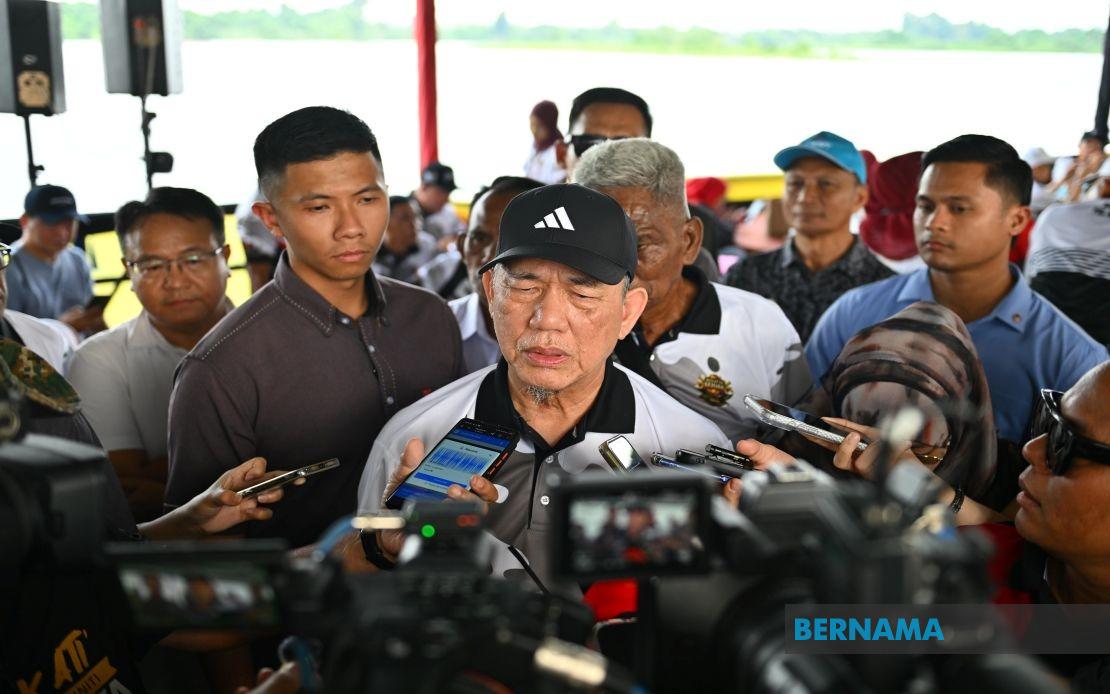
Deputy Prime Minister Datuk Seri Fadillah Yusof has provided reassurance that Malaysia's energy sector remains adequately supplied, even as geopolitical tensions simmer around one of the world's most critical maritime chokepoints. Speaking in Kuching on July 12 after the closing ceremony of Regatta 2026, Fadillah emphasized that the government maintains a vigilant stance on developments in the Strait of Hormuz, through which roughly one-third of globally traded seaborne oil passes annually.
The stability of Malaysia's fuel supply reflects proactive engagement at multiple diplomatic and commercial levels, with Petronas and Prime Minister Datuk Seri Anwar Ibrahim spearheading negotiations designed to safeguard national energy security. This multi-tiered approach acknowledges that while Malaysia possesses domestic hydrocarbon reserves, the nation remains integrated into regional and global energy markets where supply disruptions elsewhere can cascade into local consequences. The absence of current supply interruptions signals that these diplomatic efforts and commercial arrangements are functioning effectively.
Fadillah, who holds the Energy Transition and Water Transformation portfolio, distinguished between the immediate concern of physical supply availability and the longer-term economic challenge posed by price instability. While consumers and businesses can rely on fuel reaching petrol stations and power plants without interruption, the fluctuating cost of energy commodities in international markets presents a distinctly different problem—one that directly impacts government finances and spending priorities.
The Strait of Hormuz has emerged as a flashpoint for maritime tensions involving multiple state and non-state actors, raising concerns among energy-dependent nations worldwide. For Malaysia, which imports substantial quantities of crude oil and liquefied natural gas, any serious disruption to shipping through this passage would threaten both industrial operations and household energy access. The government's attentiveness to these developments reflects the strategic importance of maintaining open supply lines and the diplomatic relationships necessary to prevent escalation that could harm global energy flows.
However, Fadillah acknowledged that geopolitical volatility and pricing uncertainty create genuine headwinds for Malaysia's economic management. Global oil and gas markets respond to risk perceptions, weather disruptions, production decisions by major suppliers, and political developments across the Middle East and beyond. These external forces influence the price signals that eventually reach Malaysian consumers and businesses, irrespective of whether physical supply remains assured. A prolonged period of elevated prices would strain both household budgets and the government's fiscal position.
The financial pressure intensifies when considering Malaysia's existing commitment to consumer subsidies and assistance programmes. The government has maintained targeted price controls and direct support measures to shield lower-income households from the full impact of international energy cost fluctuations. Balancing these social commitments against longer-term fiscal sustainability represents a central policy tension that Fadillah identified as fundamental to contemporary governance challenges.
For Malaysia specifically, energy security intertwines with broader economic objectives and social stability. Unlike some resource-rich nations that can weather extended periods of commodity price weakness, Malaysia's diversified economy depends on competitive energy costs to maintain manufacturing competitiveness, particularly in energy-intensive sectors. Higher fuel and electricity prices ripple through supply chains, affecting everything from petrochemical production to palm oil processing and semiconductor manufacturing.
The acknowledgment of ongoing pricing challenges underscores a distinction between supply security in the near term and the structural economic pressures that characterize Malaysia's relationship with global energy markets. Even with Petronas maintaining adequate supply chains and government negotiations proceeding constructively, external price movements remain beyond direct Malaysian control. This reality shapes both economic forecasting and policy planning across government ministries responsible for energy, finance, and economic development.
Regional context matters significantly here. Other Southeast Asian economies face similar vulnerabilities to Strait of Hormuz disruptions and oil price swings, creating incentives for coordinated diplomatic responses and potentially joint negotiations regarding energy sourcing and supply diversification. Any major supply shock would test not only Malaysia's resilience but that of the entire region, with implications for ASEAN energy cooperation frameworks.
Looking forward, the government's emphasis on proactive engagement through multiple negotiating channels reflects a sophisticated understanding that energy security in the 21st century requires sustained diplomatic effort alongside commercial arrangements. The Energy Transition and Water Transformation Ministry's involvement signals that Malaysia is also considering longer-term alternatives through renewable energy development and reducing dependence on carbon-intensive fuel imports.
Fadillah's remarks balance reassurance with realism, acknowledging both immediate supply stability and medium-term economic challenges. This positioning allows the government to justify current subsidy levels while signalling that continued price volatility necessitates careful fiscal planning. For Malaysian businesses and households, the message is clear: fuel will reach the market reliably, but consumers should remain prepared for continued price fluctuations driven by forces beyond national borders.

