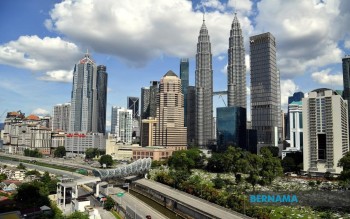
Malaysia's economy has proven unexpectedly resilient against a backdrop of geopolitical turbulence and international supply chain chaos, expanding at 6.0 per cent in the second quarter of 2026. Prime Minister Datuk Seri Anwar Ibrahim attributed this sustained momentum to a combination of defensive government policies and structural reforms implemented under the MADANI Economy framework, which together cushioned the nation's households and businesses from the worst effects of global disruptions stemming from the West Asia conflict.
The government's response to the regional crisis centred on two main pillars of economic protection. First, the MADANI administration deployed targeted financing assistance for small and medium enterprises struggling with higher operational costs and reduced market access. Second, it maintained strategic fuel subsidy mechanisms designed to prevent volatile international energy prices from translating into runaway domestic inflation. These measures worked in tandem to preserve household purchasing power and maintain the consumption patterns that typically drive Malaysia's economic activity, even as international markets experienced significant shocks.
Anwar, who holds the concurrent portfolio of finance minister, noted that Malaysia's inflation remained remarkably contained at 1.9 per cent during the same period, a testament to the effectiveness of the subsidy architecture. While global supply disruptions have pushed prices upward across most trading nations, Malaysia's domestic price environment has remained stable relative to its regional peers. This stability reflects deliberate government intervention through mechanisms including Sumbangan Tunai Rahmah and Sumbangan Asas Rahmah cash assistance programmes, alongside the broader BUDI MADANI subsidy framework that protects vulnerable populations from bearing the full brunt of international price volatility.
The second-quarter performance delivered a significant surprise to economic forecasters. Malaysia's 6.0 per cent expansion exceeded both the Department of Statistics Malaysia's preliminary estimate of 5.8 per cent and the Bloomberg consensus forecast, signalling that the underlying economy is performing more robustly than initial indicators suggested. The result represents the strongest second-quarter growth rate outside the extraordinary pandemic period since 2014, demonstrating that Malaysia is not merely recovering from disruption but is actively expanding above historical trend rates.
This achievement becomes even more striking when considering the composition of growth. The expansion was driven by a combination of domestic demand—reflecting strong consumer and business confidence—alongside a vigorous external sector. Malaysian exporters have managed to navigate supply chain challenges while capturing market share in certain segments, suggesting that the economy possesses structural advantages in the current international environment. The dual-engine growth model, powered by both internal consumption and external trade, provides stability that single-source growth models lack.
Accumulated performance over the first half of 2026 positions Malaysia on solid ground relative to official forecasts. With growth averaging 5.7 per cent across the first two quarters, the economy is now tracking well above the midpoint of the government's full-year target range of 4.0 to 5.0 per cent. This cushion provides considerable buffer against downside risks, meaning that even a significant slowdown in the second half would likely leave the annual outcome within or above the official projection band. The strong first-half showing therefore reflects genuine economic momentum rather than front-loading of demand.
Yet Anwar demonstrated political awareness by acknowledging that aggregate growth figures obscure uneven distribution of benefits across Malaysian society. The prime minister explicitly recognised that while headline economic indicators remain encouraging, many citizens continue experiencing cost-of-living pressures, and certain workers and business segments face genuinely difficult operating conditions. This bifurcation—between headline statistics and lived experience—represents a persistent challenge for policymakers and helps explain why economic resilience at the macro level does not automatically translate into universal sentiment improvement.
The government's stated intention to prioritise measures protecting household purchasing power and supporting distressed workers and businesses indicates recognition of these distributional concerns. Beyond the temporary cash transfers and subsidy programmes already deployed, this framing suggests potential future policy emphasis on wage support, employment creation in challenged sectors, and targeted business relief measures. The administration appears positioning itself to argue that growth is not merely a statistic but a pathway to tangible improvements in living standards and opportunity access.
Geopolitical uncertainty and supply chain vulnerability remain acknowledged risks in the government's assessment. The Middle East conflict shows no signs of rapid resolution, and international shipping patterns have been disrupted in ways that continue affecting cost structures for importing economies like Malaysia. Additionally, higher input costs and food prices persist as structural headwinds rather than temporary phenomena. Employment pressures in certain sectors—potentially including tourism, manufacturing, and services—suggest that labour market dynamics remain uneven, with some industries hiring actively while others contract.
The resilience demonstrated thus far reflects deliberate policy choices rather than fortunate circumstance. The MADANI Economy framework represents a philosophical shift toward inclusive growth models that explicitly consider household welfare alongside headline GDP expansion. By deploying subsidies and cash transfers strategically rather than universally, the government has attempted to target support toward those most vulnerable to external shocks while maintaining fiscal sustainability. This targeted approach differs from blanket price controls or universal subsidies that might prove fiscally unsustainable during prolonged crises.
For Malaysian businesses and workers, the current environment presents a mixed landscape. The government support framework provides genuine relief for affected SMEs and vulnerable households, while broader economic growth creates hiring opportunities in expanding sectors. However, navigating the elevated input cost environment and volatile global conditions requires active management and adaptation. Companies successfully weathering current conditions are typically those with diversified supply chains, strong balance sheets, and flexible business models.
The performance of Malaysia's economy in 2026 carries implications beyond the nation's borders. As a significant regional economy and international trade hub, Malaysia's resilience demonstrates that carefully designed policy responses can mitigate external shocks. Other Southeast Asian nations facing similar geopolitical and supply chain challenges may observe Malaysia's experience with interest, particularly regarding the efficacy of targeted support mechanisms and the importance of maintaining macroeconomic stability during turbulent periods.
Looking forward, the sustainability of Malaysia's growth momentum will depend on several factors including the trajectory of the West Asia conflict, the restoration of normalcy in global supply chains, and the continued effectiveness of government support measures in sustaining household and business confidence. The government's task involves balancing the need to maintain fiscal discipline against pressure to expand relief measures as costs persist. Malaysia's economic story in 2026 thus far suggests that this balance is being managed successfully, but upcoming quarters will test whether current momentum can be sustained against evolving global challenges.

