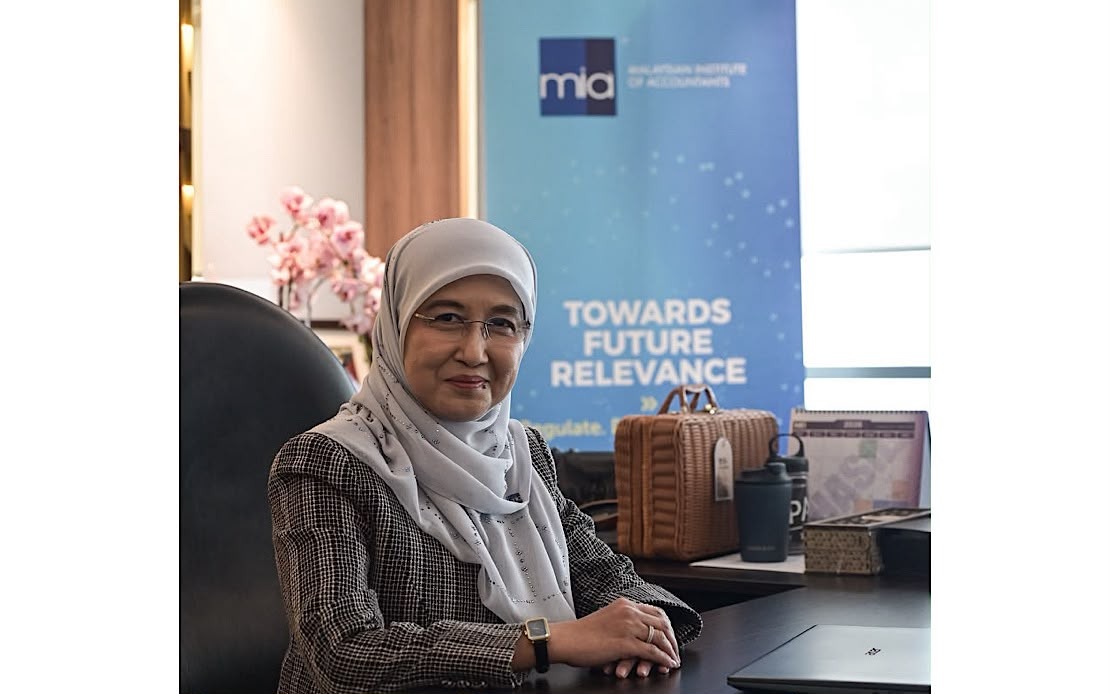
Malaysia's accountancy profession stands at a critical juncture where technological advancement and evolving business demands require a fundamental shift in how practitioners operate, according to leadership at the Malaysian Institute of Accountants. The nation's accountants must embrace innovation while reinforcing their commitment to ethical practice and stakeholder confidence, positioning themselves as indispensable advisers in an increasingly complex economic landscape rather than viewing technology as a threat to their relevance.
Datuk Saniza Said, who made history as MIA's first woman president when elected on December 8, 2025, articulates a vision of accountancy professionals transcending traditional bookkeeping roles to become strategic partners in business decision-making. This expanded mandate reflects broader changes in how organisations view financial expertise, shifting from transactional accounting functions toward high-level advisory services that inform corporate strategy, manage risks and safeguard stakeholder interests through rigorous professional judgment.
The foundation of this transformation rests on what Saniza describes as the profession's bedrock: trust, integrity and ethical conduct. In an era marked by increasingly sophisticated financial misconduct and fraud schemes, accountants serve as gatekeepers of financial transparency and independent assurance. Their ability to maintain public confidence in financial disclosures becomes crucial for Malaysia's standing as a trusted financial destination, attracting investment and sustaining market stability across the region.
Artificial intelligence and automation technologies are reshaping accountancy work in ways that paradoxically strengthen rather than weaken the profession's value proposition. Rather than replacing accountants entirely, these tools are automating routine bookkeeping, data entry and reconciliation tasks that traditionally consumed significant professional time. Saniza emphasises that while AI can handle computational and repetitive functions, human judgment, ethical reasoning and professional accountability remain irreplaceable. The distinction between what machines can do and what only qualified professionals can deliver becomes increasingly sharp.
MIA chief executive officer G. Shanmugam frames this technological shift as an opportunity to elevate the profession's attractiveness to younger talent. When automation eliminates tedious administrative work, fresh graduates can progress more rapidly into analytical, managerial and genuinely engaging roles that leverage their education and intellectual capabilities. This career pathway becomes more compelling than traditional accounting routes where junior staff spent years in low-value clerical functions before accessing meaningful professional work.
The evolving skillset required of modern accountants reflects this shifting landscape. Beyond traditional financial reporting expertise, practitioners increasingly need competencies in data analytics, predictive analytics and strategic foresight. Organisations now expect their accounting teams to anticipate market trends, identify emerging risks and opportunities, and provide forward-looking counsel on business strategy. This requires accountants to develop capabilities in pattern recognition, scenario analysis and business intelligence that transcend conventional accounting knowledge.
Sustainability reporting and assurance represent emerging domains where accountants' analytical and assurance skills find new application. MIA's recent launch of its Sustainability Blueprint and Sustainability Roadmap equips members with frameworks for developing competencies in environmental, social and governance reporting. As regulatory frameworks and investor expectations around corporate sustainability intensify across Asia, accountants positioned to provide independent assurance on sustainability metrics gain significant competitive advantage and value to their organisations.
Professional development infrastructure underpins this transformation. With approximately 42,000 members growing at 1.5 to 2.0 per cent annually, MIA's delivery of around 1,000 continuing professional development programmes yearly demonstrates institutional commitment to keeping the profession current. These programmes, supplemented by conferences, online learning and professional networking initiatives, ensure that even established practitioners can acquire emerging competencies needed to remain relevant in a rapidly evolving profession.
The broader implication for Malaysia's economic competitiveness is significant. As the nation positions itself within global financial markets and seeks to attract multinational investment, the quality and sophistication of its professional services sector becomes a competitive asset. An accountancy profession recognised for combining technological sophistication with unwavering ethical standards strengthens Malaysia's reputation among international investors and multinational corporations evaluating jurisdictions for regional headquarters or operations.
Shanmugam's assertion that accountants increasingly function as trusted business advisers underscores a fundamental repositioning of the profession within corporate hierarchies. Where accountants once occupied back-office functions supporting financial reporting, they now participate in boardroom discussions shaping strategy and competitive positioning. This evolution reflects growing recognition that financial acumen, combined with deep business knowledge and analytical capability, provides insights essential to enterprise success in volatile markets.
The technological era need not spell decline for the accountancy profession, contrary to predictions occasionally heard in industry discussions. Instead, it creates opportunity for practitioners who embrace continuous learning and expand their capabilities beyond traditional technical expertise. Accountants who develop foresight capabilities, understand data science applications and maintain ethical leadership become more valuable to organisations navigating complexity and uncertainty.
Malaysia's accountants thus face both opportunity and responsibility. The opportunity lies in expanding their scope from compliance and reporting toward strategy and foresight. The responsibility involves maintaining the professional standards, ethical conduct and public interest commitment that have historically defined the profession. Successfully navigating this transition positions Malaysian accountants as globally competitive professionals while strengthening their nation's credentials as a trusted financial centre within Southeast Asia and beyond.

