Malaysia stands poised to cross a significant economic milestone, with the country's Gross National Income per capita approaching the World Bank's high-income classification threshold. Human Resources Minister Datuk Seri R. Ramanan announced that the nation's GNI per capita has climbed to USD12,380 under Prime Minister Datuk Seri Anwar Ibrahim's administration, marking the strongest position since Malaysia gained independence in 1957. With the World Bank setting the 2027 high-income benchmark at USD14,376, Malaysia requires only USD1,996 more in per capita income to achieve this coveted status.
The achievement reflects broader economic expansion across the country. Malaysia's total Gross Domestic Product has expanded to USD472 billion, also representing the highest recorded level since 1957. These figures underscore the cumulative impact of government policies aimed at economic strengthening, foreign direct investment attraction, and workforce productivity improvements. The timing is significant for a nation that has long positioned itself as a regional economic leader and aspires to move beyond middle-income classification into the tier reserved for developed economies.
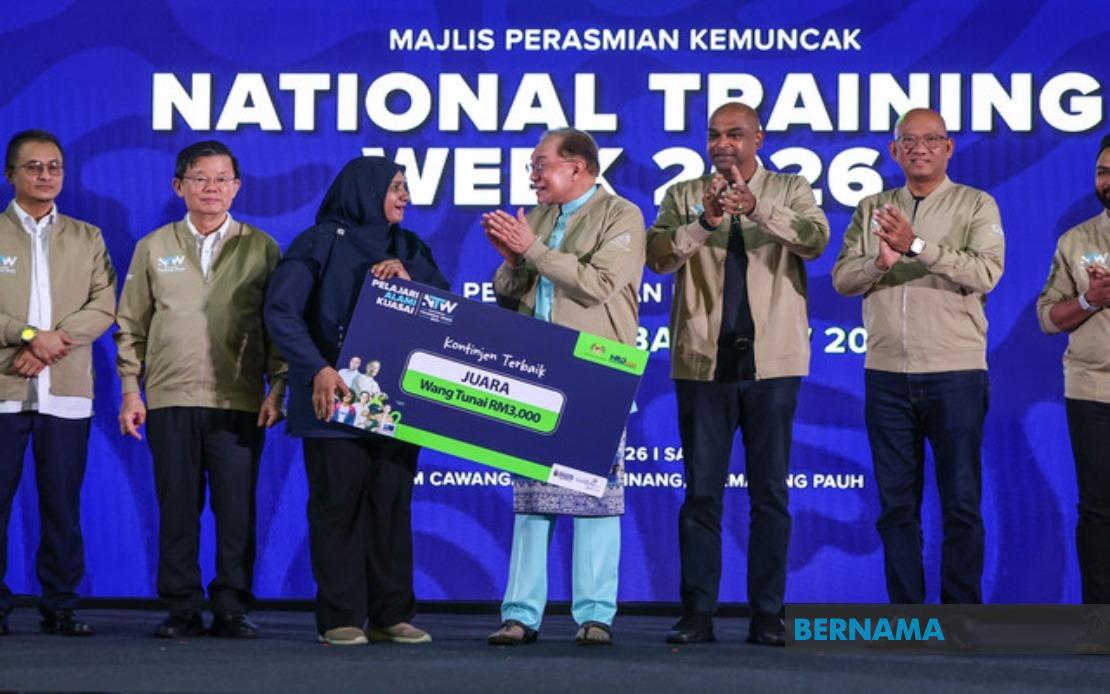
Ramanan, speaking at the National Training Week 2026 opening ceremony at Universiti Teknologi MARA Permatang Pauh near Bukit Mertajam, framed the near-achievement as validation of current economic direction. The event, officiated by Prime Minister Anwar and attended by Penang Chief Minister Chow Kon Yeow, served as a platform to highlight the interconnection between human capital development and economic advancement. The minister emphasised that reaching high-income status remains within reach rather than a distant aspiration, suggesting government confidence in current economic trajectories.
Governance and institutional integrity form a central pillar of Malaysia's strategy to sustain economic momentum. Ramanan stressed that transparent management of public funds and development resources directly enables the creation of opportunities for workforce enhancement. He highlighted the importance of institutions that operate with public trust and technical expertise, arguing that these elements are foundational to developing the nation's human talent base. This emphasis reflects growing international recognition that institutional quality often matters as much as raw investment in determining long-term economic sustainability.
The Human Resource Development Corporation serves as a key institutional mechanism in this framework. In Penang alone, the state has registered more than 8,000 employers representing 445,792 workers within HRD Corp's purview. During the first half of 2026, the corporation collected RM129.72 million in training levies in the state, redirecting RM113.74 million back into workforce development programmes spanning 125,398 individual training initiatives. This recycling mechanism demonstrates how sectoral investment in human capital can be systematised and scaled across regions.
Ramanan's commentary on fund recovery provides insight into the financial health of development institutions. He noted that strengthened governance protocols enabled recovery of RM437.3 million in the first six months of 2026 through optimisation measures and portfolio recovery efforts. While the specific components of these recoveries remain undetailed, the scale suggests significant previous inefficiencies or misallocation of resources that have since been rectified. Such recoveries effectively expand available development funding without requiring additional government allocation, improving the fiscal efficiency of human capital programmes.
The broader context for Malaysia's economic advancement involves regional competition and global economic dynamics. The high-income classification carries both tangible and symbolic significance. Tangibly, it often correlates with access to more favourable trade terms, greater foreign investor confidence, and enhanced creditworthiness. Symbolically, it represents arrival at a particular stage of development that few countries achieve, positioning Malaysia among approximately 80 nations globally classified as high-income by the World Bank. For a nation of 35 million people in Southeast Asia, such classification would strengthen regional economic positioning and validate decades of development-focused policymaking.
The National Training Week 2026 itself reflects broader efforts to democratise skills development across societal segments. Rather than targeting only formal workforce participants, the initiative explicitly includes youth, workers, homemakers, and retirees. This inclusive approach recognises that economic resilience increasingly depends on continuous upskilling across all demographics, particularly as automation and artificial intelligence reshape labour market demands. Homemakers and retirees represent valuable human resources whose potential often remains underdeveloped in traditional workforce planning.
Malaysia's trajectory toward high-income status carries important implications for Southeast Asia. The region's economic growth patterns heavily influence investment flows, trade relationships, and political-economic dynamics across the broader Asia-Pacific. Malaysia's success in moving up the income hierarchy could validate regional development models and encourage similar efforts in neighbouring nations. Conversely, failure to achieve the milestone within the projected timeframe might prompt reassessment of growth strategies or trigger increased pressure on policymakers to accelerate structural economic reforms.
The convergence of economic metrics and institutional development emphasized by Ramanan suggests that policymakers view the high-income transition as multidimensional rather than purely macro-economic. Sustained growth requires not just GDP expansion but also human capital accumulation, institutional strengthening, and equitable distribution of development opportunities. Malaysia's articulation of this comprehensive approach, coupled with concrete financial commitments through levy collection and redistribution, indicates strategic thinking about the conditions necessary to sustain high-income status once achieved.
Looking forward, the gap between Malaysia's current GNI per capita and the 2027 threshold appears manageable under normal growth conditions, though external economic shocks could alter timelines. Global economic volatility, trade tensions, and regional geopolitical developments could impact growth rates. The emphasis on workforce development and institutional governance suggests that Malaysian policymakers recognise vulnerability to external disruptions and are building internal resilience through human capital accumulation and transparent management systems that can weather economic uncertainty.

