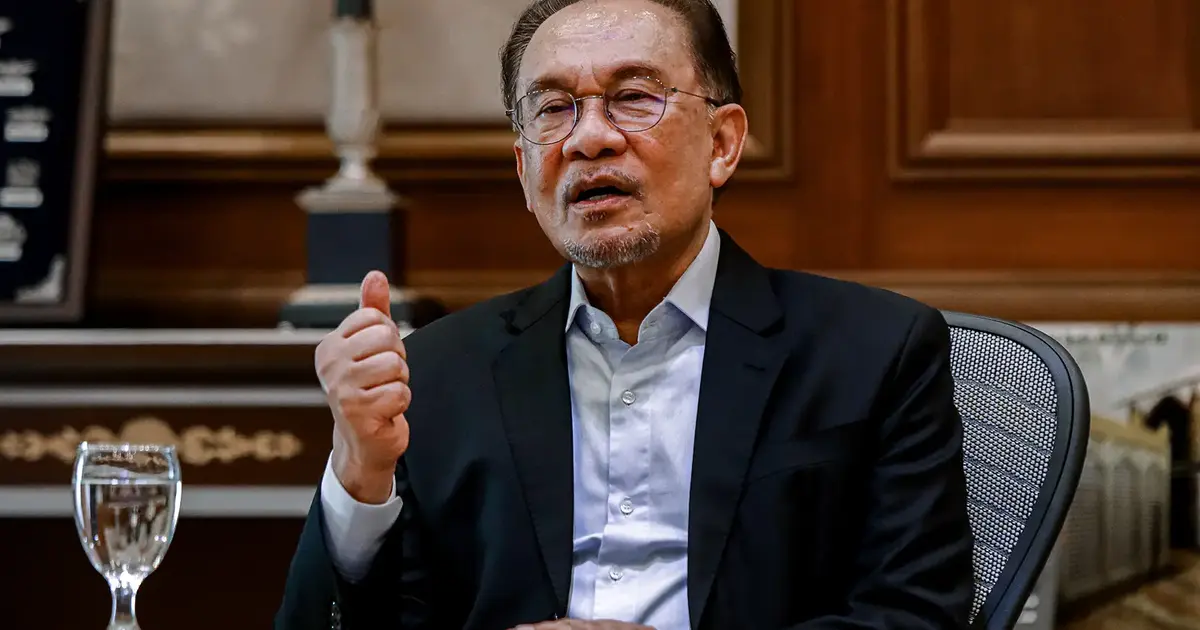
Prime Minister Anwar Ibrahim has drawn a line in the sand regarding the treatment of developing nations by wealthy European economies, signalling that Malaysia and other emerging markets will no longer passively accept what they regard as inequitable conduct in international relations. His remarks came against the backdrop of a contentious defence-related disagreement between Malaysia and Norway, which the prime minister has positioned as a test case for how developing countries should respond to what he views as unfair practices by developed nations.
The dispute with Norway represents more than a bilateral commercial disagreement; it embodies deeper anxieties within Malaysia's leadership about power asymmetries in global trade and security arrangements. By elevating this particular case in his public statements, Anwar has signalled to both the Norwegian government and the broader European community that Malaysia is prepared to alter its approach to international partnerships when it perceives itself to be disadvantaged. This messaging carries particular weight given Malaysia's historical economic ties with Nordic countries and broader Western institutions.
Anwar's positioning reflects a broader shift in Southeast Asian diplomatic strategy that has gained momentum over the past decade. Rather than accepting the terms laid down by established economic powers, countries in the region are increasingly willing to pivot toward alternative partners and seek reciprocal arrangements that they view as more equitable. This recalibration is not driven by ideology alone but by practical calculations about where Malaysia's interests lie and how best to advance them in a multipolar world.
The prime minister's emphasis on seeking alternative solutions underscores Malaysia's determination to diversify its external relationships beyond traditional European partners. For a nation heavily dependent on international trade and investment, this represents a significant policy reorientation. Malaysia has demonstrated this flexibility by deepening engagement with Asian neighbours, Middle Eastern states, and other Global South countries that can offer comparable or superior terms in defence procurement, technology transfer, and economic cooperation.
The Norway dispute itself likely involves trade, defence procurement, or investment matters where Malaysia believes Norwegian or European Union policies have imposed conditions or restrictions that unfairly disadvantage Malaysian interests. Without compromising Malaysia's sovereignty or accepting terms it considers unreasonable, the government appears determined to explore other avenues to achieve its strategic objectives. This approach reflects confidence in Malaysia's ability to negotiate from a position of reasonable strength, particularly within Asian regional frameworks.
Anwar's intervention also carries significance for Southeast Asia's collective bargaining power. When a major regional economy like Malaysia signals unwillingness to accept European terms unquestioningly, it sends a message to smaller neighbours that such resistance is viable. This potentially strengthens the negotiating position of ASEAN as a whole, as European nations cannot assume automatic cooperation from major Southeast Asian partners. The cumulative effect of multiple nations adopting similar postures could reshape the terms of engagement between Europe and Southeast Asia.
The broader context includes growing European scrutiny of issues ranging from human rights to environmental standards, which developing nations often perceive as selective and sometimes applied with double standards. When wealthy countries impose conditions on trade or defence relationships that they do not apply equally to their allies, developing nations increasingly view this as illegitimate. Anwar's statement reflects frustration with what Malaysia sees as a pattern of unequal treatment rather than an isolated disagreement with Norway.
For Malaysia specifically, this stance serves multiple domestic purposes as well. By demonstrating resolve in standing up to European partners, Anwar positions himself as a leader willing to prioritise national interests over maintaining cordial relationships with traditional Western allies. This resonates with constituencies within Malaysia that have grown sceptical of Western institutions and their fairness toward developing nations. It also reinforces his administration's nationalist credentials at a time when domestic politics remain competitive.
The practical implications extend to Malaysia's future negotiations with European entities on numerous fronts. Trade discussions, investment agreements, and defence contracts will henceforth be conducted against a backdrop where Malaysia has explicitly reserved the right to walk away and pursue alternatives. This changes the negotiating calculus for Norwegian and other European officials, who can no longer assume Malaysian acquiescence. In some cases, this may lead to more balanced agreements; in others, European partners may simply decide that the costs of engaging with Malaysia are too high and redirect their efforts elsewhere.
Regional observers will be watching closely to see whether Anwar's tough rhetoric translates into concrete policy shifts. The true test will come when Malaysia faces a specific situation requiring it to follow through on its promise to seek alternatives rather than accepting European terms. If the government demonstrates consistency between its words and actions, it will have established greater credibility both domestically and internationally. Conversely, if Malaysia reverts to accepting European positions when it matters most, the prime minister's statements will be dismissed as posturing.
The dispute with Norway may ultimately prove consequential not because of its immediate resolution but because of what it signals about Malaysia's evolving approach to great power relations. As Malaysia and other Southeast Asian nations assert greater agency in their foreign policy choices, the era of automatic deference to European or Western preferences appears to be fading. Anwar's declaration suggests that Malaysia intends to be an active architect of this transition rather than a passive subject to it.

