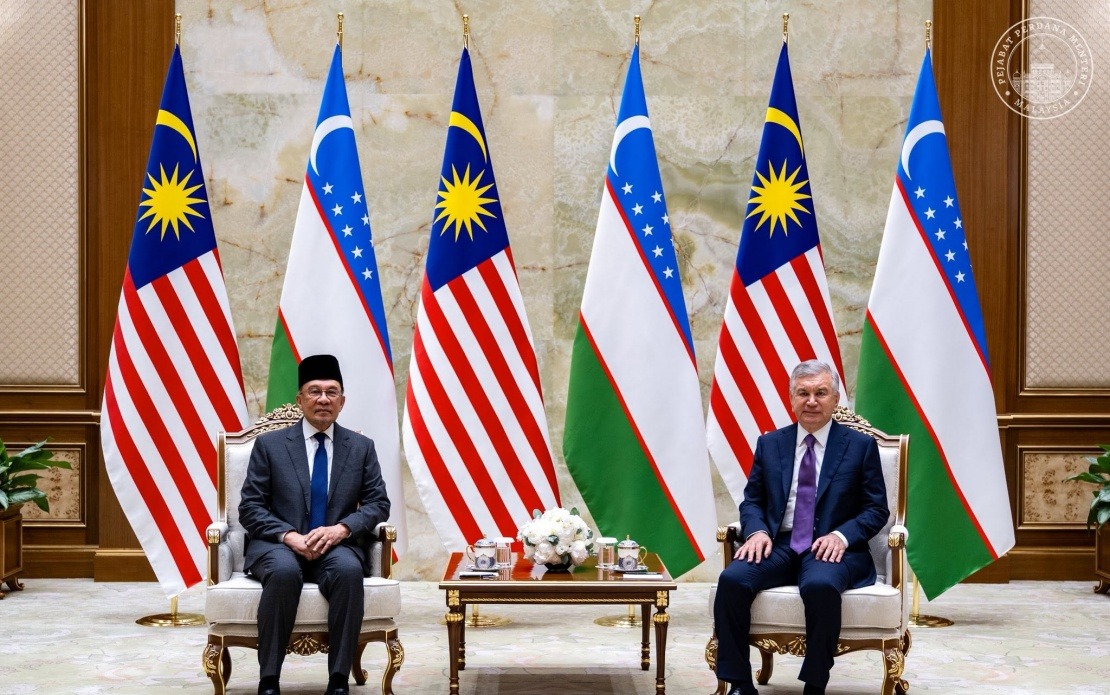
Prime Minister Datuk Seri Anwar Ibrahim has identified substantial scope for Malaysia and Uzbekistan to forge deeper economic and strategic partnerships, with both nations recognising mutual benefits across a diverse range of sectors including energy resources, international trade, investment flows, educational exchange, halal industry development and the tourism sector.
The discussion took place during an unscheduled bilateral meeting between Anwar and Uzbekistan President Shavkat Mirziyoyev when the Malaysian delegation's aircraft made a transit stop in Tashkent. The timing proved opportune, as Anwar was en route to Kazan, Russia, where he intended to participate in the ASEAN-Russia Commemorative Summit scheduled for June 17-18. Rather than allowing the stopover to pass without diplomatic engagement, both leaders seized the chance to explore concrete avenues for strengthening the relationship between their respective nations.
Energy cooperation emerged as a particularly significant focus area during the talks. Malaysia and Uzbekistan discussed substantial potential for joint ventures and technology sharing in the gas and petroleum sectors, fields where both countries possess considerable expertise and complementary interests. Beyond the immediate commercial appeal, Anwar emphasised that energy collaboration could serve broader strategic objectives, including bolstering regional energy security and advancing each nation's commitment to sustainable development goals. For Malaysia, accessing Central Asian energy resources and investment partnerships could diversify supply chains and strengthen economic resilience across the region.
The conversation extended well beyond commercial considerations. Anwar stressed the importance of collaborative efforts in preserving and advancing the intellectual and cultural heritage of Islamic civilisation, particularly in honouring the scholarly traditions that have historically produced transformative thinkers and leaders. This dimension reflects Malaysia's broader diplomatic approach of anchoring economic partnerships within shared cultural and religious frameworks, an especially resonant message for Uzbekistan given its own deep historical and contemporary connection to Islamic learning and heritage.
Educational cooperation represents another promising avenue that both nations intend to explore more systematically. Through student exchange programmes, institutional partnerships and knowledge transfer initiatives, Malaysia and Uzbekistan can strengthen human capital development while fostering people-to-people connections that transcend government-level diplomacy. Such educational ties historically prove durable foundations for sustained bilateral relationships, creating networks of professionals and academics who maintain connections across decades.
The halal industry has become increasingly central to Malaysia's economic strategy and international positioning, and Anwar's specific mention of this sector underscores its significance in bilateral trade discussions. Uzbekistan, as a predominantly Muslim nation with growing interest in halal certification and production standards, represents a natural partner for Malaysian expertise and investment. Developing halal supply chains and certification frameworks could open substantial market opportunities for Malaysian companies while helping Uzbekistan enhance its food processing and agricultural export competitiveness.
Tourism cooperation also featured prominently in the exchange. Both nations possess distinct cultural attractions, historical sites and natural landscapes that appeal to different tourist demographics. Facilitating travel, developing joint tourism packages and improving air connectivity could generate mutual economic benefits while promoting cross-cultural understanding between Malaysian and Uzbek populations.
Anwar's characterisation of Uzbekistan's increasingly important role within Central Asia and its strengthening engagement with ASEAN reflects Malaysia's strategic interest in deepening Southeast Asian connections with Central Asian states. As Central Asia assumes greater geopolitical significance amid shifting global power dynamics, Malaysia appears intent on positioning itself and its ASEAN partners as reliable economic and diplomatic counterparts to this emerging region.
The Prime Minister emphasised that Malaysia views the bilateral relationship not merely as a mechanism for generating economic returns, though prosperity remains important. Instead, he framed cooperation as a means of elevating human dignity, democratising access to knowledge and fostering development models characterised by greater equity and inclusivity. This formulation suggests Malaysia's aspiration to position itself as a development partner concerned with holistic advancement rather than purely transactional commerce.
Anwar's decision to conclude the meeting by extending good wishes to Uzbekistan's national football team ahead of its 2026 FIFA World Cup campaign against Colombia added a light diplomatic touch. Such gestures, while seemingly minor, facilitate personal rapport between leaders and demonstrate cultural awareness that extends beyond formal negotiation chambers.
The Tashkent stopover reflects evolving diplomatic practice whereby leaders utilise transit opportunities for substantive bilateral engagement. Rather than treating such moments as purely logistical necessities, both Malaysia and Uzbekistan recognised the value of face-to-face discussion in advancing their respective national interests. For Malaysia, the meeting signalled commitment to expanding its diplomatic footprint beyond Southeast Asia into Central Asia, a region offering significant untapped potential for Malaysian businesses and investors seeking geographical diversification and access to emerging markets.

