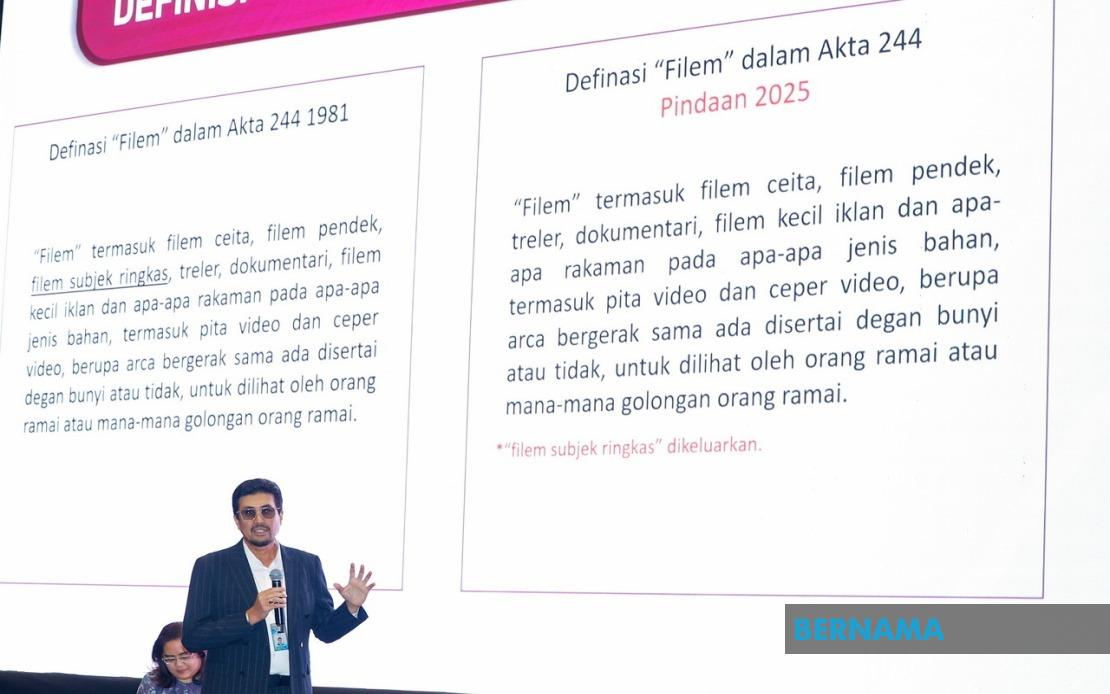
Malaysia's film industry is poised for significant transformation following the imminent launch of the National Film Development Corporation Malaysia (FINAS) National Film Policy 2026-2035, an ambitious framework designed to modernise the sector and unlock new growth opportunities. The comprehensive policy, which is undergoing final Cabinet approval, represents the country's third major film strategy since establishing its original approach in the 1980s and the most substantial legislative update since 2005. FINAS Chief Executive Officer Datuk Azmir Saifuddin Mutalib announced that the framework is expected to be formally unveiled by year's end, following an intensive two-year consultation process involving diverse stakeholders across government, industry, and the creative community.
The National Film Policy 2026-2035 encompasses over 70 distinct initiatives structured around five interconnected pillars that address critical gaps in Malaysia's current film ecosystem. These foundational areas—Financing and Investment; Marketing and Promotion; Industry Collaboration and Technology; Human Capital Development and Management; and Governance and Legislation—reflect a strategic recognition that the industry requires multifaceted support spanning from capital availability through to regulatory clarity. This architecture acknowledges that Malaysia's film sector cannot compete internationally or generate meaningful economic returns through traditional models alone, necessitating comprehensive modernisation across all operational dimensions.
A central thrust of the new policy involves developing innovative alternative financing mechanisms that extend beyond conventional banking and government grants. The recognition that Malaysia's film producers face persistent capital constraints compared to regional competitors has prompted policymakers to explore diverse funding pathways, including co-production arrangements, tax incentive structures, private equity participation, and international funding partnerships. By expanding the financing toolkit available to filmmakers, FINAS aims to accelerate project development while reducing the financial risk that currently deters investment in higher-budget productions that could achieve regional and global commercial success.
Technology adoption, particularly artificial intelligence integration, stands as another strategic priority within the policy framework. Rather than viewing AI as a threat to employment, the policy positions technological advancement as an efficiency enabler and creative tool that can enhance production workflows, distribution channels, and audience engagement strategies. This forward-looking approach reflects growing international practice where AI assists in scriptwriting, visual effects production, content personalisation, and predictive audience analytics—capabilities that Malaysian producers increasingly require to remain competitive within the dynamic streaming and digital content landscape.
Market expansion forms a cornerstone objective, with the policy explicitly targeting enhanced access to both regional and international distribution channels. Malaysia's domestic market, while substantial, remains constrained relative to China, India, and Indonesia, compelling filmmakers to develop export strategies to achieve commercial viability. By facilitating partnerships with regional distributors, streamlining export procedures, and promoting Malaysian content internationally, FINAS seeks to position local films more competitively for theatrical releases, streaming platform acquisitions, and festival recognition across Asia-Pacific markets.
The human capital dimension addresses a frequently cited bottleneck in Malaysia's film sector: workforce development and professional certification standards. The policy commits to establishing formalised training pathways and credentials that enhance technical skill levels among directors, cinematographers, sound engineers, and other specialised roles. Partnerships with academic institutions including Universiti Teknologi MARA (UiTM) and the National Academy of Arts, Culture and Heritage (ASWARA) represent structured mechanisms to embed systematic skills development within the broader industrial strategy, creating career pathways that attract talent and professionalise the workforce.
Intellectual property protection mechanisms receive strengthened emphasis within the legislative and governance pillar, addressing longstanding industry concerns about content theft, unauthorised distribution, and inadequate enforcement. As Malaysian productions achieve greater international visibility and commercial value, robust legal frameworks protecting creators' rights become increasingly essential for attracting investment and safeguarding revenue streams. The policy's commitment to strengthening IP protections signals recognition that a sustainable creative industry requires both creative freedom and secure property rights.
The policy formulation process itself reflects Malaysia's commitment to inclusive policymaking methodology. Rather than imposing top-down directives, FINAS conducted extensive consultation spanning one to two years with government agencies, industry associations, production companies, academics, and cultural organisations. This engagement approach generated feedback emphasising the need for clarified cooperation frameworks between FINAS and various industry associations, highlighting implementation details that will determine whether policy aspirations translate into practical industry outcomes. The collaborative development process enhances legitimacy while improving policy design through diverse stakeholder input.
Contextualising this initiative within Southeast Asia's competitive creative economies reveals its strategic importance for Malaysia's positioning. Thailand, Vietnam, and Indonesia have aggressively developed film sector policies targeting regional and global audiences, with some achieving notable commercial and critical success. Malaysia's new policy represents a deliberate effort to recalibrate the nation's creative industries strategy, moving beyond cultural preservation toward economic dynamism while maintaining the sector's role as a vehicle for reflecting Malaysia's multicultural identity and fostering social cohesion.
The policy's economic dimension warrants particular attention for Malaysian policymakers and investors. Positioning the film industry as an "engine of economic growth" reflects recognition that creative industries generate employment, attract international production spending, develop export revenue, and enhance national brand positioning. Regional comparisons suggest that well-resourced film sectors can contribute meaningfully to tourism, technology services, and cultural exports—economic multipliers increasingly important as Malaysia transitions toward higher-value creative economy participation.
Implementation success will depend substantially on securing adequate government funding commitments, ensuring bureaucratic coordination across multiple ministries, and maintaining industry confidence as initiatives roll out. The transition from policy framework to concrete investment availability and regulatory streamlining requires sustained political commitment and resource allocation. Stakeholder feedback during consultation sessions indicates that clarity regarding FINAS-industry association cooperation frameworks will significantly influence industry reception and participation levels.
Looking forward, the National Film Policy 2026-2035 represents Malaysia's most comprehensive attempt to modernise its film sector through integrated strategic intervention. Success would position Malaysia competitively within regional creative economies, generate sustainable cultural and economic value, and establish the nation as a credible production hub attracting regional and international projects. The policy framework signals policy recognition that Malaysia's film industry requires systematic support across multiple dimensions simultaneously—a holistic approach that contrasts with previous incremental initiatives and reflects sophisticated understanding of modern industry dynamics.

