Malaysia's government has pledged to maintain its existing support schemes for the public even as it braces for nearly RM40 billion in petroleum product subsidies during 2024, a financial burden directly tied to escalating Middle East tensions. Deputy Finance Minister Liew Chin Tong delivered this reassurance during parliamentary proceedings, signalling the administration's determination to shield ordinary Malaysians from the twin pressures of volatile global energy markets and geopolitical instability affecting crude supplies.
The mounting subsidy bill reflects a strategic calculation by Putrajaya: absorbing the cost of fuel price stabilisation is deemed less politically damaging than forcing consumers to absorb international oil volatility. This approach gained particular urgency during March and April, when West Asian developments sent global crude prices surging. Without intervention, Malaysian petrol prices would have climbed to RM5 per litre or higher during those months, creating immediate hardship for commuters, transporters, and manufacturers dependent on stable energy costs. By cushioning the shock, the government avoided potential economic disruption and maintained public confidence in its crisis management capabilities.
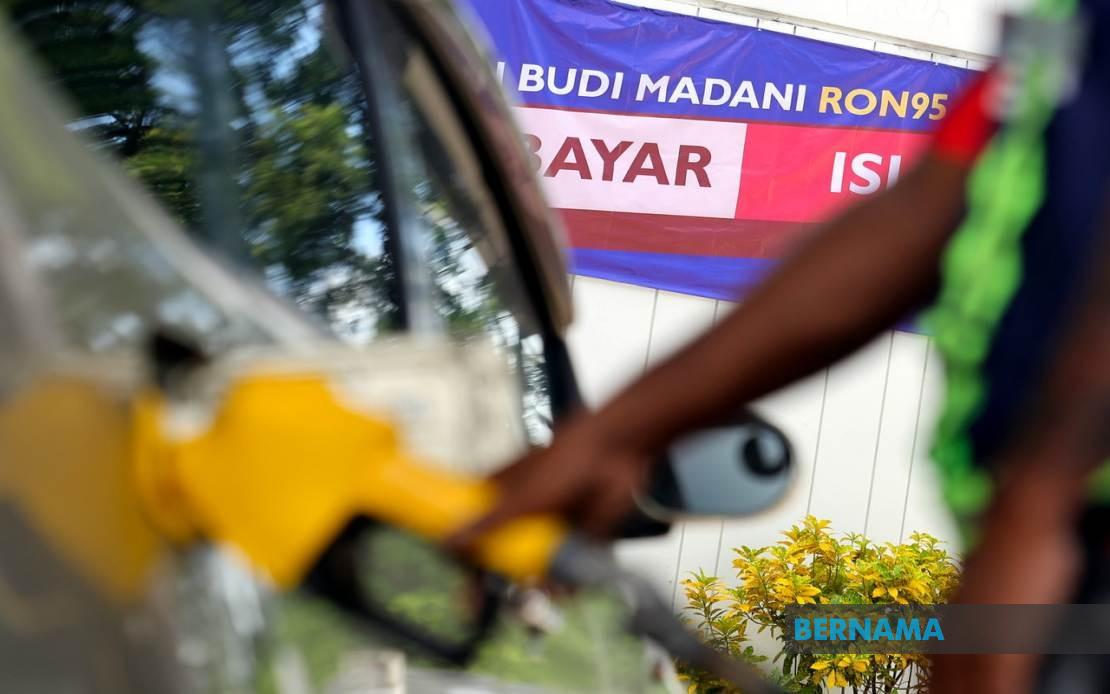
The centrepiece of this protection framework is the BUDI MADANI RON95 scheme, launched in September of the previous year. Under this programme, ordinary motorists continue purchasing RON95 petrol at the fixed price of RM1.99 per litre, coupled with a monthly allocation that prevents sudden shortages. For a petrol-dependent economy like Malaysia's, where road transport remains the dominant mode of cargo and passenger movement, such price certainty provides invaluable stability. Manufacturers can forecast fuel costs reliably, taxi and bus operators can maintain service frequency without unpredictable expense spikes, and household budgets remain predictable. The gap between the controlled domestic price and the actual international cost—potentially three times higher during peak crisis periods—represents a direct wealth transfer from government coffers to consumers.
Liew emphasised that Malaysia's relatively advantaged position stems from this deliberate policy choice. Unlike some regional neighbours that periodically float fuel prices closer to market rates, Malaysia has chosen a more interventionist path. The deputy minister contrasted Malaysia's situation with hypothetical chaos, noting that Malaysian roads remain congested because reliable fuel supplies exist, whereas artificial scarcity or price-driven rationing could paralyse logistics networks. This distinction carries weight for a trading nation whose prosperity depends on seamless supply chains, just-in-time manufacturing, and efficient regional commerce.
The government's commitment extends beyond petrol pricing to encompassing broader assistance mechanisms. Sumbangan Tunai Rahmah (STR) and Sumbangan Asas Rahmah (SARA)—direct cash transfers and basic assistance grants—will continue unmodified, Liew confirmed. These programmes, introduced in recent years as targeted alternatives to blanket subsidies, deliver aid more efficiently to households below specified income thresholds. By maintaining their scope alongside petroleum support, the administration seeks to address both energy affordability and broader living costs simultaneously. This dual approach recognises that even with controlled petrol prices, lower-income households face pressure on food, utilities, and school expenses.
The parliamentary questioning itself, posed by a Pakatan Harapan backbencher representing Hulu Langat, reflects legitimate public concern about fiscal sustainability. With RM40 billion allocated to petroleum subsidies alone, observers understandably worry whether other programmes could face retrenchment. Total government expenditure on various assistance schemes has expanded significantly since 2020, reflecting both COVID-era relief measures and the administration's broader philosophy of targeted social protection. The opposition lawmaker's supplementary query essentially asked whether the government would prioritise petroleum support over food assistance or school aid—a zero-sum framing that many policymakers find uncomfortable.
Liew's response sidestepped explicit cost calculations, instead emphasising the strategic value of BUDI95 as a uniquely effective intervention. This rhetorical move—focusing on the scheme's distinctiveness and public benefit rather than debating fiscal trade-offs—reflects political sensitivity around subsidy discussions. In Malaysian politics, any suggestion that government might trim assistance to ordinary citizens invites accusations of being insensitive to rakyat (people's) welfare. By asserting that no reductions will occur, the administration avoids triggering such criticism while deferring harder questions about long-term fiscal sustainability.
The petroleum subsidy burden, while substantial, reflects Malaysia's particular economic geography and policy history. As an oil-producing nation, Malaysia had historically kept domestic fuel prices below regional and global benchmarks, a practice that became entrenched in public expectation. Even after partial liberalisation in preceding decades, complete float pricing remained politically implausible. The BUDI95 scheme thus represents a compromise: maintaining popular maximum prices while admitting that free-market rates sometimes necessitate government support. This middle path has proven durable, surviving multiple changes of government and international price cycles.
For Southeast Asia more broadly, Malaysia's experience offers a case study in the costs of price stability during volatile periods. The RM40 billion outlay this year dwarfs defence spending or infrastructure investment, illustrating how energy subsidy programmes can consume fiscal space. Neighbouring countries monitoring this situation observe both the political necessity and the substantial expense of maintaining subsidised fuel. Thailand, Indonesia, and the Philippines have all grappled with similar pressures, sometimes opting for gradual price deregulation rather than indefinite subsidisation. Malaysia's choice to maintain controls, at least through the current crisis period, reflects confidence that petroleum export revenues and budget surpluses can accommodate the cost.
Looking forward, the sustainability of this approach depends substantially on two factors: how long West Asian tensions persist and when global oil prices stabilise at lower levels. Should regional conflict escalate further or spread, petroleum costs could rise even beyond current projections, straining the RM40 billion estimate. Conversely, if international crude prices retreat toward longer-term trend levels, the subsidy bill would shrink automatically, easing fiscal pressure. Liew's parliamentary statement, while reassuring on immediate continuity, implicitly concedes that government cannot indefinitely absorb unlimited subsidy costs. The framing as temporary crisis protection, rather than permanent policy, leaves room for eventual adjustment once global conditions normalise.
The broader context includes Malaysia's position within ASEAN and global energy markets. As one of the region's wealthier nations with sovereign wealth funds and petroleum reserves, Malaysia possesses resources that smaller economies lack. However, this advantage is finite. The government's determination to shield citizens from fuel price volatility reflects both capacity and political choice—an investment in social stability and public confidence that the leadership judges worth the fiscal cost. Whether this commitment remains affordable if petroleum crises persist longer than anticipated remains an unspoken worry underlying parliamentary reassurances.

