The Malaysian government has committed to undertaking a systematic assessment of the nation's import requirements, encompassing capital goods and raw materials, with the intention of crafting targeted policies that will diminish the country's reliance on external sources. This strategic initiative forms part of a broader effort to enhance the competitiveness and resilience of domestic industries while maximising the economic returns from Malaysia's trade and investment activities. The announcement underscores a fundamental shift in how policymakers view the relationship between import management and industrial development in an increasingly complex global economy.
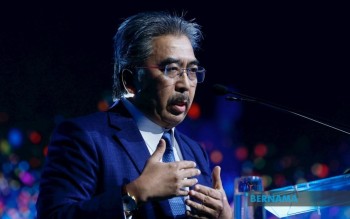
Datak Seri Johari Abdul Ghani, who heads the Ministry of Investment, Trade and Industry, articulated the rationale behind this approach during remarks at the RHB Progress Series 2026 conference in Kuala Lumpur. He emphasised that fostering genuine value creation within Malaysia requires a multi-faceted strategy encompassing technological innovation, domestic capability development, and ensuring that the benefits of growing trade and investment flows translate into tangible improvements for Malaysian workers and businesses. This perspective reflects a recognition that simply expanding trade volumes, while important, does not automatically guarantee broad-based economic advancement if the gains accrue primarily to foreign enterprises or remain concentrated in low-value activities.
Malaysia's recent trade performance presents an impressive headline narrative. Last year marked a historic milestone as the nation's combined import and export volumes surpassed RM3 trillion for the first time in its recorded economic history. Exports expanded by 6.5 per cent to reach RM1.61 trillion, while imports climbed by 6.2 per cent to RM1.45 trillion, resulting in a healthy trade surplus of RM151.8 billion. These figures demonstrate Malaysia's continued integration into regional and global supply chains and its ability to compete internationally across numerous sectors. However, the government's current policy pivot suggests that policymakers view these achievements as a necessary but insufficient foundation upon which to build long-term prosperity.
The broader context for this initiative centres on Malaysia's aspirations to transition into the high-income economy category. According to World Bank classifications, the threshold for high-income status is a gross national income per capita of US$14,375. Malaysia currently stands at approximately US$12,380, placing it roughly 16 per cent below the target. This gap represents not merely a statistical shortfall but a challenge that demands sustained enhancements in productivity, innovation capacity, and the economic complexity of industries and services. As the World Bank periodically adjusts these thresholds to reflect global economic conditions, the distance Malaysia must travel continues to shift, necessitating continuous improvement rather than plateau satisfaction.
Johari articulated the necessity for departing from conventional approaches that have characterised Malaysian economic management in previous decades. The minister stressed that Malaysia must cultivate the strategic flexibility required to navigate an evolving global landscape, expand its partnership base beyond traditional investors, and make investment and trade decisions grounded in long-term national advantage rather than short-term considerations. This framing suggests recognition that the strategies and policy frameworks that facilitated Malaysia's emergence as a middle-income nation may require fundamental recalibration to address the distinct challenges and opportunities of the next development phase.
A critical component of the government's emerging strategy involves deliberately assessing which imported products and capital goods should continue to be procured from external sources and, conversely, identifying categories where Malaysia possesses or can develop sufficient domestic capacity to reduce import dependence. This approach represents a departure from the comparative advantage framework that has long dominated Malaysian trade policy thinking. Johari cautioned that an excessive reliance on cheaper imported goods, while delivering short-term cost savings to consumers and businesses, risks gradually eroding the technological capabilities and manufacturing expertise of domestic firms. Over extended periods, such erosion can render nations structurally dependent on imports, reducing their ability to upgrade their economic structure and capture higher-value activities.
The government's concerns find concrete illustration in Malaysia's iron and steel sector, which Johari cited as a cautionary example. Malaysia's integrated iron and steel industry was historically self-sufficient and competitive, yet has experienced significant contraction as larger international producers with economies of scale entered the market. Rather than viewing this as an inevitable outcome of competitive forces, the government now appears inclined to consider whether alternative policy frameworks could have preserved greater domestic capacity. The minister articulated a nuanced position distinguishing between welcoming foreign direct investment that brings genuinely new technologies and products to Malaysia versus permitting imports that displace existing domestic capabilities without generating offsetting benefits through knowledge transfer or complementary growth.
This philosophical shift carries substantial implications for how Malaysia approaches future foreign investment applications and trade negotiations. The government appears determined to be more selective, prioritising foreign entrants who will enhance rather than substitute for domestic capabilities. Under this framework, foreign investors would ideally introduce products, technologies, or capabilities that do not yet exist within Malaysia's industrial ecosystem, thereby expanding the overall productive capacity rather than displacing local competitors. Simultaneously, such arrangements would ostensibly benefit both foreign investors—who gain access to regional markets and lower costs—and domestic firms, which gain exposure to advanced practices and partnership opportunities.
The practical implementation of such policies presents considerable complexity. Determining which sectors possess viable domestic potential, identifying which imports genuinely compete with local production versus complementing it, and designing incentive structures that encourage domestic development without breeding inefficiency or corruption requires sophisticated institutional capacity. Malaysia must balance its commitments under various regional and bilateral trade agreements against domestic industrial policy objectives. The approach risks inviting retaliation from trading partners if perceived as protectionism, necessitating careful framing and international diplomacy.
The government's broader developmental agenda intersects with technological advancement and innovation capacity. Creating sustainable domestic industries capable of competing internationally requires continuous investment in research and development, human capital development, and institutional frameworks supporting entrepreneurship and technological adoption. Import substitution alone, without accompanying efforts to build innovative capacity and technological sophistication, historically produced inefficient, uncompetitive industries dependent on protection rather than genuine competitive advantage.
The timing of this policy review reflects Malaysia's positioning within broader regional developments. Southeast Asia is experiencing intensifying competition as regional peers pursue industrial upgrading strategies and as geopolitical tensions reshape global investment and trade patterns. Nations throughout the region are reassessing the balance between openness and strategic autonomy, seeking to maximise benefits from global integration while developing sufficient domestic capacity to weather external shocks and pursue independent policy objectives.
Paralleling these macro-level policy considerations, Malaysia's financial sector is advancing its digital payment infrastructure. RHB Bank's introduction of RHB Pay, described as Malaysia's first bank-owned unified online payment gateway, exemplifies how domestic institutional capacity and technological innovation can strengthen the enabling environment for businesses. Such infrastructure improvements facilitate domestic transaction efficiency and competitive advantage, complementing the broader industrial development agenda the government is articulating. The phased rollout, with additional payment modalities anticipated in the fourth quarter of 2026, reflects a development approach balancing functionality and resilience.
The government's comprehensive approach—combining import policy review, foreign investment selectivity, and support for domestic institutional development—suggests a recognition that Malaysia's transition to high-income status requires integrated strategy rather than isolated policy interventions. Success will depend on effectively balancing openness and protection, welcoming foreign investors while preserving domestic capacity, and building innovative capability while managing fiscal constraints. The coming months will clarify whether this policy framework translates into concrete reforms capable of reshaping Malaysia's industrial trajectory or remains primarily rhetorical positioning.

