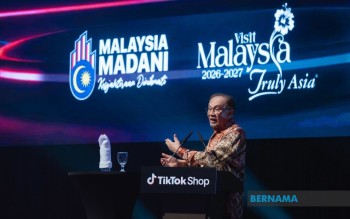
Malaysia is preparing to implement stricter evaluation procedures for incoming investment applications, with Prime Minister Datuk Seri Anwar Ibrahim announcing the move to ensure foreign capital actually contributes to job creation and economic development within the country. Speaking at the TikTok Shop Summit 2026 in Kuala Lumpur on August 20, Anwar indicated that the Ministry of Investment, Trade and Industry (MITI) has flagged a troubling pattern whereby certain enterprises operate warehouses and logistics facilities across Malaysia while generating virtually no employment opportunities or tangible economic contribution to local communities.
The Prime Minister's statement reflects growing frustration within government circles over what officials characterise as value-extraction investment models, where foreign companies establish minimal operational presence while channelling profits and supply chains outside Malaysia. MITI's alert to the cabinet has prompted a comprehensive review of pending applications, signalling a deliberate policy shift toward more demanding standards that future investors must meet. This approach signals Anwar's administration is prepared to become more selective about which foreign enterprises gain market access, particularly those pursuing low-impact business models that benefit primarily themselves rather than the broader Malaysian economy.
Central to these concerns is the phenomenon of large multinational operators leasing warehouse space in strategic logistics hubs like Port Klang without corresponding requirements to hire local workers or source materials domestically. These arrangements, Anwar explained, create infrastructure expenses and congestion for Malaysian port authorities while returning minimal benefit to workers or suppliers in the country. The Port Klang example typifies the government's frustration: substantial foreign investment flowing into property rental and logistics positioning, yet negligible demand for local employment or Malaysian goods, essentially using the nation's infrastructure as a transit point rather than establishing genuine operating bases.
A separate but interconnected issue involves the proliferation of small-scale trading entities registered under ostensibly local business names that function as import channels for entirely foreign merchandise. Anwar highlighted an particularly striking example: companies registering as traditional coffee shops or local eateries while exclusively selling imported coffee, tea, and biscuits, thereby masquerading as domestic enterprises while capturing market share from actual local producers. Such deceptive practices not only undermine authentic small businesses but also erode consumer confidence in Malaysian-branded products and create an unfair competitive environment where brand authenticity becomes a liability.
The discussion arose during a TikTok Shop participant's question regarding the influx of low-cost products through cross-border e-commerce platforms such as Temu and Pinduoduo, platforms that have increasingly disrupted traditional retail and local e-commerce operators across Southeast Asia. The participant sought clarity on government measures to preserve fair competition and sustainable growth opportunities for Malaysian businesses contending with artificially depressed pricing strategies. This line of questioning underscores legitimate anxieties within Malaysia's merchant and manufacturing communities about market saturation from ultra-low-cost foreign products that local producers cannot match without abandoning quality or sustainability standards.
Anwar acknowledged Malaysia's identity as an open, free-trade economy that actively welcomes international commerce and digital platform expansion. However, he drew a critical distinction between legitimate cross-border trade and predatory pricing practices designed to capture market dominance, labelling such strategies as dumping. The proliferation of digital and online commerce platforms has dramatically lowered barriers to market entry for foreign businesses, enabling them to establish consumer reach with minimal physical infrastructure or local employment investment. While this democratises commerce in certain respects, it simultaneously creates regulatory blind spots where traditional oversight mechanisms struggle to track or evaluate the actual economic impact of these entities.
The government's emerging framework appears designed to distinguish between investments that genuinely establish productive capacity, employment, and supply-chain integration within Malaysia versus those that merely exploit the country's geographic position, port infrastructure, or consumer base. Anwar indicated that enforcement officers have already begun taking action against entities deemed to provide no community benefit, suggesting the policy shift from permissive to evaluative already has operational teeth. However, the challenge of implementation remains substantial, particularly in distinguishing between legitimate efficiency-driven investment and extractive models that technically operate within existing regulations.
For Malaysian businesses and workers, the policy represents a potential counterbalance to the pressures created by globalised e-commerce and foreign capital mobility. Small and medium enterprises operating in retail, F&B, and manufacturing have faced mounting pressure from lower-cost imports and efficiency advantages enjoyed by large foreign operators. Stricter scrutiny of investment applications could create space for domestic competitors to establish market positions and develop supply chains without constant undercutting from new foreign entrants pursuing short-term market capture strategies rather than long-term value creation.
The policy shift also addresses broader concerns about Malaysia's role within regional and global supply chains. Rather than functioning primarily as a warehouse or transit hub for foreign commerce, the government appears intent on repositioning Malaysia as a location where foreign investment builds integrated operations requiring local talent, suppliers, and services. This aligns with longer-term economic diversification objectives and reduces dependency on transactional logistics revenues that fluctuate with global trade cycles.
Implementing these stricter standards will require MITI to develop clearer criteria for evaluating investment applications, distinguishing between high-impact and low-impact activities. Categories such as employment intensity, local supply-chain linkages, technology transfer potential, and value-added contributions will likely become formal evaluation metrics. The regulatory framework must also address definitional challenges regarding what constitutes genuine economic benefit, particularly for digital businesses and e-commerce operations that may create value through channels traditional metrics do not capture.
Regionally, Malaysia's tightened investment screening sits within a broader Southeast Asian pattern of reassessing foreign capital flows and ensuring they align with national development priorities. Neighbouring countries including Thailand, Vietnam, and Indonesia have implemented comparable measures, suggesting a coordinated regional shift toward more developmental investment models. This synchronisation could eventually reshape competition for foreign direct investment across ASEAN, with nations increasingly competing on their capacity to demand genuine economic contribution rather than merely offering low regulatory barriers.

