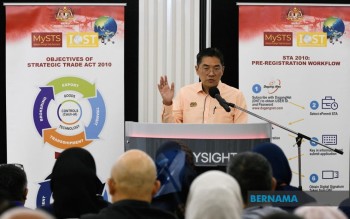
The Ministry of Investment, Trade and Industry has reaffirmed its commitment to strengthening Malaysia's electrical and electronics sector as part of a broader strategic effort to keep the country entrenched as a vital node in the world's technology manufacturing ecosystem. Deputy Minister Sim Tze Tzin outlined the government's approach during remarks made at industry engagement events in Penang's Bayan Lepas region, emphasising that sustained investment and policy support are essential to protecting Malaysia's competitive advantages in an increasingly contested global market.
Malaysia's prominence in E&E manufacturing rests on decades of accumulated expertise and infrastructure, particularly in Penang and the northern corridor, where hundreds of multinational technology firms have established operations. The sector encompasses a spectrum of sophisticated capabilities ranging from semiconductor assembly and testing to advanced sensor production and telecommunications equipment manufacturing. These activities generate substantial export revenues and employ tens of thousands of workers across multiple skill levels, making the industry foundational to the nation's economic stability.
The semiconductor segment deserves particular attention within this industrial ecosystem. Malaysia has carved out a specialised niche in the back-end semiconductor value chain—the assembly, testing, and packaging stages that transform raw silicon wafers into finished components ready for integration into consumer and industrial electronics. While less visible than chip design or fabrication, these functions require considerable technical sophistication and represent a crucial chokepoint in global electronics production. Maintaining Malaysia's position in these activities ensures sustained employment and foreign exchange earnings.
Government officials recognise that the sector's future depends not merely on preserving existing operations but on continuously upgrading technological capabilities and regulatory frameworks. Sim highlighted that MITI is paying deliberate attention to export control compliance mechanisms, a dimension increasingly relevant as geopolitical tensions reshape technology trade patterns. Nations are scrutinising technology exports more rigorously, and Malaysia must navigate these restrictions whilst maintaining its reputation as a reliable and trustworthy manufacturing partner. Companies operating within clearly understood regulatory boundaries gain competitive advantages in winning contracts from multinational firms concerned about supply chain integrity.
The Northern Region Strategic Trade Act Clinic programme exemplifies this government-industry collaboration model. The annual engagement initiative, which drew 86 participants at its most recent iteration, provides technical guidance on product classification, permit applications, interactions with regulatory bodies, and internal compliance audits. This direct advisory support helps companies avoid costly errors and ensures they remain aligned with international standards. Such interventions may seem procedural but significantly reduce friction in doing business and demonstrate government responsiveness to industry needs.
Fortunately for Malaysia, recent trade performance has created momentum for sectoral advancement. Strong export results in the first half of the year have bolstered company profitability and market confidence. The government views this window of prosperity as an opportunity to reinforce worker welfare and social cohesion. Sim explicitly appealed to successful companies to share their gains with employees through wage increases and performance bonuses, recognising that sustained worker commitment and reduced turnover are essential for maintaining product quality and operational efficiency in high-precision manufacturing environments.
The intersection of economic performance and labour relations carries particular significance for Malaysia's manufacturing sector. Unlike lower-cost competitors, Malaysia's value proposition increasingly depends on skill, reliability, and process stability rather than pure wage competitiveness. Workers with training, experience, and institutional memory provide substantial returns through reduced defects, faster problem-solving, and improved productivity. Companies that invest in employee welfare build organisational capabilities that foreign investors reward with expanded operations and advanced function assignments.
Malaysia's position in E&E manufacturing faces evolving challenges and opportunities. Supply chain diversification strategies by Western companies, partly driven by concerns about geopolitical concentration, may create new opportunities for Malaysian manufacturers to capture work previously concentrated in other Asian nations. Simultaneously, technological advancement—particularly in automation and artificial intelligence—necessitates continuous workforce upskilling to maintain competitiveness. Automation may reduce certain routine assembly roles whilst creating demand for technicians, engineers, and process specialists.
The government's emphasis on close public-private collaboration reflects understanding that individual company success and sectoral health are mutually reinforcing. Companies thriving within a supportive regulatory environment and benefiting from industry-specific infrastructure generate tax revenues, employment, and technological spillovers. In turn, government policies that facilitate compliance, reduce uncertainty, and maintain institutional quality attract investment and encourage capacity expansion. This virtuous cycle depends on sustained attention to sector-specific needs rather than generic economic policies.
Looking forward, Malaysia's continued participation in the global E&E value chain requires vigilance across multiple dimensions. Policymakers must monitor geopolitical developments affecting technology trade, anticipate workforce skill requirements emerging from technological change, and ensure regulatory frameworks remain competitive with alternative manufacturing destinations. Industry players must invest in upgrading capabilities and worker development. When government and business align around shared objectives of sectoral advancement, Malaysia can convert its existing assets—geographic position, established infrastructure, skilled workforce, and investor relationships—into sustained prosperity and deepened integration within high-value technology networks.

