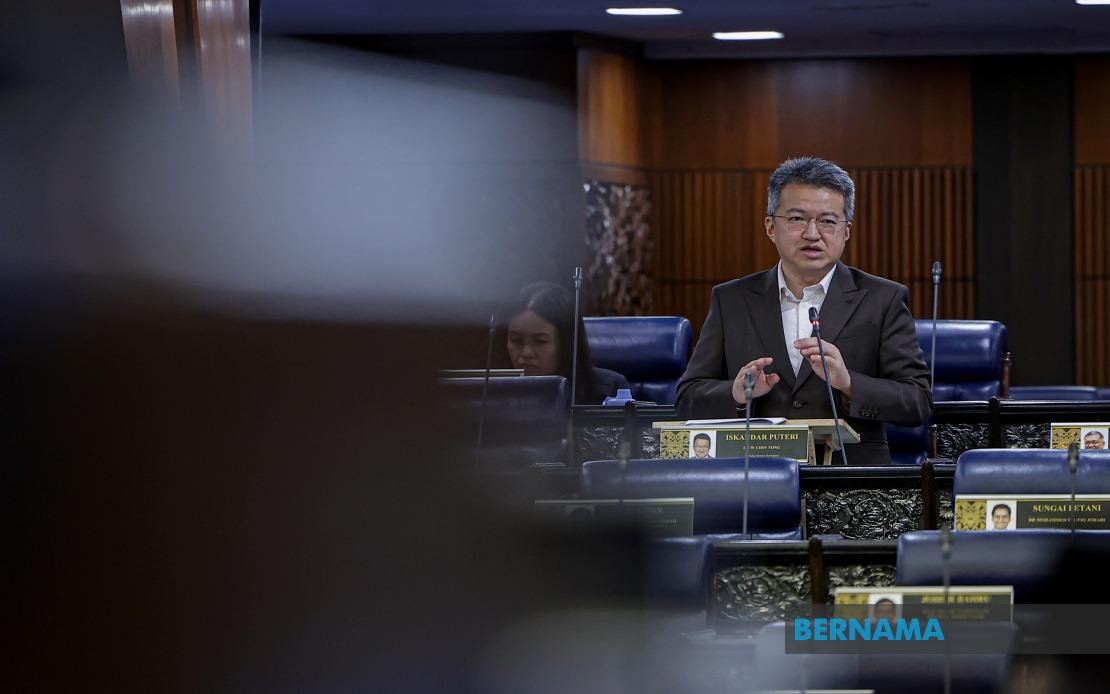
Malaysia's government is undertaking a comprehensive overhaul of its institutional safeguards and public finance management systems in response to the 1Malaysia Development Berhad scandal, Deputy Finance Minister Liew Chin Tong announced during parliamentary proceedings this week. The administration under Prime Minister Datuk Seri Anwar Ibrahim has prioritised strengthening governance mechanisms across multiple fronts as part of a deliberate strategy to restore the nation's credibility with international markets and investors who lost confidence following the controversial state development fund's collapse.
The scope of the reforms reflects the severity of reputational damage inflicted by 1MDB, which had become a focal point for global scrutiny and triggered enforcement investigations across multiple jurisdictions. Beyond the direct financial impact, the scandal undermined perceptions of Malaysia's institutional integrity and the competence of its public administration. This erosion of international confidence created tangible economic consequences, affecting Malaysia's ability to attract quality foreign investment and maintain favourable market conditions. The government now recognises that restoring governance standards is not merely a matter of administrative improvement but an essential economic imperative for national competitiveness.
Central to the reform agenda is the Public Finance and Fiscal Responsibility Act 2023, which represents a fundamental restructuring of how Malaysia manages and accounts for public resources. This legislation establishes binding fiscal discipline requirements that constrain discretionary spending and impose transparency obligations on government agencies managing significant sums. By codifying these standards in law rather than relying on administrative guidelines, the government has created enforceable mechanisms that cannot be easily circumvented through procedural workarounds. The act signals to international observers that Malaysia's commitment to fiscal probity extends beyond rhetorical pledges to concrete legal instruments backed by enforcement provisions.
The government has also substantially expanded the investigative and audit powers vested in the Auditor-General through amendments to the Audit Act, introducing what officials characterise as a "follow the public money" framework. This methodology enables auditors to trace public expenditure across multiple entities and transactions, identifying irregularities that might otherwise remain concealed within complex organisational structures. The approach proves particularly relevant given that 1MDB's opacity partly resulted from the fund's structural isolation from conventional oversight mechanisms. By enhancing audit reach and comprehensiveness, the government aims to create an environment where large-scale misappropriation becomes logistically more difficult to conceal and operationally riskier to execute.
Beyond fiscal administration, the government is drafting a Government Procurement Bill designed to introduce competitive tendering standards and transparency into how public agencies purchase goods and services. 1MDB's trajectory involved numerous questionable procurement decisions and related-party transactions that enriched connected intermediaries while depleting the fund's assets. Formalising procurement standards through legislation establishes baseline requirements that procurement officials must follow, reducing the scope for discretionary award decisions that might favour particular contractors or consultants. This structural reform targets the mechanisms through which corrupt schemes typically operate within government systems.
State-owned enterprises represent another focal point for reform efforts, with the government revising the legal framework governing SOE operations and oversight. Many developing economies struggle with SOE governance given these entities' combination of commercial objectives, political accountability pressures and operational autonomy. Malaysia's experience with 1MDB—technically structured as a development company rather than a traditional ministry—demonstrated how inadequate SOE governance frameworks can enable resource misappropriation at scale. Reformed SOE regulations aim to impose clearer accountability structures, mandatory disclosure requirements and independent board oversight to prevent future cases where connected parties exercise unchecked control over substantial public resources.
The financial burden imposed by 1MDB extends far beyond the scandal's immediate losses, with the government allocating RM18.7 billion from both operating and development budgets since 2017 to service the fund's obligations. This expenditure represents a substantial opportunity cost, with those resources unavailable for other government priorities including infrastructure, education and healthcare. The MADANI Government's assumption of office in March 2023 coincided with inherited 1MDB liabilities, requiring allocation of RM13 billion from the development budget specifically to redeem USD3 billion in government-guaranteed 1MDB bonds. This allocation consumed approximately 13.1 per cent of the development budget for that fiscal year, illustrating how historical mismanagement continues constraining contemporary government policy space and fiscal flexibility.
The scandal's international dimensions amplified Malaysia's governance challenges, with foreign enforcement agencies investigating cross-border transactions and pursuing legal proceedings involving multiple jurisdictions. This multinational enforcement attention subjected Malaysia's institutional competence to external scrutiny and created perceptions that the country's domestic authorities could not be relied upon to investigate and prosecute financial crimes of magnitude. International investor scepticism about Malaysia's willingness and capacity to enforce accountability standards becomes a competitive disadvantage when firms evaluate regional investment locations. Demonstrable governance improvements therefore serve not merely domestic reform objectives but also aim to signal to international capital markets that Malaysia operates institutional systems meeting global standards.
The government's messaging emphasises that governance strengthening represents an ongoing process rather than a discrete reform package. As reforms take institutional root and demonstrate effectiveness, the government projects improved Malaysia performance across various competitiveness and investment metrics. The administration has noted improvements in foreign direct investment approvals and trade performance, attributing these gains partly to confidence restoration resulting from announced reforms. However, sustained credibility improvement requires demonstrable implementation of announced measures and consistent enforcement of new standards, as international observers remain alert to discrepancies between rhetorical commitments and operational realities.
For Southeast Asian governments observing Malaysia's reform trajectory, the case presents instructive lessons about governance vulnerabilities within state-owned development institutions and the international costs of institutional failures. Several regional economies operate comparable development agencies and investment vehicles, creating contexts where similar mismanagement risks potentially exist. Malaysia's experience illustrates how governance failures create externalities extending far beyond the immediate financial losses to affected entities, generating reputational costs that constrain national economic performance across multiple dimensions. The vigour with which the MADANI Government pursues institutional reform reflects recognition that governance strengthening constitutes a necessary condition for Malaysia's continued economic competitiveness and international positioning.

