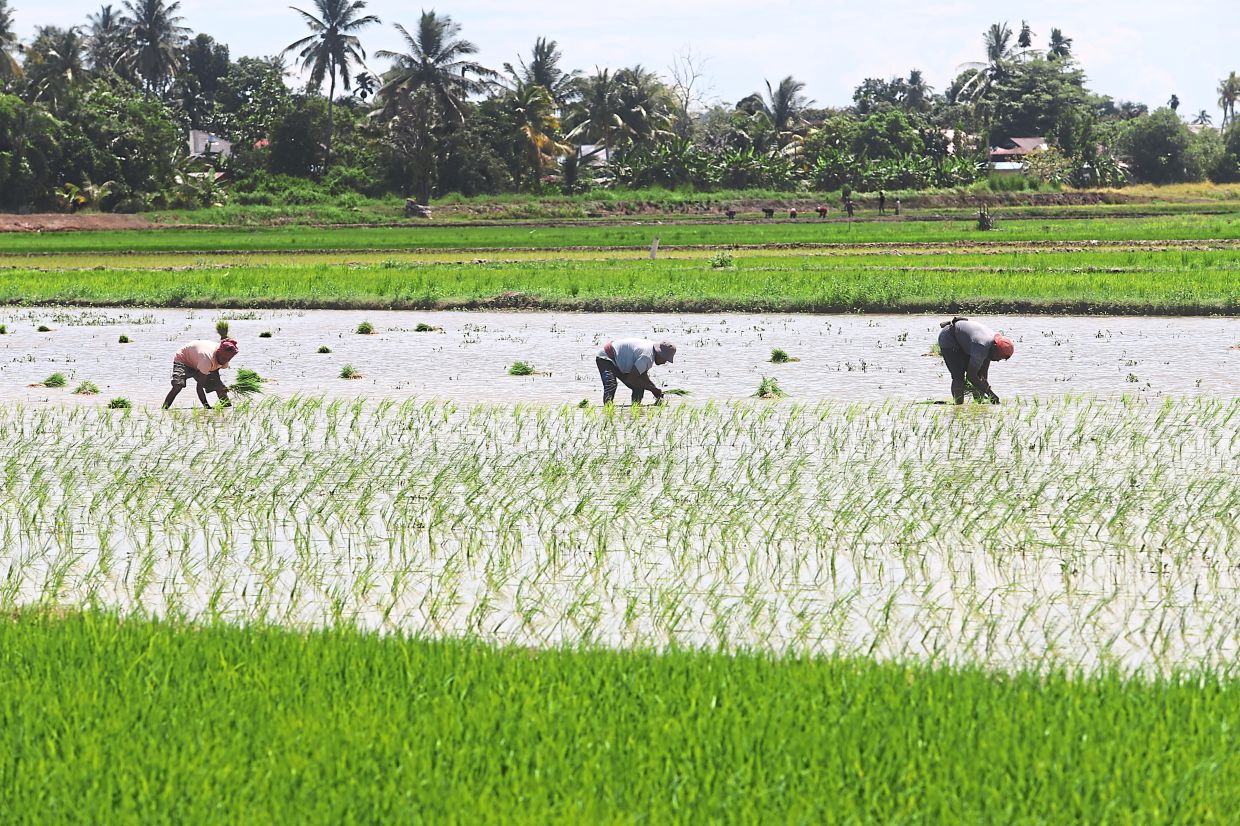
When geopolitical tensions between the United States and Iran threatened to choke off shipping through the Strait of Hormuz, global markets braced for shock waves. The disruption promised to raise the cost of two critical inputs for food systems worldwide: oil derivatives needed for fertiliser production, and petroleum-based plastics for packaging. Across the world, consumers steeled themselves for empty shelves and climbing grocery bills as energy costs spiralled. Yet in Malaysia, the anticipated food price crisis never materialised. Instead, the country's food inflation remained subdued at 1.4% year-on-year as of May 2026, a testament to proactive government intervention that shielded both consumers and farmers from the worst effects of international turbulence.
The stability Malaysia has achieved did not happen by accident. The government moved decisively to support agricultural production through a series of carefully targeted interventions designed to cushion farmers against rising operational costs. In April, the Ministry of Finance substantially increased Budi Agri-Komoditi, a diesel subsidy programme for agricultural machinery, raising it from RM300 to RM400 monthly—a significant 33% uplift that directly offsets climbing fuel and transportation expenses. Simultaneously, the government nearly doubled the ploughing incentive known as IPKP, boosting it from RM160 to RM300 per hectare for the 2026 planting season. Farmers in Peninsular Malaysia received an additional boost through advance payments of RM200 per hectare to help them prepare land before planting, ensuring cash flow at a critical moment in the agricultural calendar.
According to Prof Datuk Dr Nasir Shamsudin, an agricultural economist at Putra Business School and professor emeritus at Universiti Putra Malaysia's Faculty of Agriculture, these measures have proven their worth. The RM400 monthly assistance under Budi Agri-Komoditi directly compensates for surging diesel and transportation costs, while the enhanced IPKP allowance strengthens farmers' financial position precisely when they must invest in land preparation. As short-term cost-mitigation mechanisms, these initiatives have succeeded in relieving production pressures, maintaining agricultural output levels, and protecting farmer incomes—all of which work together to keep upward pressure on food prices in check. Prof Nasir emphasises that the resulting cost savings represent a genuine positive development for consumers seeking price stability at the checkout.
Looking beyond emergency measures, the government has embedded agricultural support into the broader fiscal framework. Budget 2026 allocated RM2.62 billion across multiple subsidy and assistance programmes spanning paddy prices, crop cultivation, fertiliser, seeds and production incentives. The fishing sector received RM160 million to provide living allowances up to RM300 monthly and catch bonuses, while RM55 million was earmarked for local fruit growers through targeted incentives and infrastructure improvements for pineapples, soursop, water apple and pomelo. Although these initiatives were established before the February Middle East conflict, they have proven instrumental in shielding Malaysia's agricultural sector from external shocks and ensuring a steady domestic food supply.
The government has publicly assured Malaysians that strategic food reserves remain robust. Essential items including chicken, eggs, fish, milk and fruits are sufficiently stocked to last at least one month despite ongoing global disruptions. Rice supplies, bolstered by the national buffer stock, can sustain the population for five to six months. The country also maintains adequate fertiliser inventories covering approximately nine months of domestic demand. These reserves function as a critical buffer, providing time for supply chains to stabilise and preventing panic buying that could destabilise prices.
Yet Prof Nasir cautions that subsidy programmes, while valuable as emergency responses, cannot serve as permanent solutions. Over the longer term, sustainable price stability demands structural improvements in agricultural productivity and supply chain efficiency. He identifies mechanisation, precision agriculture, climate-smart technologies, high-yield seed varieties, efficient irrigation systems, post-harvest facilities and integrated logistics as the real drivers of lasting competitiveness. These investments permanently reduce unit production costs and lessen the sector's dependence on continuous government support. Without such improvements, Malaysia risks perpetuating a cycle of subsidy dependency.
Recognising this reality, policymakers are shifting Malaysia's fertiliser strategy toward greater self-sufficiency and reduced vulnerability to global price fluctuations. The Agriculture and Food Security Ministry is actively promoting a transition toward organic fertilisers, biofertilisers and Effective Microorganisms products. A RM5.5 million initiative under the 13th Malaysia Plan aims to strengthen the circular economy by converting agri-food waste into compost and organic fertilisers, simultaneously addressing waste management and input costs. This diversification reduces reliance on chemical fertilisers whose prices track volatile global energy markets.
Yet Malaysia confronts a structural challenge that subsidies and domestic reforms alone cannot fully resolve: the country remains a net food importer with deep dependence on foreign agricultural inputs. Although domestic production has improved, Malaysia continues importing substantial quantities of rice, wheat, dairy products and meat. The 2024 agri-food trade deficit reached RM39.34 billion, reflecting how profoundly global markets shape domestic price dynamics. This external vulnerability means that Malaysian consumers and producers remain exposed to international price shocks regardless of domestic policy responses. Even sectors appearing self-sufficient in production often depend on imported inputs, creating hidden vulnerabilities throughout the supply chain.
Prime Minister Datuk Seri Anwar Ibrahim has publicly recognised these pressures, describing smallholders and entrepreneurs as the backbone of the national economy in a May Facebook post. His decision to extend Budi Agri-Komoditi reflected acknowledgment that rising living costs and global uncertainty create genuine hardship. This political commitment to agricultural support suggests that food security has become a priority concern at the highest policy levels, though the government's own analysis shows that long-term stability requires moving beyond temporary relief toward productivity transformation.
The path forward demands balanced strategy. Current subsidies provide essential breathing room while structural reforms take hold, allowing farmers to maintain production levels and prices to remain manageable for households. Simultaneously, investments in agricultural technology, supply chain modernisation and circular economy approaches must accelerate to build resilience independent of subsidies. For a nation of 34 million people where food represents a substantial share of household budgets, this combination of immediate support and long-term transformation offers the most realistic pathway to durable food security and affordable prices even as global disruptions multiply.

