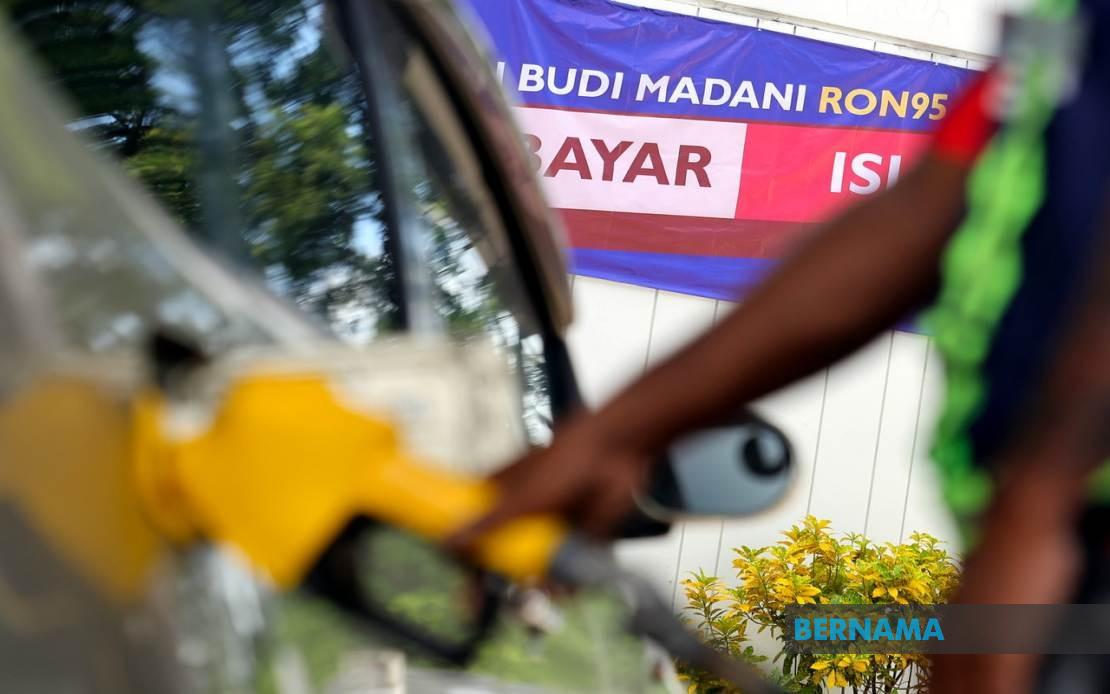
The Malaysian government has reversed course on fuel subsidy reductions, with Prime Minister Datuk Seri Anwar Ibrahim confirming on August 30 that the basic monthly quota under the Budi MADANI RON95 programme will return to 300 litres per person. This restoration addresses concerns raised by millions of motorists who faced a squeeze on their fuel allocations under the previous scheme, demonstrating the administration's responsiveness to public pressure on a cost-of-living issue that touches almost every household in the nation.
The decision will have immediate implications for more than 16 million Malaysians who depend on subsidised RON95 fuel at the controlled price of RM1.99 per litre. By restoring the quota from the previously announced 200 litres monthly to 300 litres, the government effectively increases the volume of affordable fuel available to ordinary drivers, reducing the likelihood that commuters and daily users will need to purchase petrol at market rates. For families operating on tight budgets, this 50 per cent increase in their monthly allocation represents a meaningful relief in transportation costs and household expenditure.
The Prime Minister unveiled the restoration during his National Day address at the Putrajaya International Convention Centre, emphasising the government's commitment to supporting lower and middle-income earners. This timing—announcing the decision at a major national event—signals the political importance the administration places on fuel subsidy policy as a barometer of its commitment to household welfare. The announcement came just five months after the government had disclosed its intention to compress the quota, indicating that circumstances or political considerations prompted a recalibration of the original plan.
The fuel subsidy landscape has been shaped significantly by regional geopolitical tensions. In March of this year, the government announced the quota reduction from 300 to 200 litres monthly, explicitly citing the conflict in West Asia as justification for the austerity measure. The compressed allocation was slated to take effect from April 1, 2026, suggesting the government had factored in continued regional instability affecting global energy prices. The decision to reverse this measure before implementation suggests either improved regional conditions or a reassessment of budgetary priorities.
Beyond petrol users, the government has also expanded support for diesel-dependent groups, indicating that the subsidy restoration initiative encompasses multiple fuel consumers. Owners of diesel-powered pick-up trucks and jeeps—a category encompassing more than half a million eligible vehicle operators—will receive up to 400 litres of Budi Diesel monthly. This allocation reflects the government's recognition that commercial and agricultural users depend heavily on diesel for their livelihoods, and supporting them is essential to maintaining economic productivity in rural areas and small business sectors that form the backbone of Malaysia's distributed economy.
The restoration programme is named Budi MADANI, with the acronym drawing from Malaysia's emphasis on civility and community values in public policy. The branding reflects an attempt to position fuel subsidies not merely as transactional economic transfers but as expressions of government care for its citizens. This framing is particularly significant in Southeast Asia, where fuel subsidies carry strong political weight and voter sentiment around energy costs can determine electoral outcomes. Malaysia's experience with subsidy reforms—including the controversial removal of fuel price controls in 2008—demonstrates how motorists regard government energy policy as a proxy for broader competence and fairness.
The financial implications of the restored quota extend beyond individual motorists to the national budget. Maintaining subsidies at higher volumes requires government expenditure that competes with spending on health, education, and infrastructure. The decision to restore the quota therefore reflects deliberate budgetary trade-offs, with policymakers evidently determining that the political and social costs of maintaining the reduction outweighed the fiscal savings. This calculus becomes especially acute in an election cycle, as governments typically prioritise visible welfare measures that directly benefit their voter base.
For regional context, Malaysia's subsidy approach contrasts with varying policies across Southeast Asia. While some neighbours have pursued subsidy reduction or removal strategies, Malaysia has maintained targeted subsidies for defined population segments, attempting to balance fiscal sustainability with social protection. This middle-ground approach requires careful recalibration as international oil prices fluctuate and geopolitical factors influence energy availability. The decision to restore quotas suggests the government remains committed to this interventionist model rather than moving toward market-based pricing mechanisms.
The restoration also carries implications for inflation management and cost-of-living pressures. When fuel allocations shrink, households absorb higher costs for transport, food logistics, and consumer goods delivery—ultimately feeding into broader price increases. By ensuring that 16 million Malaysians maintain access to 300 litres monthly at subsidised rates, the government aims to dampen inflationary pressures that stem from transport costs. This approach is particularly important for food security, as Malaysia's reliance on imported agricultural products makes transportation costs crucial to retail food prices that directly affect household food security and nutrition.
The announcement raises questions about the long-term sustainability of Malaysia's fuel subsidy framework. While the restoration addresses immediate public welfare concerns, policymakers must eventually reconcile the tension between maintaining subsidies and pursuing fiscal consolidation. The reversal of the planned reduction suggests that government views maintaining current subsidy levels as non-negotiable for now, but future developments in oil prices, regional stability, and domestic revenue could force renewed discussions about quota adjustments. The decision to restore quotas before implementing the reduction indicates that political consensus around subsidy reduction remains fragile.
For businesses and logistics operators, the certainty provided by restored diesel allocations enables better planning and cost projections. Commercial vehicle operators facing uncertain fuel access would build contingencies into pricing structures, ultimately raising costs for consumers. With the allocation restored to previous levels, logistics companies can operate with greater cost predictability, potentially easing supply chain pressures and supporting broader economic activity in manufacturing and commerce sectors that depend on reliable transportation networks.

