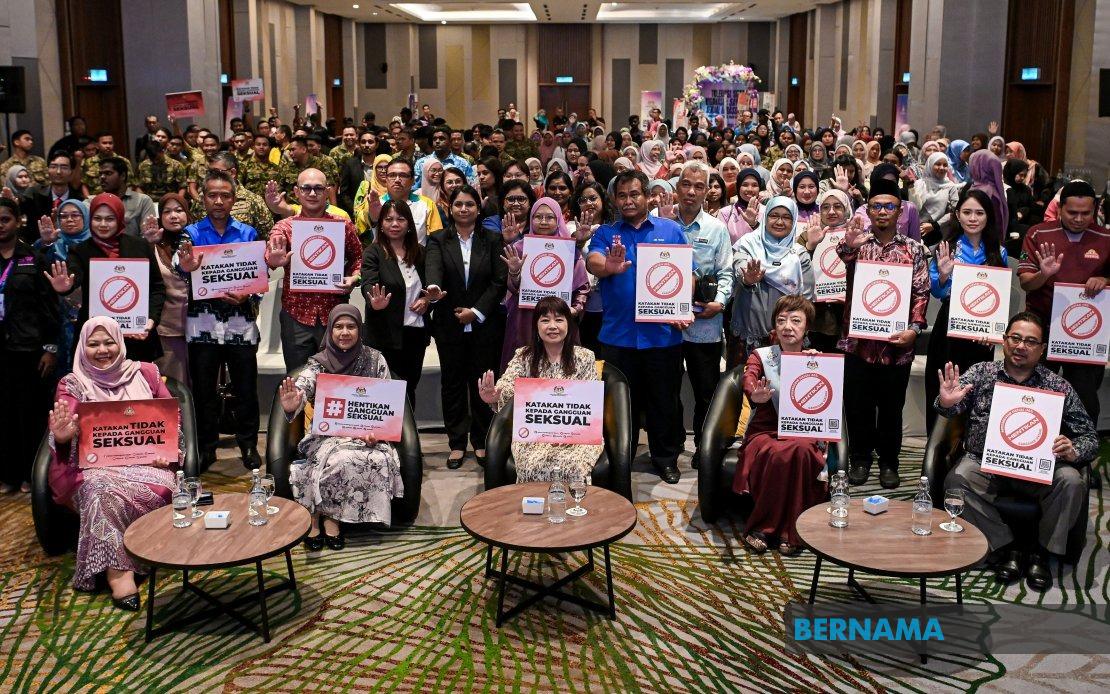
Malaysia's sexual harassment landscape has become increasingly visible as victims grow bolder in coming forward, with authorities documenting 388 incidents across the first five months of this year. Deputy Minister of Women, Family and Community Development Lim Hui Ying disclosed the figures in Port Dickson, underscoring a pattern that extends far beyond what official records once captured. The trajectory is striking: cases jumped from 477 documented incidents in 2022 to 1,038 last year, suggesting that what was once hidden is now being reported with greater frequency.
The rise in reported cases warrants careful interpretation. Rather than necessarily indicating a surge in actual harassment occurring, the figures reflect a fundamental shift in how Malaysian society addresses misconduct. More victims are finding the courage to lodge complaints, emboldened partly by greater public discourse around workplace rights and personal dignity. Communities are slowly rejecting the culture of silence that long protected perpetrators. This cultural evolution remains incomplete, however, with many incidents likely still unreported due to shame, fear of career consequences, or concerns about damaging family relationships.
The workplace emerges as a particularly vulnerable arena for harassment in Malaysia. Lim's data indicates that most documented cases centre on employment settings and involve perpetrators with family connections to victims. This convergence of professional hierarchy and personal relationships creates psychological complexity that discourages reporting. A subordinate harassed by a colleague who shares family ties may fear the social and economic fallout of disclosure far more than the harassment itself. Employers and workplace cultures that normalise such behaviour compound the problem, making workplace sexual harassment a systemic challenge requiring institutional reform across sectors.
The gender dimension of harassment in Malaysia remains uneven. While women comprise the overwhelming majority of victims, Lim's acknowledgment that men also experience sexual harassment—albeit in smaller numbers—broadens the conversation beyond traditional framing. Male victims face distinct barriers to reporting, including societal expectations of masculine resilience and the stigma of coming forward. Recognising this diversity ensures support systems serve all vulnerable persons rather than limiting assistance to one demographic group.
In response to this challenge, Malaysia established the Tribunal for Anti-Sexual Harassment (TAGS) to accelerate justice and reduce victim trauma. As of mid-June, the tribunal had processed 100 complaints, resolving 82 cases within 60 days of first hearing. This efficiency represents a significant institutional achievement, though the comparative numbers suggest the tribunal remains a nascent mechanism with limited reach relative to the scale of harassment occurring. Expanding awareness of TAGS among victims unfamiliar with the avenue represents ongoing work for the ministry.
The government's integrated support infrastructure attempts to address harassment through multiple touchpoints. Talian Kasih 15999, a 24-hour counselling helpline, provides immediate psychosocial assistance for those in crisis. Local social support centres complement this service, creating a network designed to ensure timely help reaches those in need. Yet access remains uneven across Malaysia's diverse geography and communities, particularly in rural areas where transport, language barriers, and social stigma may prevent people from utilising distant services.
Lim's emphasis on shared responsibility reflects recognition that combating harassment demands systemic change across institutions. Parents, educators, employers, colleagues, and students each hold agency in building zero-tolerance environments. Early education that instils respect and consent—beginning in schools—serves as foundational prevention. Workplace training that clarifies boundaries, consequences, and reporting mechanisms establishes clearer norms. Family conversations that validate victims rather than prioritising reputation create safer domestic spaces. Without this multi-level intervention, awareness campaigns alone prove insufficient.
The government's Women, Peace and Security advocacy initiative, aligned with the National Action Plan 2025–2030, situates harassment prevention within broader frameworks of national development and security. This positioning recognises that normalised harassment undermines social cohesion, erodes trust in institutions, and diminishes women's full participation in civic life. When women fear harassment in workplaces, public transport, and educational settings, their economic and political engagement contracts, depriving Malaysia of talent and perspectives essential to national progress.
The link between unaddressed harassment and escalating violence merits particular attention in the Malaysian context. Early-stage harassment often reflects power imbalances and boundary violations that, if not checked, can intensify into physical violence. The psychological toll of chronic harassment—anxiety, depression, reduced workplace productivity—cascades through families and communities. Intervening early, supporting victims adequately, and holding perpetrators accountable thus represents an investment in public health and social stability.
Moving forward, expanding victim support must accompany enforcement efforts. Many people remain unaware that the Tribunal for Anti-Sexual Harassment exists or how to access it. Public campaigns in Malay, English, and community languages could increase knowledge and utilisation. Employers require clearer guidance on implementing workplace policies that prevent harassment and protect reporters from retaliation. Courts and enforcement agencies need training to handle cases with sensitivity and cultural competence.
The rising trajectory of reported cases offers an opportunity to reimagine Malaysian workplaces and communities as spaces where dignity prevails. This requires sustained political will, adequate funding for support services, and cultural messaging that treats harassment not as an individual victim's burden but as a collective failure requiring institutional remedy.

